
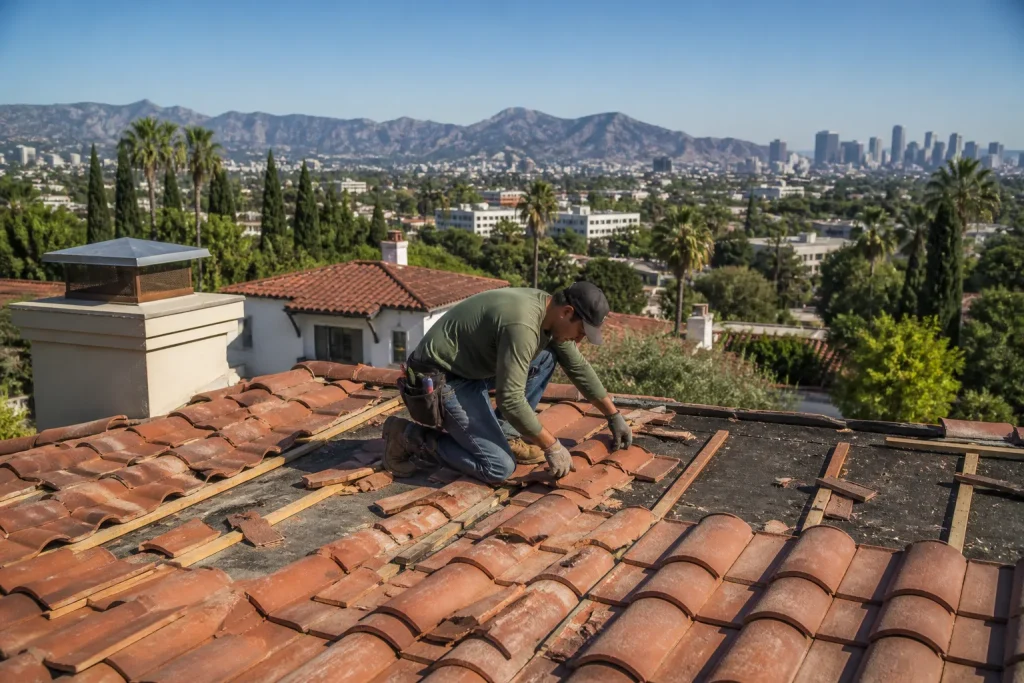
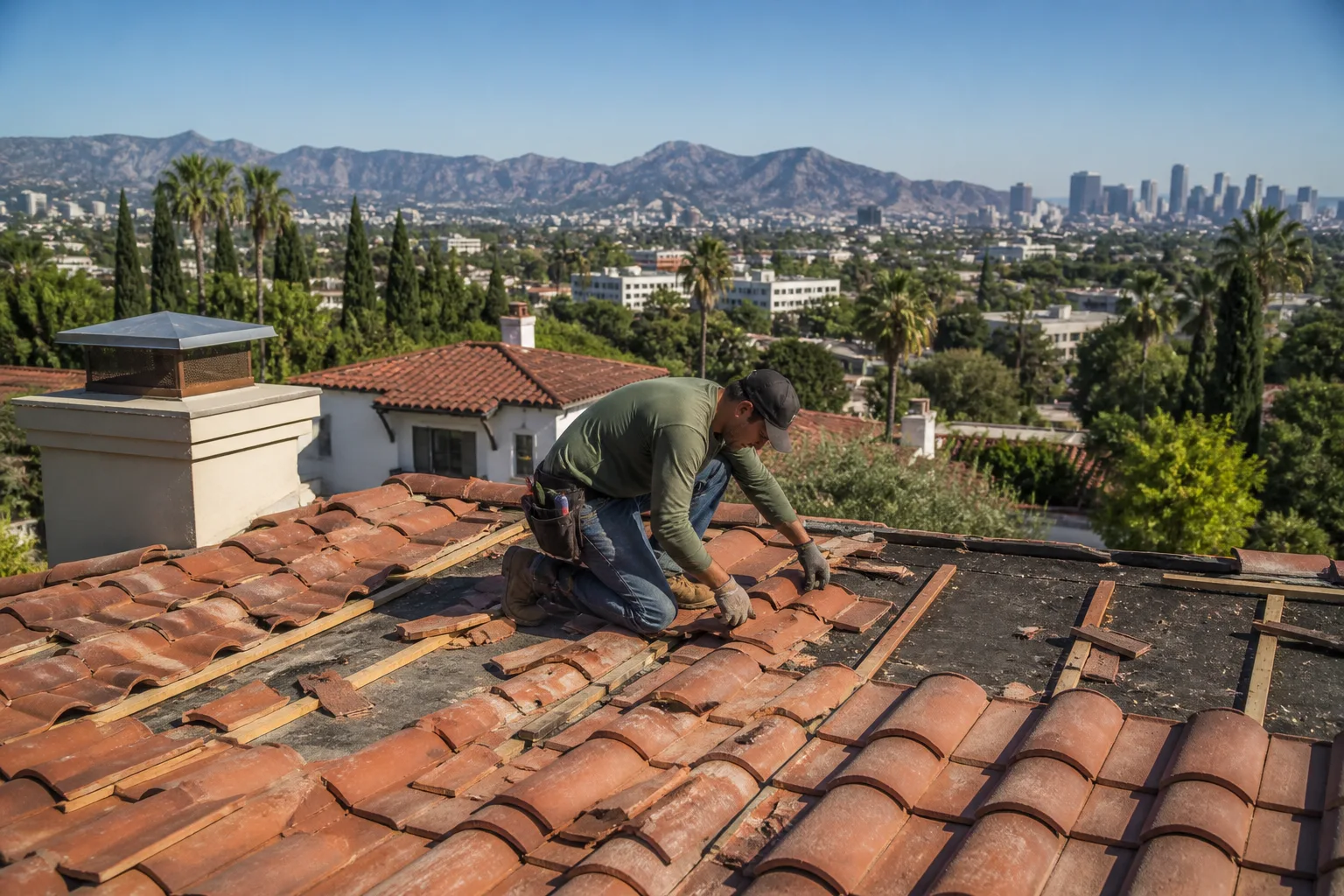
Preparing Your Home’s Roofing for Winter in Los Angeles
Preparing a Los Angeles roof for winter costs between $250 and $450 for a professional pre-season inspection, and October is the right month to book it. The goal isn’t to add insulation or clear snow. It’s to find the dry-season damage that turns into a leak the first time an atmospheric river parks over the San Fernando Valley for three days. If you’d rather skip the ladder work, call (945) 303-9821 and we’ll handle the whole checklist.
Here’s the thing most winter-prep guides get wrong about this city: an LA roof doesn’t fail in winter. It fails in summer, quietly, and winter just delivers the water that exposes it. Eight months of heat and zero rain is a stress test. Sealant shrinks. Flashing caulk turns brittle and pulls away from vent pipes. Debris from jacarandas and eucalyptus piles into valleys and bakes into a crust. Then November arrives and every compromised seam gets its first real drink of water since March. That’s why October matters, and that’s why we wrote this.
Key Takeaways
- LA’s dry season creates specific vulnerabilities: sealant shrinkage, cracked flashing caulk, and debris compaction in roof valleys.
- Three inspections matter before the first rain: valleys and gutters, all roof penetrations, and the drip edge along eaves.
- October is the booking window. By mid-November, most reputable Los Angeles roofing crews are booked for weeks.
- Homeowners can safely clear gutters and valleys from the ground or with proper fall protection. Everything else belongs to a pro.
- A legitimate pre-season roof inspection in LA runs $250 – $450 and should include written findings, photos, and a line-item repair quote.
Why LA’s Dry Season Creates Its Own Failure Pattern
In most of the country, winter prep means dealing with what winter is about to do: ice dams, snow load, freeze-thaw cycles. Los Angeles doesn’t have any of that. What we have is a long rainless stretch, usually March through October, where the average daily high sits in the 70s and 80s and nothing touches the roof but sun. That’s the problem hiding in plain sight.
Roofing sealant is a flexible product, and flexibility has a lifespan. A tube of sealant applied around a plumbing vent in March sees eight months of thermal expansion and contraction before a single drop of rain hits it. By October, that bead is often cracked, lifted at the edges, or separated entirely from the pipe it’s supposed to protect. We see this on Roof Repair in Los Angeles calls every single fall: the leak isn’t from winter weather. It’s from summer shrinkage that winter finally exposed.
The same applies to flashing caulk around chimneys, skylights, and HVAC penetrations. And debris plays a role too. A roof valley that collected leaves in May will hold them until November, compacted into a mat that blocks water flow and turns a drainage channel into a pond. The roof didn’t change in September. The conditions just hadn’t arrived to reveal the damage. If you want to catch this before water does, the inspection has to happen while the damage is still invisible from the ground.
The Three Inspections That Matter Before an LA Rainy Season
We could hand you a 40-point checklist, but most of it would be noise. After years of winter-prep inspections across Los Angeles, from Sherman Oaks to Glendale to the Palisades, these are the three that actually prevent the most common leak calls.
1. Valleys and Gutters
Valleys are the V-shaped channels where two roof planes meet, and they move more water than any other part of the roof during an atmospheric river. If a valley is packed with debris, water backs up and spills sideways under the shingles. Gutters matter for the same reason: a clogged downspout floods the eave and rots the fascia board. In Los Angeles, pine needles from the foothills and seed pods from liquidambar trees are the usual culprits. Check both before the first rain. Clear them after the Santa Anas finish blowing in late October.
2. All Roof Penetrations
Anything that pokes through the roof is a penetration, and in LA it’s usually exposed to direct sun all day. Plumbing vents, HVAC unit stands, skylight curbs, chimney flashing, even the mast where the power line attaches. Each one gets sealed with a material that degrades faster in our UV-heavy climate than it would anywhere else. Look for separation between the sealant and the pipe, visible cracks in the flashing caulk, or lifted flashing edges. Water finds these gaps within minutes of a real storm.
3. The Drip Edge Along Eaves
Drip edge is the metal strip along the roof perimeter that pulls water away from the fascia board and into the gutter. If it’s rusted, bent, or missing, water runs behind the gutter and down the wall. Los Angeles homes with older roofs frequently have drip edge that was never installed correctly or has corroded from decades of coastal air in neighborhoods like Santa Monica and Brentwood. It’s a small piece of metal that causes a disproportionate share of winter paint damage and soffit rot.
This trio covers roughly 80% of the winter leak calls we respond to. If you’re in Los Angeles and want someone else to do the looking, our roofing company in Los Angeles performs this exact inspection as part of a written pre-season service.
Reading Your Attic After the First Rain
Here’s a habit that costs nothing and saves thousands: after the first meaningful rain of the season, go into your attic with a flashlight and look at the underside of the roof decking. You’re looking for moisture evidence, not drips. In most Los Angeles homes, the attic is dry eleven months a year, so any water mark from the recent storm is fresh and easy to see.
What to look for: dark rings around nail heads, water staining that follows the slope of the rafters, or insulation that looks matted down in one spot. If you see active moisture or a visible drip, that’s a call-now situation. Water sitting on dry California framing starts growing mildew in days. Call (945) 303-9821 and describe what you see.
If you see a small water stain but it’s not actively wet and doesn’t grow after the second rain, you can note it and monitor through the season. Mark the stain with a pencil line so you can tell whether it’s expanding. One small stain might be a one-time event, like wind-driven rain pushing water under a ridge cap during a specific storm angle. Two storms in a row with growth, and you’re trending toward a repair.
The key distinction: active moisture right now, in the moment of inspection, is urgent. A dry, small, stable stain is schedule-it-when-convenient. We’ve walked attics in Los Angeles where a homeowner had been monitoring a “tiny stain” for two seasons, and the attic side of the decking looked fine while the top side had lost a full sheet of plywood to rot. When in doubt, get a professional opinion before the next storm front arrives.
Why October Is the Right Month to Schedule This
Los Angeles roofing companies operate on a seasonal cycle that the Home Depot commercials never mention. From April through September, the schedule is steady but manageable. Repairs, replacements, some new construction. Nothing urgent. Then the first atmospheric river forecast hits in November and every phone starts ringing at once. Homeowners who ignored their roofs for eight months suddenly need someone tomorrow, and the honest companies are booking two to three weeks out.
October is the window between those two worlds. The weather is still dry. The storms haven’t begun, usually. And a roof replacement in Los Angeles or a simple repair can still be scheduled at a time that works for you rather than whenever a slot opens up. Book in October and you’re choosing your date. Call in November and you’re competing with every neighbor who just discovered a leak at 2am.
On cost: a legitimate pre-season inspection in Los Angeles runs $250 to $450 from a licensed contractor. That price should include a physical walk of the roof, photos of any problem areas, written findings, and a line-item quote for any recommended repairs. If the contractor wants $800 for an inspection, that’s high. If the inspection is “free” but the repair quote arrives with no breakdown, be skeptical. The Kingswell Way, which is how we operate Tilehurst Roofing home services, is simple: written price before any work starts, every time, no exceptions. You should expect that from any roofer in this city.
What You Can Safely Do Yourself (And Where DIY Stops)
Clearing valleys and gutters of summer debris is the one task a Los Angeles homeowner can handle before winter without professional help. If you can reach your gutters with a ladder placed on level ground, or if you have a single-story home where a good leaf blower from the ground covers most of the roof edge, go ahead. The goal is simple: remove anything that blocks water flow. Wet leaves, dry leaves, seed pods, pine needles, tennis balls, whatever the kids left up there.
We pulled a tennis ball out of a scupper drain on a flat roof in Los Feliz last October. The homeowner had been hosing off his roof deck all summer and wondered why one corner always held water. One ball. That’s the whole story. Most debris problems are exactly that small, and exactly that easy to prevent.
But here’s where DIY ends. Walking on a pitched tile or shingle roof without fall protection is not a Saturday afternoon project. Our technicians use harnesses, roof jacks, and proper ladder tie-offs on every job, and we still treat every roof walk with respect. Clay tile from Boral or roof tile from the early 2000s can be brittle after years of Los Angeles heat. A cracked tile you created while inspecting is a leak you’ll discover next month. Leave the roof walk to someone with the right equipment and insurance.
The same caution applies to any sealant work. Applying new caulk to a vent pipe while balanced on a rake edge is how emergency rooms in Los Angeles meet roofing customers. It’s not worth the hospital visit. If you can see cracking sealant during your attic check, that’s your signal to call a professional who can inspect the whole penetration system, not just the part you happened to notice.
Material Choices That Hold Up to LA’s Winter Pattern
When an inspection does turn up damage serious enough for replacement, Los Angeles homeowners have more good options than most realize. We offer material selections from seven manufacturers, including GAF, CertainTeed, Owens Corning, and Boral, because no single product fits every home in this city. A coastal home in Pacific Palisades faces salt air and marine layer moisture. A hillside home in Highland Park deals with direct sun and wildfire risk. A 1920s bungalow in Echo Park needs an underlayment that works with its specific slope.
Boral’s concrete and clay tile is a common choice for Spanish-style homes throughout Los Angeles, and it handles the wet-dry cycle of our winters well when the underlayment beneath it is solid. GAF and CertainTeed asphalt shingle lines offer more accessible price points and easier repair on standard pitched roofs. Owens Corning holds up well on homes where wind-driven rain is the primary concern, like parts of the Westside. The point is you have choices, and a good roofer should walk you through them rather than selling whatever is on the truck.
When in doubt, call a pro. If you’re in Los Angeles and want a written inspection report before the first storm, we’re here.
The Bottom Line
Los Angeles winters are mild until they aren’t, and the roof problems that surface in January were usually created in July. The dry season shrinks sealant, cracks flashing caulk, and bakes debris into valleys. The first atmospheric river just points it all out. Your preparation should happen in October, should include the three inspections that matter, and should produce a written report with real numbers. If a repair is needed, get the price in writing before the work starts. If you’d rather have a professional handle the entire pre-winter roof check, call (945) 303-9821 for a free estimate. Roof repair in Los Angeles is our core trade, and we’ve been doing it long enough to know that October prep beats November panic every single year.
Frequently Asked Questions
A pre-season roof inspection from a licensed Los Angeles contractor typically costs $250 to $450, and that price should include a physical roof walk, photos of problem areas, and a written line-item quote for any recommended repairs. Call (945) 303-9821 to schedule your inspection and get an exact quote first.
October is exactly the right time. The weather is still dry, the rainy season hasn’t begun, and roofing companies in Los Angeles still have scheduling flexibility. By late November, most reputable crews are booked two to three weeks out. Call (945) 303-9821 to reserve your October inspection window.
The three most common pre-winter problems in Los Angeles are cracked sealant around roof penetrations, debris-packed valleys and gutters, and damaged drip edge along the eaves. Check these three areas after the Santa Anas finish, and call (945) 303-9821 if you see anything that worries you.
Yes, if you can do it from the ground or from a ladder placed on solid, level ground. Clearing summer debris from gutters and valleys is safe for most homeowners. Walking on the roof itself is not, especially on brittle Los Angeles tile. Call (945) 303-9821 and let a trained professional handle the roof walk.
Written by Greg Holloway, Owner at Tilehurst Roofing, serving Los Angeles since 2000.
Need Roofing Help?
Call Tilehurst Roofing - licensed & insured, here with fast after-hours help in Los Angeles.
(945) 303-9821