
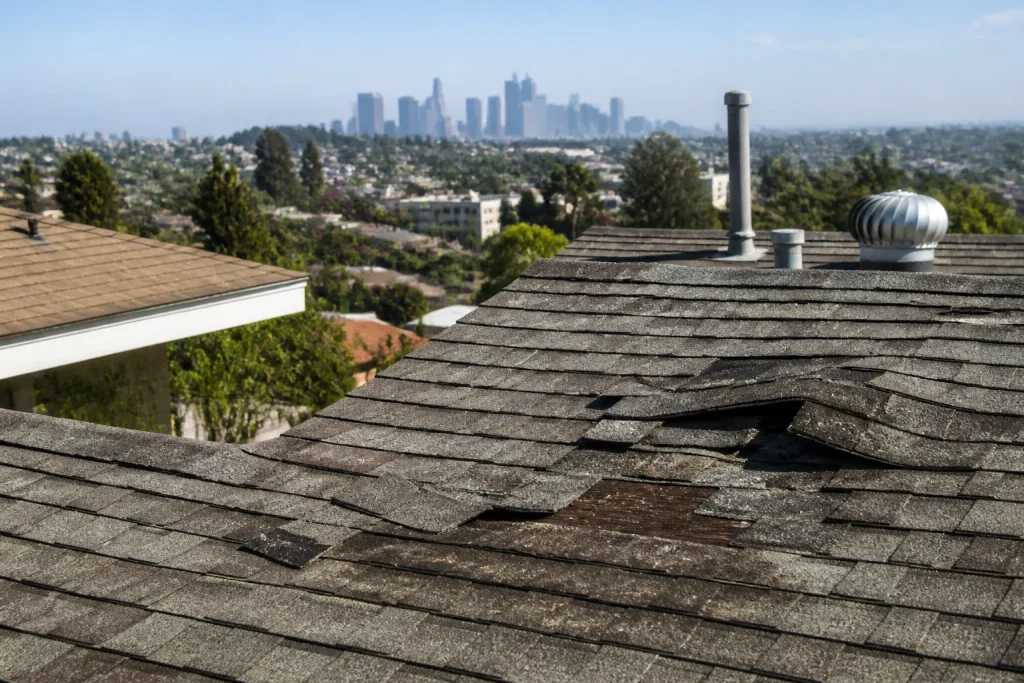
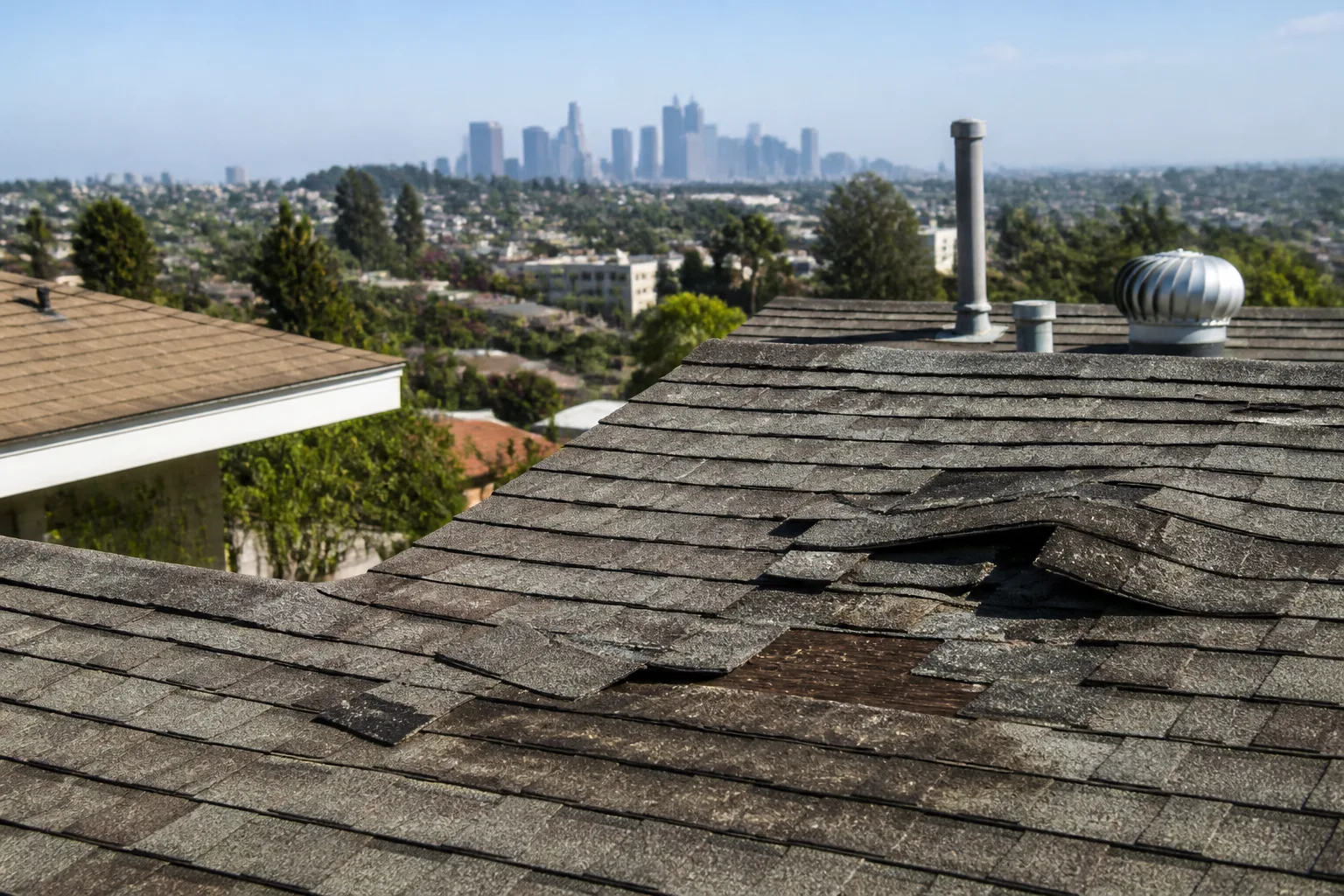
Roof Repair: Repair or Replace? How Los Angeles Homeowners Decide
Most Los Angeles homeowners should repair a roof when damage is isolated to one slope or penetration and the roof has at least five years of expected life left. Replacement becomes the smarter financial move when repairs would exceed roughly 30 to 35 percent of a full reroof cost, when the roof is over 18 years old, or when your insurer is sending non-renewal letters. If you’d rather not work through the math alone, call Tilehurst Roofing at (945) 303-9821 and we’ll walk the roof with you for free.
A 16-year-old roof in Los Angeles isn’t just a roofing question. It’s an insurance question, a resale question, and a fire-zone question. The right answer depends on which of those pressures hits you first. We pulled a failed patch out of a home in Woodland Hills last month where the previous contractor had used standard felt underlayment on a composition shingle roof. It lasted eleven months. The homeowner spent $1,400, then spent $19,800 on a full replacement eighteen months later. That $1,400 wasn’t a repair. It was a delay with interest.
How Much Does Roof Repair Cost in Los Angeles?
Roof repair in Los Angeles typically runs $350 to $950 for minor work like replacing a few cracked tiles or resealing a pipe boot. Mid-range repairs, such as replacing a section of rotted decking or rebuilding a valley, land between $1,200 and $3,400. Larger repairs involving multiple slopes or structural work can reach $5,000 to $9,000. Here’s the pricing table we hand homeowners before touching a nail:
- Tile replacement (3 – 10 tiles): $350 – $800
- Flashing repair around chimney or skylight: $450 – $1,100
- Pipe boot or vent collar replacement: $300 – $600
- Small decking patch (one sheet of plywood or OSB): $400 – $900
- Valley rebuild with new underlayment: $1,500 – $3,200
- Widespread tile or shingle replacement on one slope: $2,800 – $6,500
- Full asphalt shingle replacement (standard 1,800 sq ft home): $13,000 – $22,000
- Full tile roof replacement: $28,000 – $55,000 depending on tile profile and underlayment spec
These numbers reflect what we see across the San Fernando Valley, the Westside, and the foothill communities. A roof in Porter Ranch with steep pitches and tile will price differently than a low-slope gravel roof in Mar Vista. Anyone quoting you without walking the roof is guessing. Cheap bids in roof repair in Los Angeles are almost always a scope problem, not a good deal.
The Break-Even Formula: When Repairing Costs More Than Replacing
Here’s the shortcut most contractors won’t show you. Divide the cost of a full replacement by the number of years of expected roof life, then compare that annual cost to what repairs are costing you. If a new roof costs $18,000 and carries a 25-year expected life, you’re paying $720 per year for the roof. If you’re spending $3,000 a year on repairs to keep a roof with seven years left alive, you’re losing $2,280 per year by not replacing. That’s the real math.
The multiplier people forget is escalation. Roofing material and labor costs in Los Angeles have risen roughly 4 to 6 percent annually for the past decade. A $14,000 replacement quoted this year is a $16,200 job in three years if trends hold. Deferring a replacement you know is coming doesn’t just cost repairs. It costs you the delta between today’s price and tomorrow’s.
Use this quick test. If your roof is under 12 years old, repair is almost always right. Between 12 and 18 years, repair only if the damage is isolated to one penetration and the underlayment is still sound. Over 18 years old on an asphalt shingle roof in Los Angeles, you’re playing defense. The shingles are brittle, the granule loss is visible, and your underlayment is near the end of its functional life even if the top layer looks passable from the street.
The Insurance Factor: What Los Angeles Carriers Are Doing Now
This is the pressure point most homeowners don’t see coming. Major carriers writing policies in Los Angeles County have tightened roof age thresholds significantly over the last three years. We’re hearing from homeowners in Sherman Oaks, Encino, and Tarzana who got non-renewal notices not because their roof leaked, but because their roof hit the carrier’s age limit. Some carriers won’t write a new policy on a composition shingle roof over 15 years old, period. Others will write it only with an inspection, and the inspection fails on granular loss, raised shingle tabs, or curling at the eave line.
If your roof is 14 or 15 years old and your insurer is sending renewal paperwork, call your agent and ask the direct question: “If I file a claim on this roof in 18 months, will you cover it?” Don’t accept a vague answer. Get it in writing. If the answer is hedged, a targeted repair isn’t going to change your insurance risk profile. You’re buying time but not coverage confidence.
Some LA homeowners in higher-risk ZIP codes are finding that a full replacement with a fire-rated assembly is the only way to keep their policy in force. That changes the math entirely. It’s no longer repair versus replace. It’s replace versus self-insure. Nobody wants to self-insure a roof in a wildfire corridor. That’s a conversation to have with a roofer who knows what underlayment ratings your carrier requires, not just what’s cheapest. Our roofing company in Los Angeles walks through the insurance checklist on every estimate because we know it’s driving the decision now more than curb appeal ever did.
Very High Fire Hazard Severity Zones: The Repair Rules Change
Los Angeles has a patchwork of VHFHSZ designations across the Santa Monica Mountains, the Verdugos, the Santa Susana range, and up into the Angeles National Forest foothills. Homes in places like Tujunga, Sunland, La Cañada Flintridge, Calabasas, and parts of Granada Hills fall under stricter requirements. If you live in one of these zones, a repair isn’t just a question of matching tile. It’s a question of whether the repair materials meet current Chapter 7A fire-rated standards.
Here’s what that means in practice. A roofer who patches a section with commodity underlayment that isn’t fire-rated has technically performed a repair that may not comply with what your local building official would approve if they saw it. Did the roofer pull a permit? Most repairs under a certain square footage don’t require one, which means the non-compliant material gets installed with no inspection. You’re left with a roof that looks fixed and isn’t code-aligned.
If you’re in a VHFHSZ, ask your repair contractor one question before they start: “Is this material fire-rated to the current Los Angeles County standard for my zone?” If they blink, they don’t know. Walk. A repair on a fire-zone roof should use a fire-rated underlayment and, where required, a Class A assembly. That’s true even for a patch. Tilehurst Roofing has crews working in these foothill communities weekly, and we specify the underlayment on the written estimate so there’s no ambiguity about what goes under the tile.
The “Selling in Under Three Years” Scenario
If you’re selling a Los Angeles home within 36 months, the calculus flips. You are not buying a roof for yourself. You’re buying one for the buyer’s lender, the buyer’s insurer, and the buyer’s inspector. That changes what “repair versus replace” means in a very specific way.
A targeted, well-documented repair is often the financially smarter move here. A roof with isolated tile damage or one leaking boot can be repaired for under a thousand dollars, photographed, and disclosed cleanly. The disclosure is the key. California sellers must disclose known roof issues. A repair done properly and documented with a written guarantee satisfies disclosure in a way that a “seems fine” roof does not. Buyers in LA have become skittish about roofs because they’ve seen insurance costs spike. A clean disclosure with a recent repair receipt calms that conversation.
But there’s a line. If your roof is visibly at the end, the buyer’s inspector will flag it, the buyer’s lender may condition the loan on it, and now you’re replacing a roof under contract with a buyer pressing for price concessions. You’re renegotiating from weakness. In that situation, a roof replacement in Los Angeles before listing is a negotiating asset, not a cost. You list with a new roof, a transferable manufacturer warranty, and no inspection drama. That sells faster and often for enough to offset the reroof.
The rule: selling in under three years, repair anything under $3,000 if the roof’s overall condition is serviceable. Replace if the roof is 20-plus years old, or if visible granule loss in the gutters, curling shingles, or multiple missing tiles are present. The curb is where the inspection happens.
How to Get Two Honest Bids for the Same Scope
Most Los Angeles homeowners comparing bids are comparing two different scopes of work and don’t know it. One contractor quotes a repair with new underlayment. Another quotes the same repair without it. The prices are $2,400 apart, and the homeowner picks the cheaper one thinking they saved money. They didn’t. They bought half a repair.
Here’s the language to hand both contractors. Pick one of these scopes and use it verbatim:
- “Repair the two cracked tiles on the west slope. Replace the underlayment under the repaired section. Re-bed and re-point the ridge where needed. Leave the existing flashings in place unless you find active leaking.”
- “Replace the rotted decking on the north slope behind the master bathroom. Include new underlayment, new drip edge, and reinstallation of the existing tile.”
- “Diagnose the leak in the hallway ceiling. Quote only the leak source repair. Separately line-item anything you recommend but don’t include it in the base quote.”
The words “line-item anything you recommend but don’t include it in the base quote” are the single most important phrase in getting comparable bids. It forces the contractor to separate “must do” from “should do.” Then ask both contractors for the same line-item breakdown: materials, labor, disposal, permit fees if any. If one bid has a line called “miscellaneous” with a big number next to it, ask what it is. If the answer is vague, that’s a red flag.
Tilehurst Roofing writes every Los Angeles estimate as a line-item document with a written price in your hands before any work starts. You’ll see the underlayment brand, the tile profile, the waste factor, the labor, and the haul-away as separate numbers. Not because quoting is a show, but because we’ve been the second bid after a bad experience enough times to know that clarity is the product.
When to Call a Pro
If you’re leaving a water stain on the ceiling unaddressed because the leak only shows during heavy rain, you’re not saving money. You’re feeding mold, drywall damage, and a bigger repair every month. If you see granule loss in your gutters, cracking at the shingle edges, or tiles sliding on a steep pitch, call someone. If you’re in a fire zone and don’t know whether your underlayment is rated, call someone today, not next month.
Roof work in Los Angeles means two-story homes, tile that shatters underfoot, and steep pitches that punish mistakes. Walking a roof without the right shoes and harness setup is how people end up on the evening news. We’re happy to do it for you. If you’re considering whether to repair or replace, the fastest path to an answer is a 30-minute roof walk with someone who will tell you the truth, not sell you a roof you don’t need. Call (945) 303-9821 to set that up.
Related services in Los Angeles: roof repair, full roof replacement, and Tilehurst Roofing home for the full scope of what we do.
The Bottom Line
Repair makes sense when your roof is under 15 years old, the damage is isolated to one penetration or slope, and your insurer is still writing your policy without complaint. Replace makes sense when the roof is past 18 years, repairs are piling up faster than $1,000 a year, you’re in a fire zone with non-rated materials, or your carrier has sent the first warning letter. Selling soon changes the math toward repair for disclosure purposes. Staying twenty years changes the math toward replacement for cost-per-year purposes.
If you’re in Los Angeles and need help deciding, Tilehurst Roofing offers free estimates. We’ll walk the roof, give you a written price before any work starts, and tell you honestly whether repair or replacement is the better money. Every repair we do carries a written guarantee, and we back it with the 365-Day Done Right Promise. Call (945) 303-9821 to schedule your free estimate.
Frequently Asked Questions
Most Los Angeles roof repairs run between $350 and $3,400 depending on the scope. Minor tile replacement or pipe boot work sits at the low end. Valley rebuilds, decking patches, and multi-slope repairs land higher. Call (945) 303-9821 for an exact written quote on your specific roof.
Not at Tilehurst. Your written estimate includes the labor, materials, disposal, and permit fees if applicable. If we uncover hidden damage during the work, we stop and talk to you before proceeding. No one learns about a price increase at the door. It’s a written price before any work starts, every single time.
Most small repairs under a certain square footage don’t require a permit in Los Angeles, but there are exceptions in fire hazard zones and when structural decking is replaced. Ask your contractor directly. If they can’t tell you whether your specific repair triggers a permit, that’s a signal to call someone else.
Most Los Angeles roof repairs are completed in one day. Tile matching on older homes can add lead time because finding the right tile profile matters more than speed. Decking replacement or valley rebuilds can run two days. Call (945) 303-9821 and we’ll give you an honest time window with your written estimate.
Written by Greg Holloway, Owner at Tilehurst Roofing, serving Los Angeles since 2000.
Need Roofing Help?
Call Tilehurst Roofing - licensed & insured, here with fast after-hours help in Los Angeles.
(945) 303-9821