
Free roof inspection with deck photos before we talk money - GAF and Owens Corning certified installation
 Before
 After
After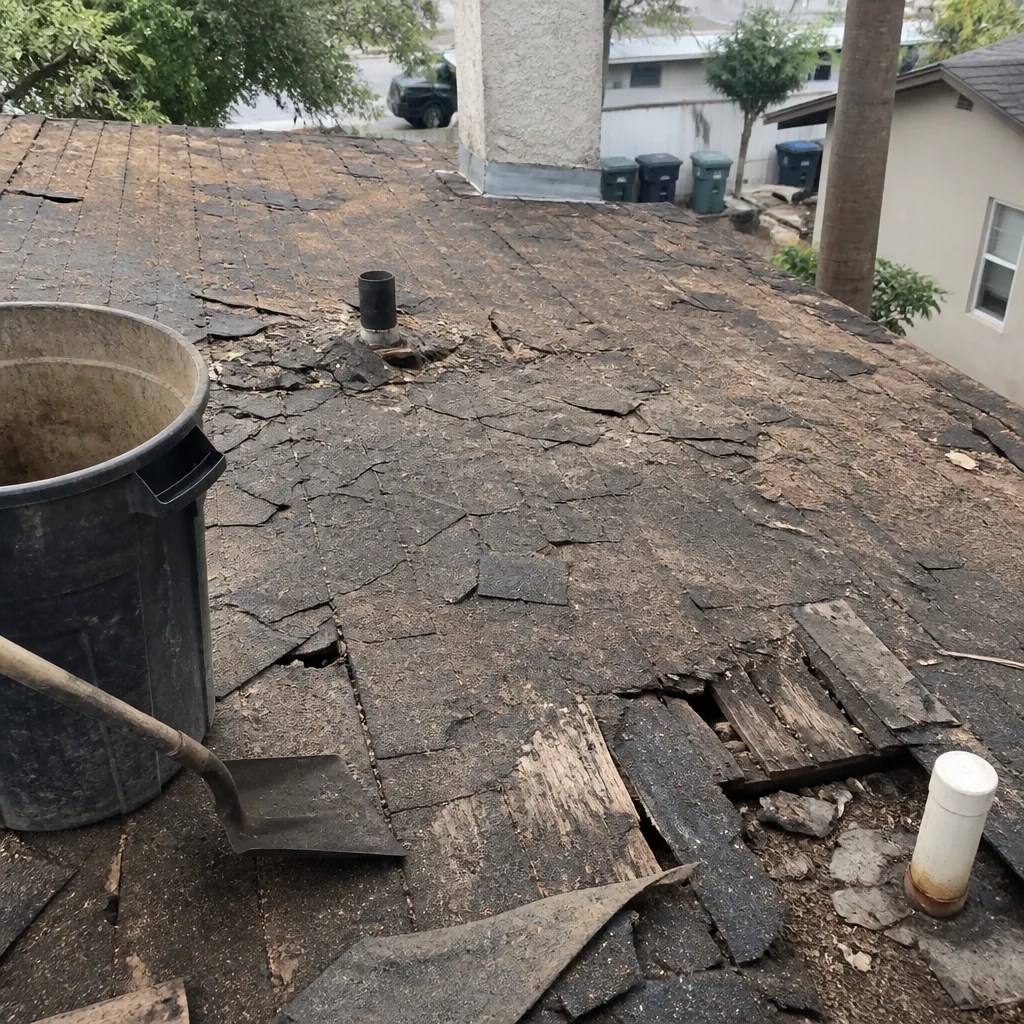 Before
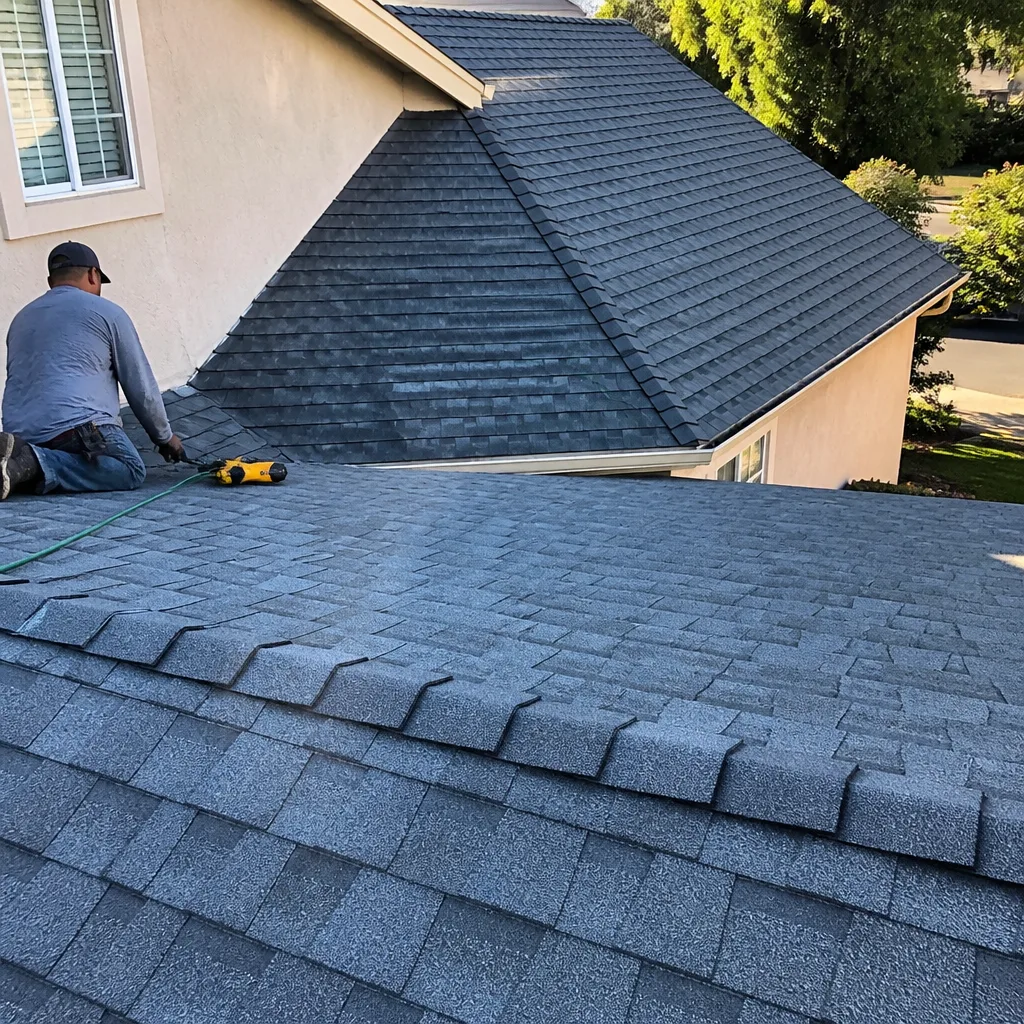 After
After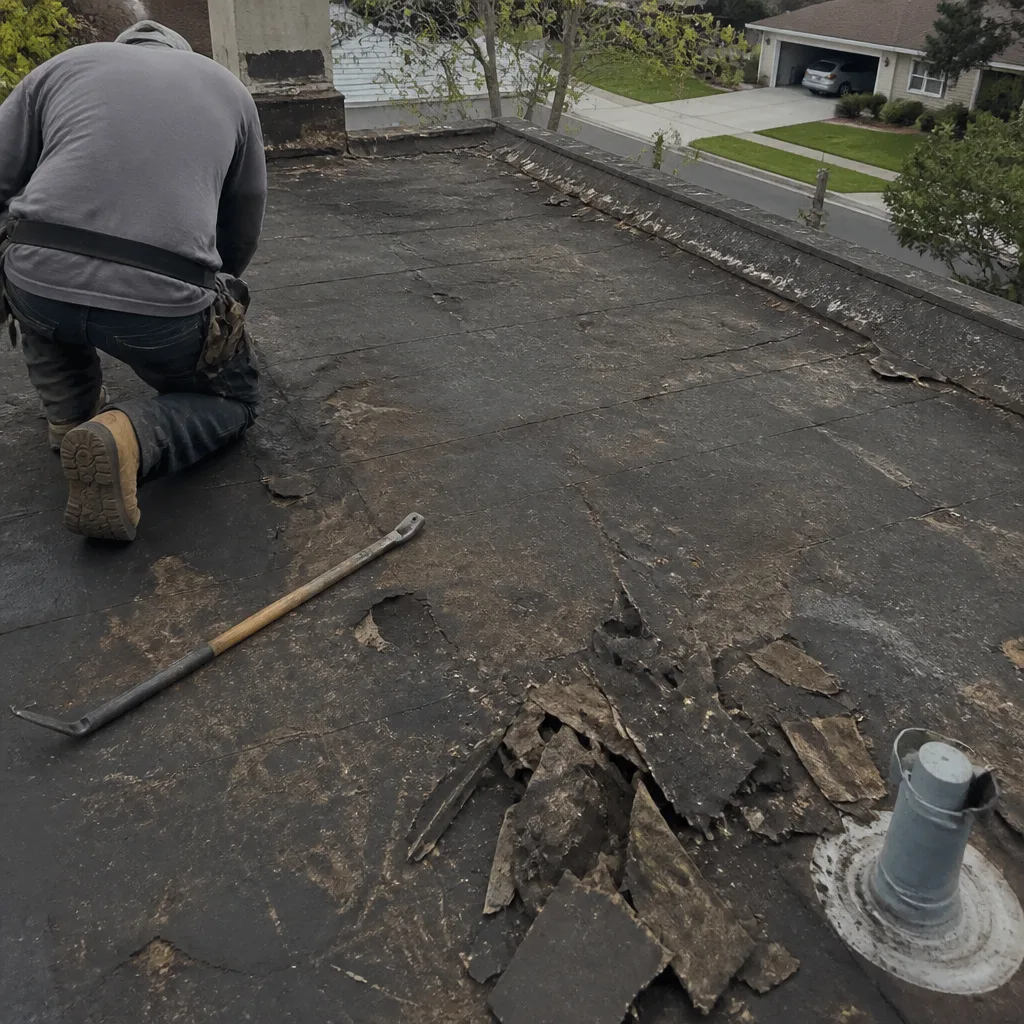 Before
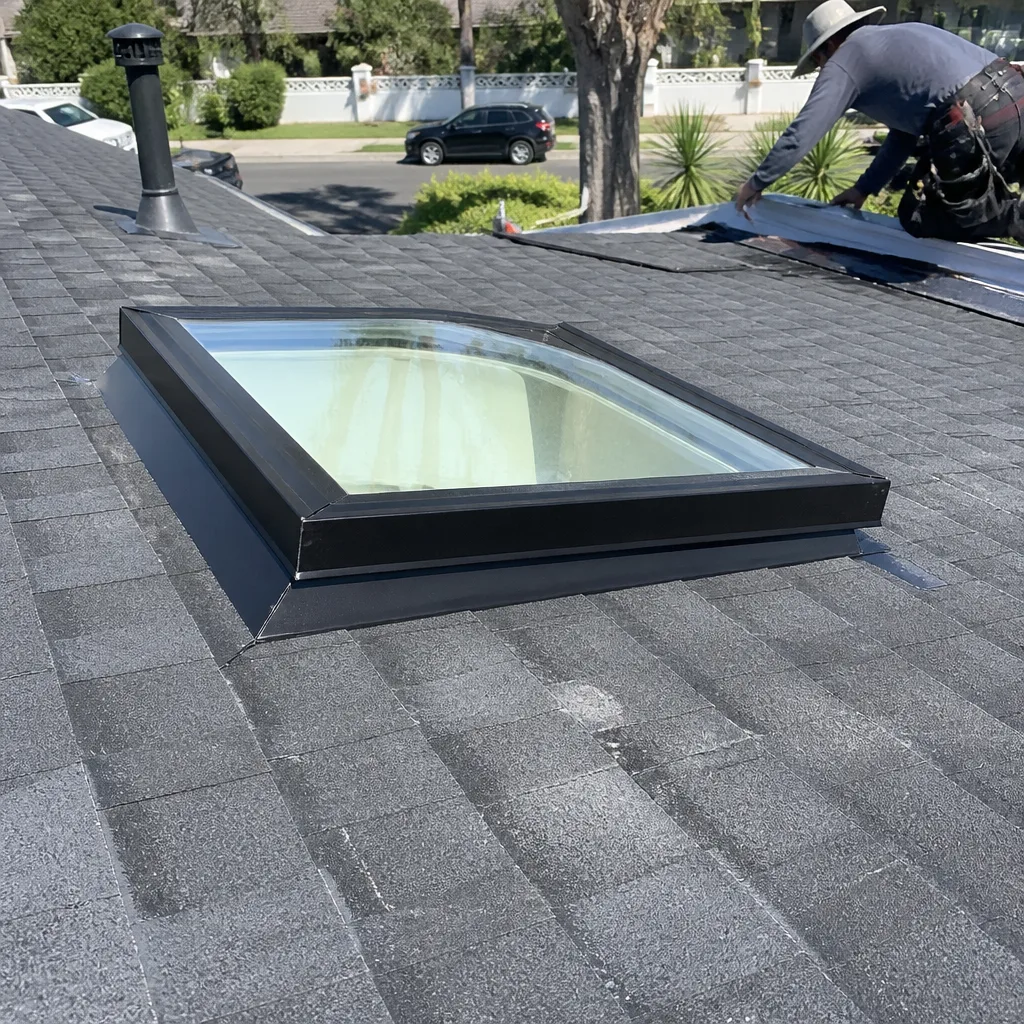 After
AfterAtlas Flashing Replacement: The Los Angeles Owner’s Guide
We stock Atlas-compatible flashing and install it throughout Los Angeles, with most replacements running $350-$750 installed depending on which flashing runs failed and how much tear-out the repair requires. Most jobs are done in a single visit, and the parts are usually on our truck when we arrive. You’ll typically discover the problem the way every homeowner does: a water stain showing up on a ceiling or wall, often weeks after a storm moved through, because flashing fails quietly long before the leak announces itself.
Flashing is the metal that bridges the gap between your roof and anything that pokes through it or runs into it: chimneys, skylights, vent pipes, valleys, walls. When it fails, water gets where it shouldn’t. Atlas shingles are good shingles. But the flashing around them is the same flashing any roof needs, and in Los Angeles, it takes a beating from sun, smog, and the occasional Santa Ana wind event that works it loose.
Which Atlas Models This Applies To
Atlas flashing isn’t a single part number. The right replacement depends on where the leak is, not just which Atlas shingle line you have. Most Los Angeles homes with Atlas roofs run one of three product families: Pinnacle, StormMaster, or GlassMaster. Pinnacle is the most common here, though in hillside and canyon neighborhoods like Eagle Rock, Mount Washington, and Studio City, we see a lot of StormMaster Shake for the look. The flashing we install is compatible across all Atlas lines, because flashing is sized to the penetration and the roof pitch, not the shingle manufacturer.
Here’s the compatibility gotcha that trips people up: Atlas wall flashing and step flashing come in standard widths of 4, 6, 7, and 10 inches, and the wrong width on a sidewall is the number one reason a “repaired” flashing leaks again within a year. If the flashing doesn’t extend far enough up the wall and out onto the shingle course, water wins. We match the width to the roof’s pitch and the wall siding type, and we verify the old flashing’s measurements before we quote.
On the OEM-versus-aftermarket question: Atlas doesn’t require proprietary flashing for warranty coverage. Quality aftermarket flashing, in 26-gauge or thicker galvanized or aluminum, performs as well as what the original installer used, and it’s what we stock. We also stock compatible parts for GAF, Owens Corning, and CertainTeed roofs. What matters more than the brand stamp is the gauge, the width, and the sealant used at every lap joint.
Tilehurst Roofing is an independent service provider. We are not affiliated with Atlas, and we don’t speak for their warranty department. We install flashing that works with your Atlas roof, and we stand behind the work ourselves.
Signs Your Atlas Flashing Replacement Is Failing
- Water staining on ceilings or upper walls after rain. This is the classic late-stage symptom. By the time paint bubbles or stains show, the flashing has been leaking for a while. Los Angeles gets most of its rain in a narrow winter window, so a stain in March often traces back to a leak that opened in January.
- Visible rust, cracks, or separation at the chimney base. Chimney flashing takes the worst of it: expansion and contraction against masonry, direct sun, and wind-driven rain. Rust streaks or lifted metal at the corners mean the seal is compromised, even if you haven’t seen a stain indoors yet.
- Curled, lifted, or missing step flashing along a sidewall. Step flashing is installed in courses, each piece lapping the next. When wind gets under one piece and lifts it, water follows. You can sometimes see this from the ground with binoculars: a small silver or brown tab sticking up where the roof meets a wall.
- Granule buildup in gutters near a valley or transition. Granules wash off shingles all the time, but heavy concentration in one spot often means water is channeling where it shouldn’t, wearing the shingle surface faster near a failing flashing seam.
- Water stains on the roof deck visible from the attic. If you can get into your attic after a rain, look for dark wood or wet insulation around pipes, vents, or the chimney chase. That’s the earliest and most honest signal. Flashing leaks show up first under the roof, not on the ceiling.
Replacement Cost & What’s Included
In Los Angeles, expect to pay between $350 and $750 installed for a typical flashing replacement. A single pipe boot or vent flashing runs toward the low end. A full chimney reflash with new step flashing, counterflashing, and a reglet cut into the masonry lands toward the high end. Jobs involving stucco removal or Spanish tile reset go higher still, and we’ll tell you that before we start, not after.
Here’s the breakdown we give every customer:
- Parts: $40-$180 depending on flashing type, gauge, and linear footage
- Labor: $250-$450, including tear-out of the old flashing and proper resealing
- Disposal and cleanup: included, always
- Written guarantee: included, always
Know the price before the first tile moves. That’s how we run every flashing job. You get a written number in your hands before any work starts, and if the repair fails inside the guarantee period, we come back at no charge under our 365-Day Done Right Promise. That’s not a pitch. It’s the only way Greg Holloway will sign his name to a roof.
DIY or Call Us?
You can check a few things safely: look for visible metal lifting at roof edges and around the chimney, watch for interior stains after rain, and check the attic for dark spots. What you shouldn’t do is get on the roof. Flashing work near chimneys, valleys, and walls means working at height, often on a slope, with your weight on surfaces that may already be soft from water damage. A fall in Los Angeles is a 911 call, not a learning experience.
The other reason to call us: proper flashing installation requires removing shingles around the area and relaying them correctly. If the shingles aren’t seated right, the new flashing fails within months. That’s the repair we get called to fix most often, the one someone else did. Call (945) 303-9821 for a free estimate, and we’ll tell you what’s actually wrong before you spend a dollar.
FAQs
In Los Angeles, expect 15-20 years from properly installed flashing, though chimney flashing in direct coastal sun can degrade closer to the 10-12 year mark. The UV exposure and salt air near the coast age metal faster than the roofing industry’s national averages suggest. We see this constantly in Palos Verdes, Long Beach, and the westside neighborhoods.
Sometimes, if the failure is a single lifted lap or a dried-out sealant joint. More often, by the time water is getting in, the flashing is mechanically compromised and patching it is throwing good money after bad. We’ll tell you honestly which situation you have. Call (945) 303-9821 and we’ll assess it for free.
Most single-penetration flashing replacements take 2-3 hours. A full chimney reflash can run 4-6 hours depending on the masonry condition and how much counterflashing needs to be cut and set. We’ll give you the time window when we give you the price, and the crew shows up in that window.
Yes. We carry 26-gauge galvanized and aluminum flashing in 4, 6, 7, and 10-inch widths, plus pipe boots, vent collars, and compatible repair materials for Atlas, GAF, Owens Corning, and CertainTeed roofs. If a job needs something unusual, we source it the same day from our Los Angeles suppliers.
Written by Greg Holloway, Owner, Tilehurst Roofing at Tilehurst Roofing, serving Los Angeles and nearby areas.