
Free roof inspection with deck photos before we talk money - GAF and Owens Corning certified installation
 Before
 After
After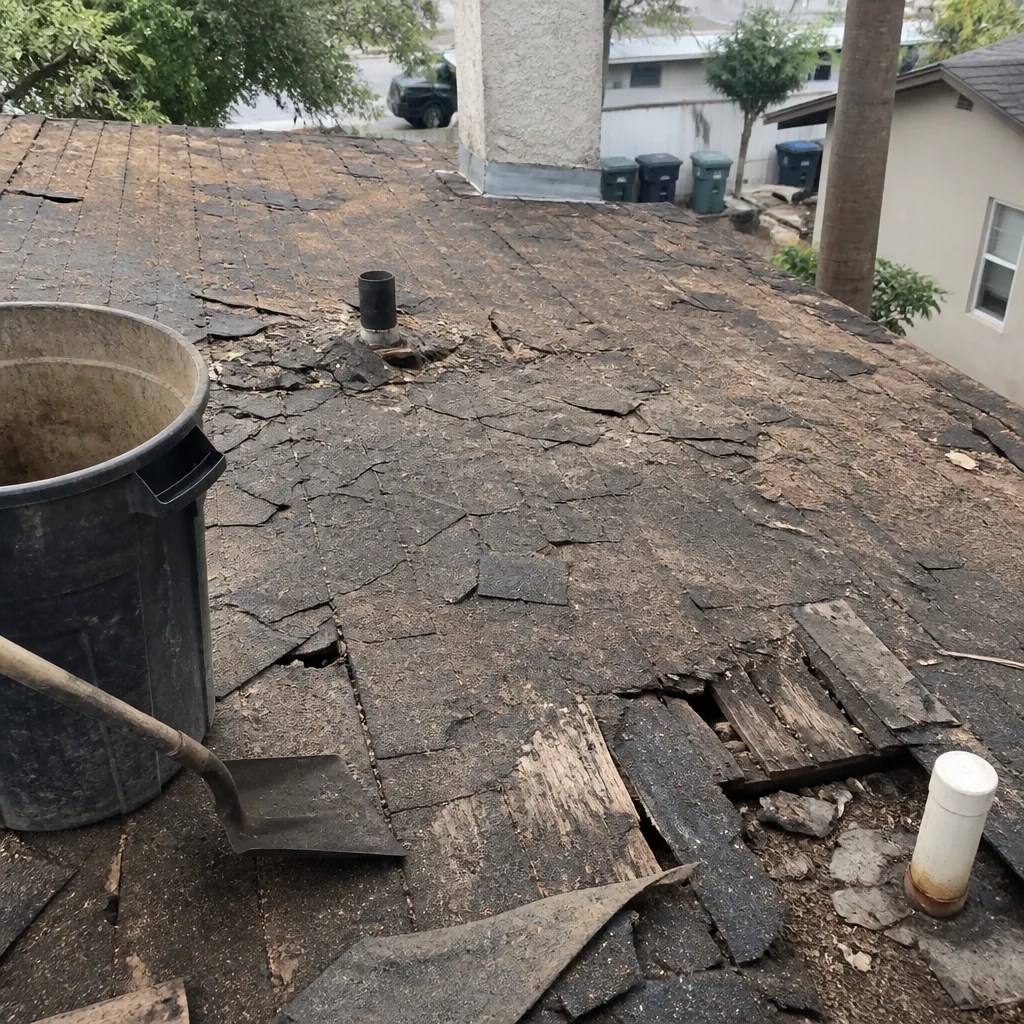 Before
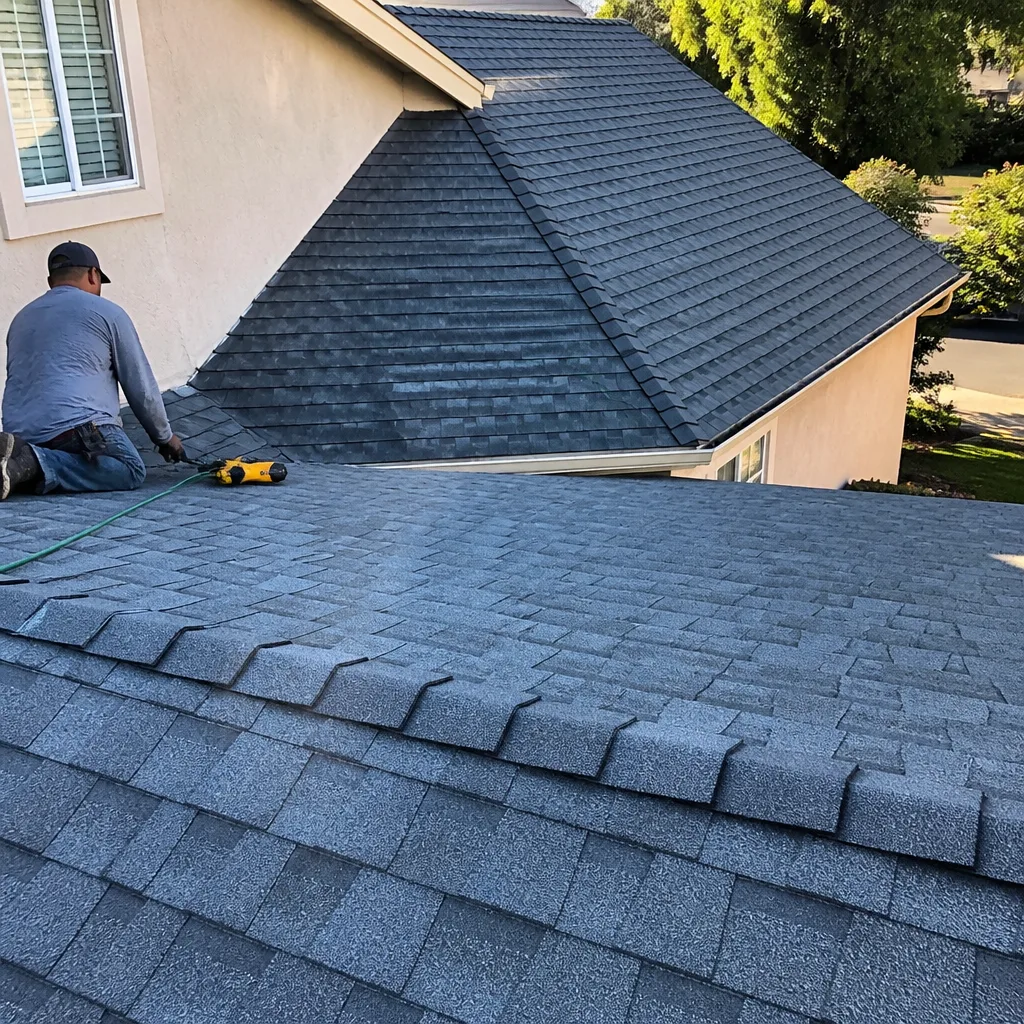 After
After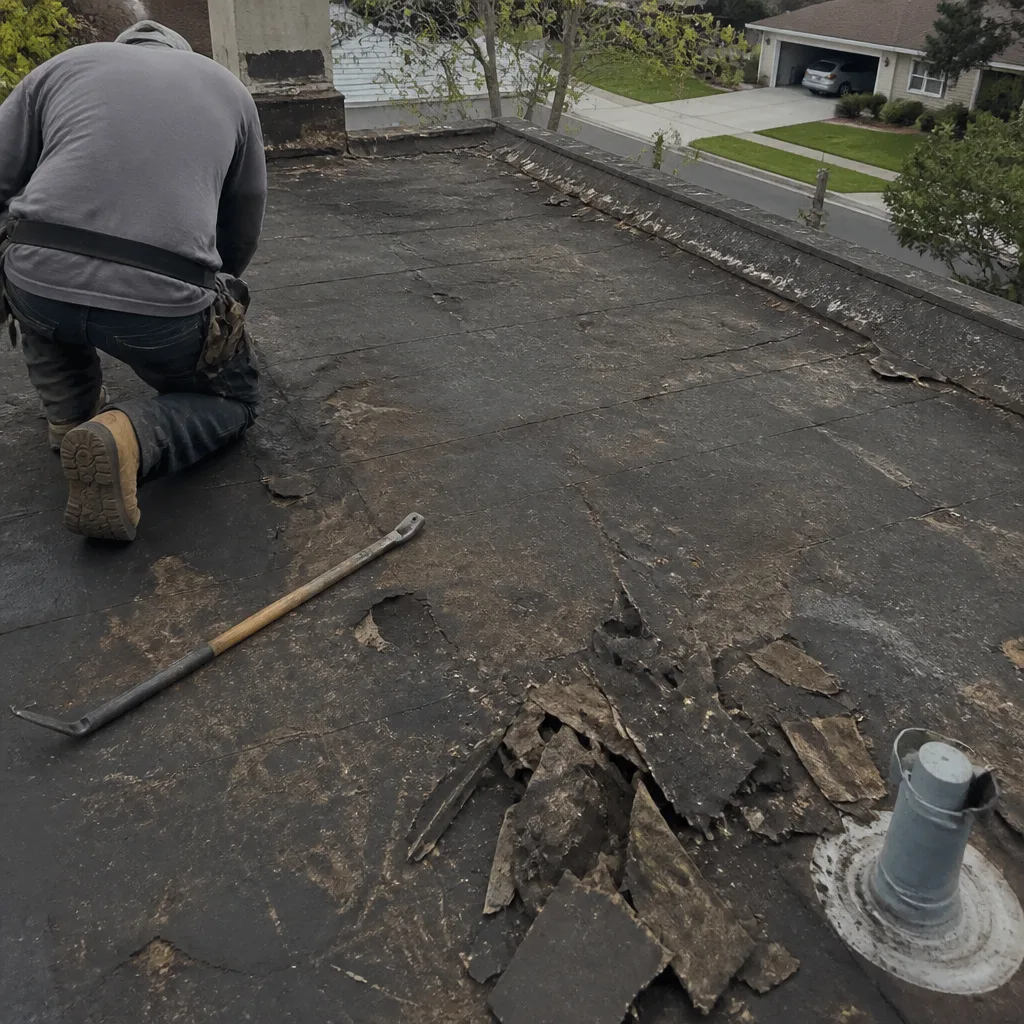 Before
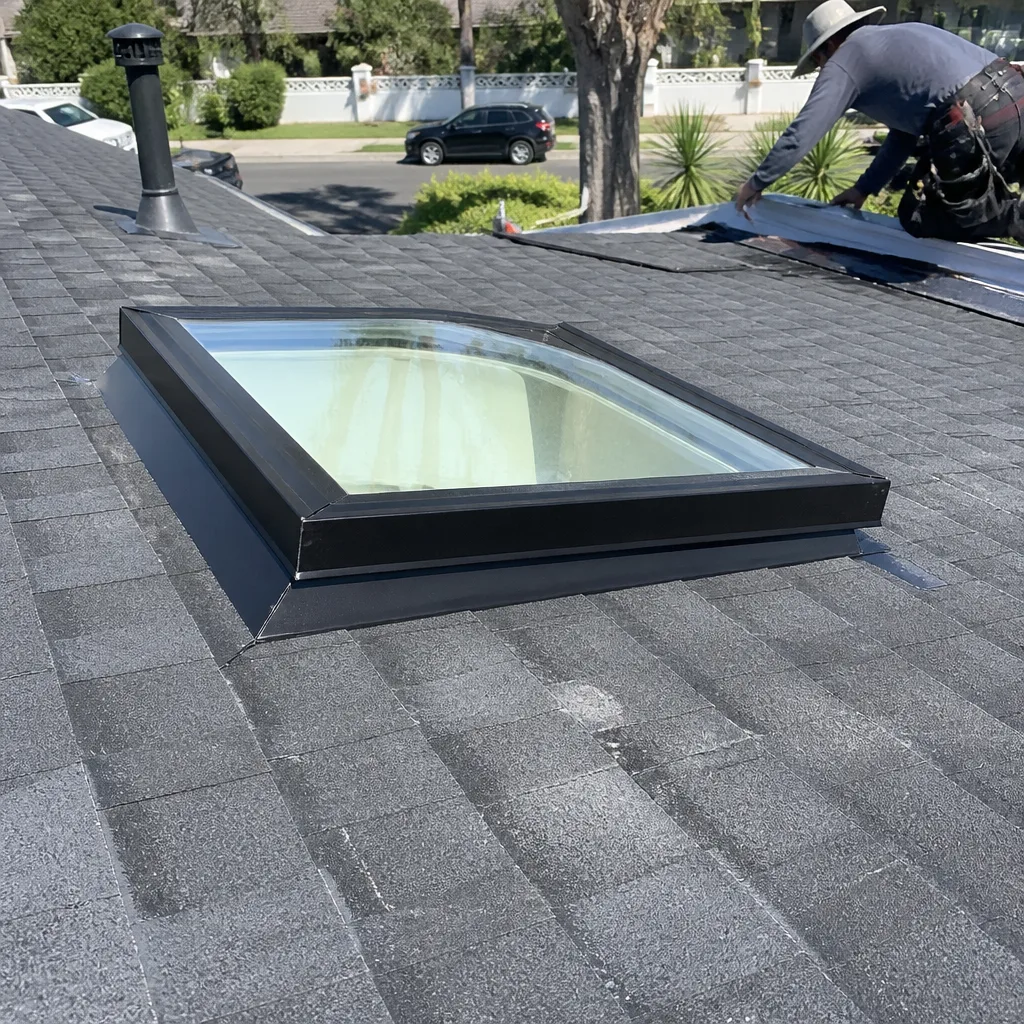 After
AfterGAF Flashing Replacement: The Los Angeles Owner’s Guide
GAF flashing replacement in Los Angeles typically runs $14 to $22 per linear foot installed, so a standard chimney or skylight re-flash job lands between $450 and $900. We stock GAF-compatible flashing on our trucks and complete most residential swaps the same day we diagnose it. Most homeowners find out the flashing has failed the hard way: a water stain on the ceiling near the chimney, damp drywall around a skylight, or that musty smell in the attic after the first real rain of the season.
Flashing is the metal or synthetic material that seals the joints where your roof meets something vertical: a chimney, a wall, a skylight, a vent pipe. GAF builds their flashing from aluminum, galvanized steel, or their proprietary Dura Grip material depending on the application. When it fails, water gets in quietly, often for months, before you see any sign inside the house.
Key Takeaways:
- Typical installed cost in Los Angeles: $14-$22 per linear foot, $450-$900 for most jobs
- Most swaps are done the same day, which matters before the next storm
- You get a written price and a written guarantee before any work starts
- We’re an independent roofing company, not affiliated with GAF, but we install GAF-compatible flashing daily
Which GAF Models This Applies To
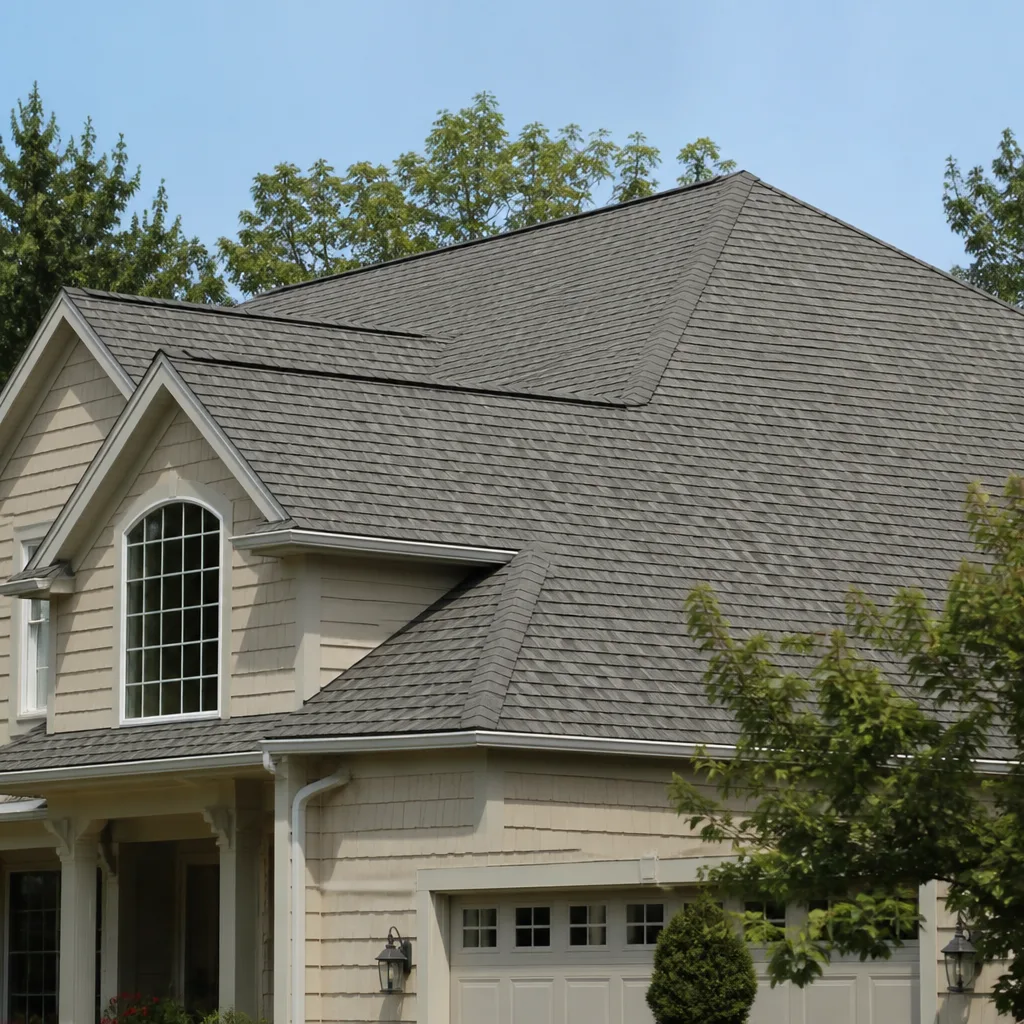
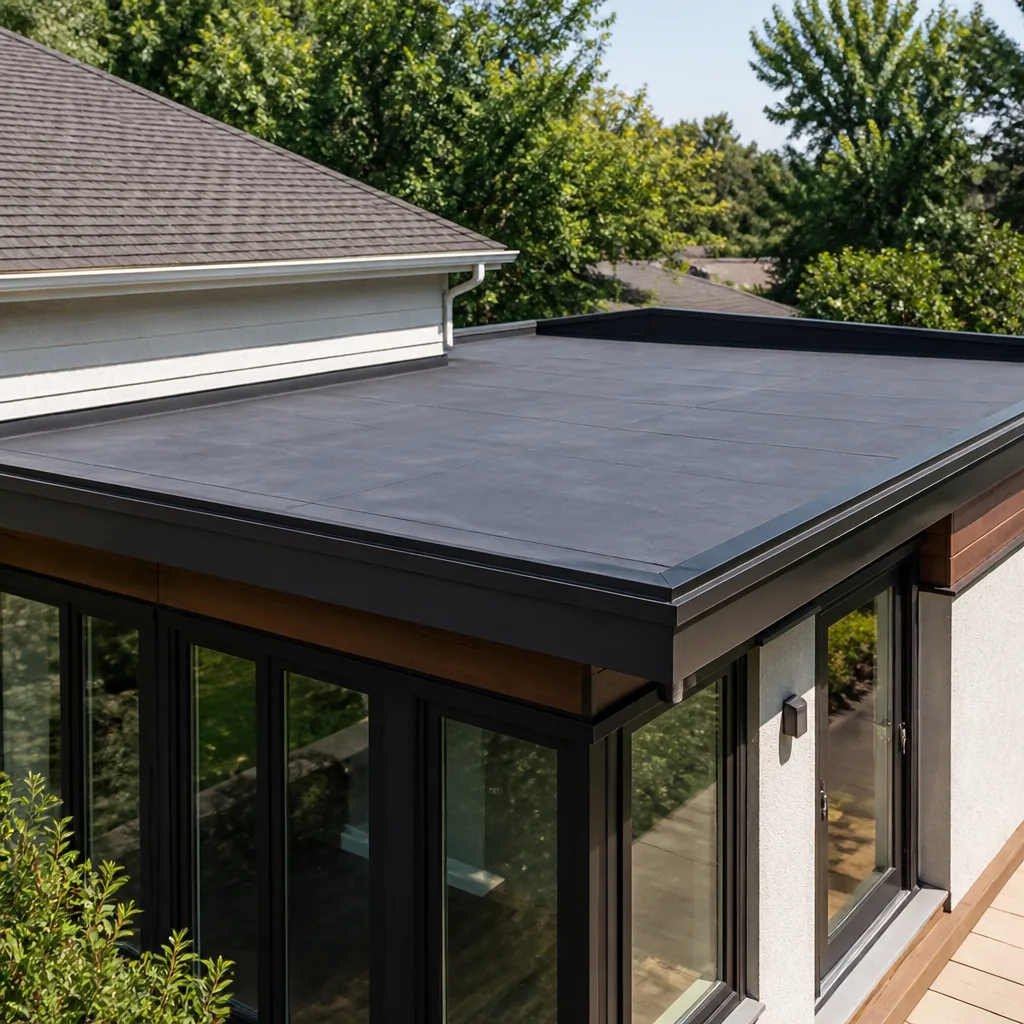
GAF flashing falls into a few broad families, and getting the right one depends on both the roofing system you have and the penetration it’s sealing. If you have GAF Timberline shingles (the most common GAF product on Los Angeles roofs), your flashing is likely the standard 4-inch step flashing at sidewalls and a pre-formed chimney base flashing. For GAF TPO or EverGuard flat/low-slope systems, common on the older flat-roof sections across Mid-City, West Adams, and parts of the Valley, the flashing is typically heat-welded TPO membrane with metal termination bar. GAF Slateline or Camelot systems use the same step flashing dimensions as Timberline but often pair with wider counter-flashing at stucco transitions.
The compatibility gotcha we see most often: GAF’s exact-match branded flashing is not always on the shelf at local supply houses, and generic box-store flashing kits sold as “universal” rarely meet the same gauge or bend radius as GAF’s spec. A 26-gauge steel step flashing bent at the wrong angle against a stucco wall will fail inside three years. We stock OEM GAF flashing where it matters (chimney bases, pipe collars) and use matching-gauge aftermarket step flashing for straight runs where the spec is identical and the cost drops about 20 percent. The decision is made at the ridge, in front of you, with the numbers explained.
Signs Your GAF Flashing Replacement Is Failing
- Water stains on the ceiling near a chimney or skylight. This is the classic first symptom. The stain usually appears 12 to 24 inches from the penetration itself because water travels along the roof deck before it finds a path down through the drywall.
- Peeling or separated flashing at the base of a wall. Step flashing can pull away from stucco or siding over time as the house settles. If you can see a gap between the flashing and the wall plane, water has already found it.
- Rust or corrosion on exposed metal flashing. Los Angeles isn’t the wettest climate, but we get six months of dry heat followed by hard seasonal rain. That expansion-contraction cycle, plus coastal salt air within five miles of Santa Monica or Long Beach, ages galvanized flashing faster than the national average.
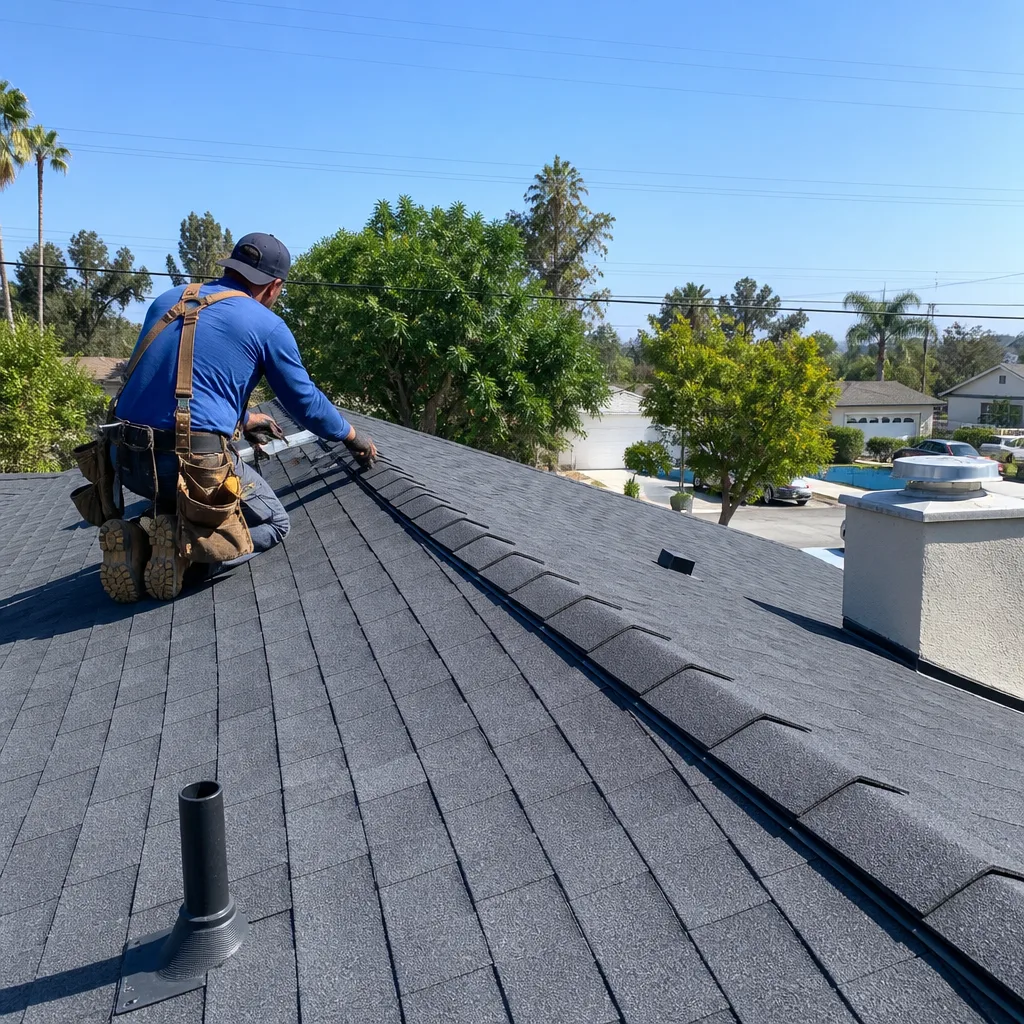
- Cracked or dried pipe collars. The rubber boot around vent pipes, even on GAF systems, breaks down under Southern California UV within 8 to 10 years. Once the rubber cracks, those pipes are catching rain every time it falls.
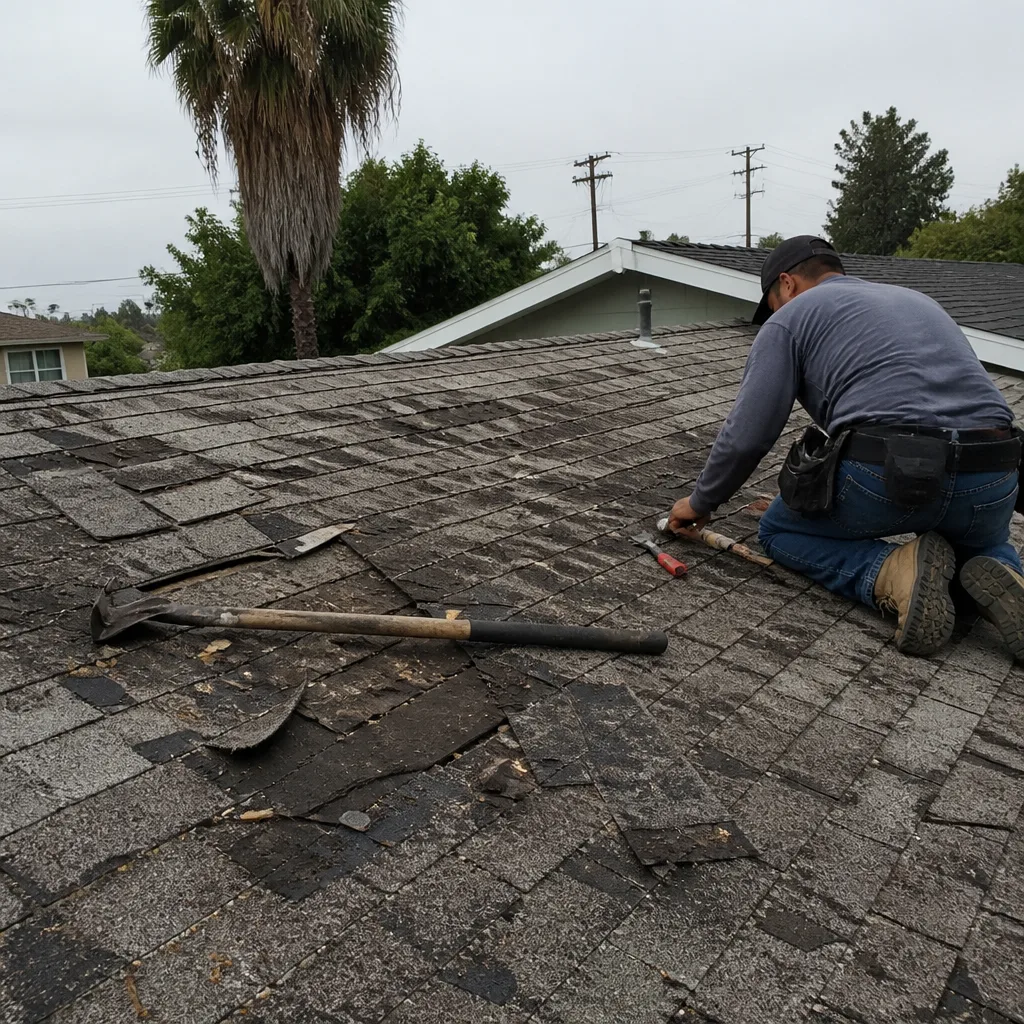
- Granule loss or lifted shingles directly around flashing. If the shingles around a chimney or wall have lifted, curled, or lost their granule coat, the flashing underneath is nearly always the problem. The flashing has failed and the shingles are telling you.
Replacement Cost & What’s Included
Here are real Los Angeles numbers, not national averages. Straight step flashing replacement on a sidewall runs $14 to $18 per linear foot installed. A full chimney re-flash, including new base flashing, counter-flashing, and the necessary masonry sealant, lands between $650 and $900. Skylight flashing replacement runs $500 to $750 depending on curb condition. Vent pipe collars are the cheap one: $65 to $125 each, installed.
What drives the range is access. A two-story chimney in Silver Lake with a 8/12 pitch costs more than a single-story vent stack on a gently sloped Canoga Park roof. Every estimate includes the flashing itself, the sealants and fasteners, disposal of the old material, and cleanup. You’ll get a written line-item price before any work starts, and the work carries a written guarantee. If the repair fails inside the guarantee period, we’re back at no charge. That’s the 365-Day Done Right Promise, part of the Kingswell Way of roofing: say the price before the work, show up in the window we gave you, leave the place cleaner than we found it.
DIY or Call Us?
An owner can safely do one thing: identify which flashing looks wrong. Walk the roof perimeter with binoculars or get up on a solid ladder and look for lifted flashing, rust, cracked collars, or sealant that has pulled away. Taking photos is useful. We’ll look at them on the estimate call.
The DIY line stops when you need to remove shingles to reach the flashing underneath. This is not a silicone-and-hope situation. Improper step flashing installation is the single most common cause of the repeat leaks we fix, usually a year or two after someone patched the last one. Working on a roof also involves heights that don’t forgive mistakes. If you’ve already got a failed flashing job, the fix costs more than the first repair would have, because now you’re paying to undo the last guy’s work too. Know the price before the first tile moves. Call (945) 303-9821 and we’ll come look, write a number down, and you decide.
FAQs
Galvanized steel flashing lasts roughly 15 to 20 years in Los Angeles weather. Aluminum lasts longer, often 25 to 30 years, but it costs more. UV exposure, salt air within a few miles of the coast, and the seasonal expansion cycle between our dry summers and wet winters all work against flashing longevity. If your flashing is over 15 years old and you’re seeing interior stains, replacement is cheaper than waiting.
Sometimes, but less often than people hope. A small separation at a single step flashing joint can be resealed and re-secured, which runs about a third of the cost of replacement. But if the metal itself is rusted, bent, or pulled away from the wall plane, patching it just moves the leak to a different seam. We’ll tell you straight which situation you have. Call (945) 303-9821 and we’ll assess it for free.
Most GAF flashing swaps take 2 to 4 hours. A vent pipe collar takes 30 minutes. A full chimney re-flash with new counter-flashing runs half a day. Weather permitting, we schedule and complete the work the same week you call.
Yes. We carry GAF OEM chimney bases, pipe collars, and matching-gauge step flashing, plus GAF-compatible materials from Owens Corning and CertainTeed for repairs on those systems. If your roof has an older or discontinued GAF flashing profile, we’ll source it and have the part in hand before we schedule the work.
Written by Greg Holloway, Owner, Tilehurst Roofing at Tilehurst Roofing, serving Los Angeles and nearby areas.