

Free roof inspection with deck photos before we talk money - GAF and Owens Corning certified installation




 Before
 After
After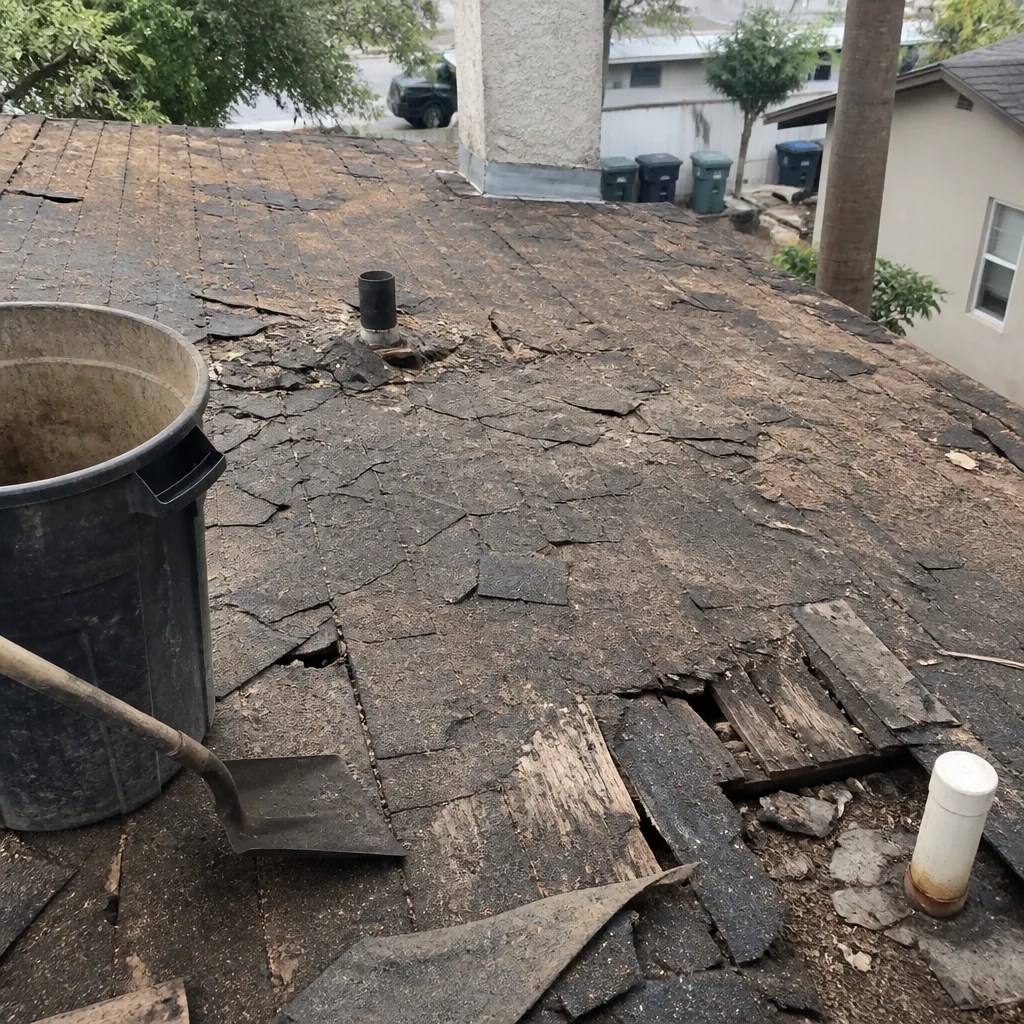 Before
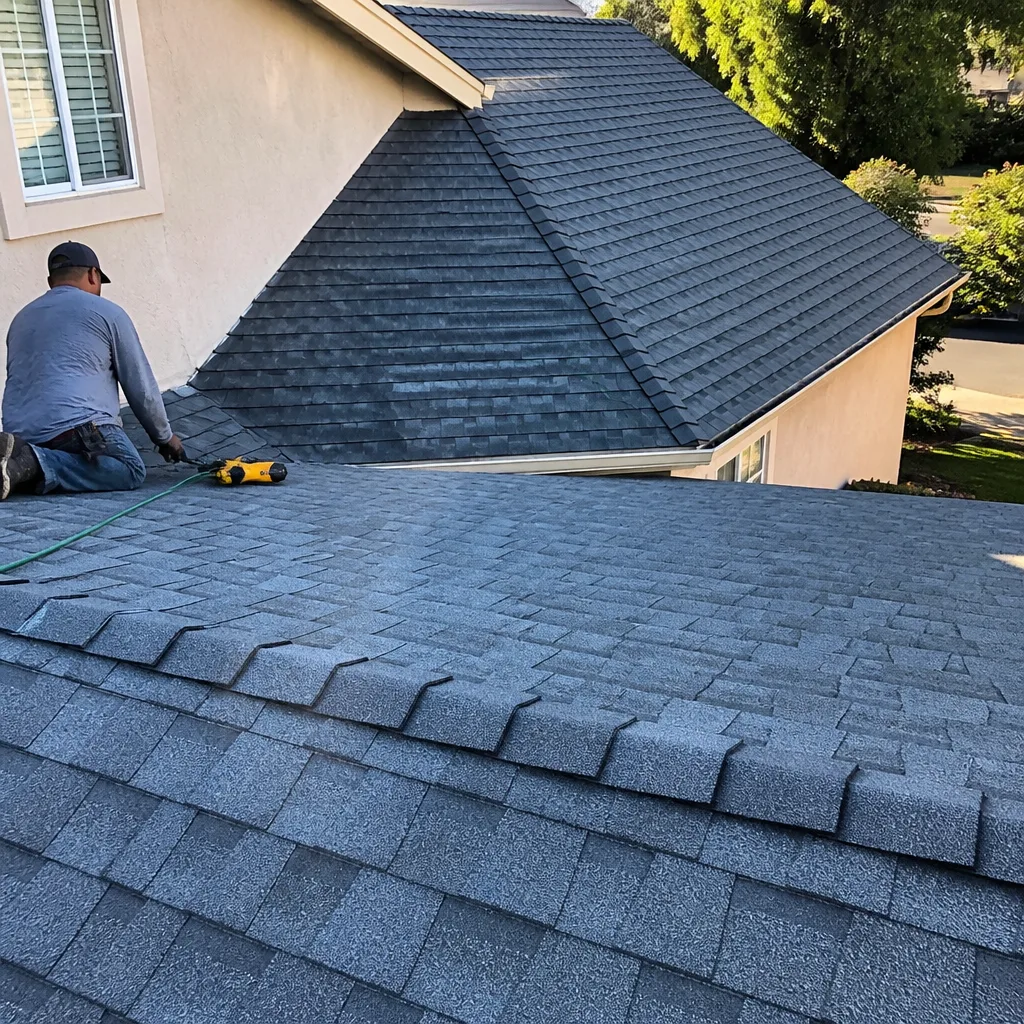 After
After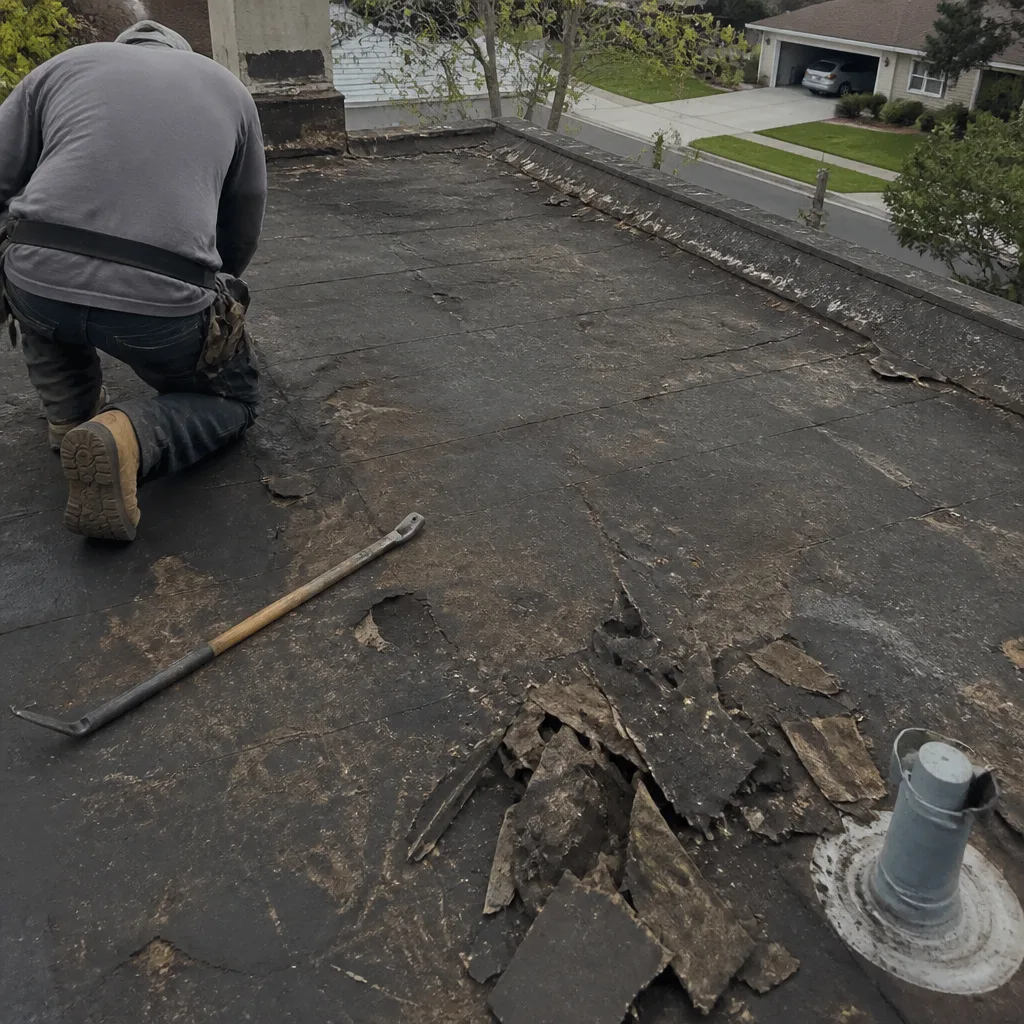 Before
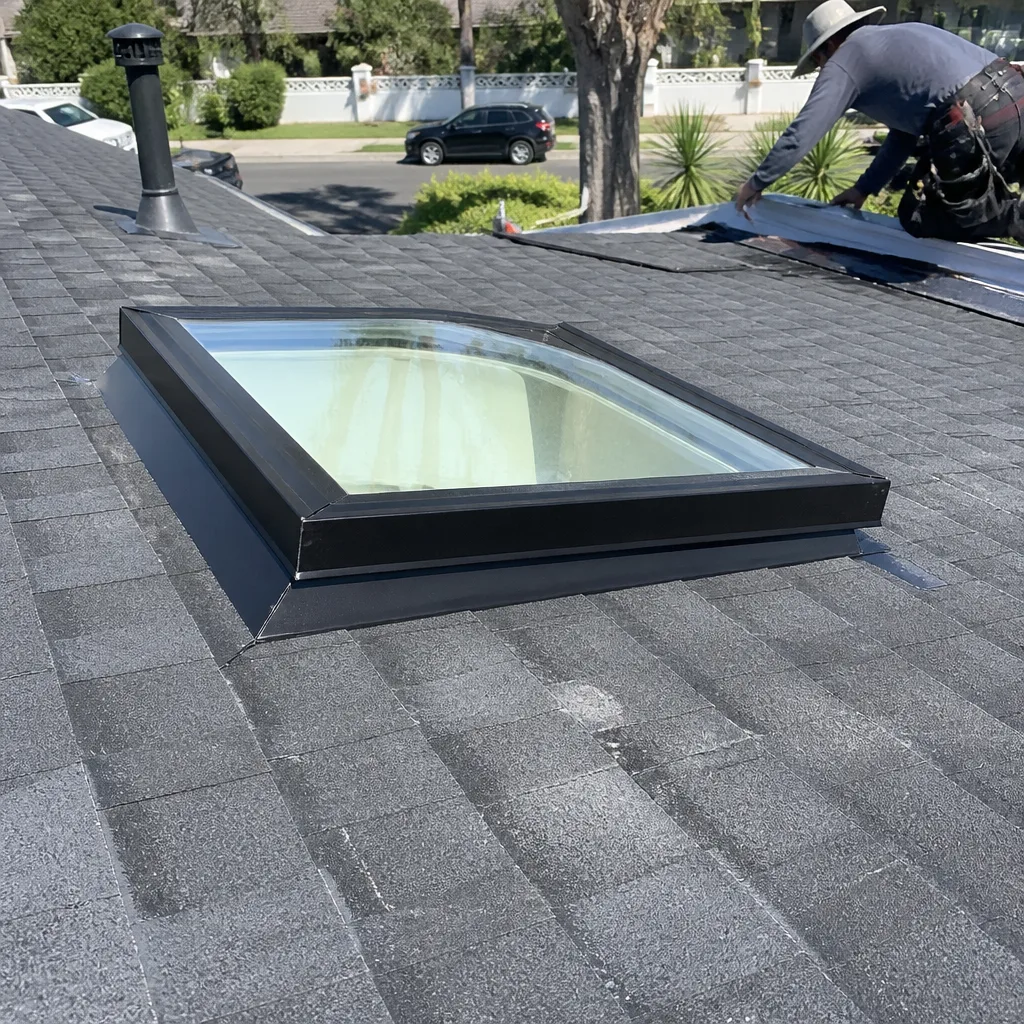 After
AfterHail Dents on the Roof and Gutters
Hail dents on your roof and gutters almost always mean the protective granule layer on your shingles has been knocked loose or stripped away, leaving the asphalt underneath exposed to sun, rain, and the next storm. It looks like a cosmetic problem from the ground. It isn’t. Once that granule layer is compromised, the shingles age faster and water finds its way in sooner than you’d expect.
The gutters are the easy part to spot – the soft aluminum dimples with the first hailstone large enough to do damage. The roof is trickier. Granule loss from hail impact looks like dark, bare patches on the shingle surface, and you’ll often find a surge of loose granules collecting in your downspout or at the base of your downspout outlet after a storm. That granule migration is your roof telling you something happened up there.
Why It Happens
Granule Loss on Asphalt Shingles
Asphalt shingles are coated in ceramic granules that block UV radiation and give the shingle its fire resistance. A hailstone – even a marble-sized one traveling at speed – hits that surface like a hammer tap and knocks granules loose at the point of impact. What you’re left with is a small, dark, slightly sunken circle on the shingle face. If you can safely see your roof from a ladder at the eave, look for a pattern of these circles spread unevenly across the field of shingles. A random scatter pattern is hail. Granule loss concentrated at the ridge or valleys more likely points to age or foot traffic.
Dented or Cracked Shingle Edges
Larger hailstones – think golf ball size or above – can crack a shingle outright or split the mat underneath without visibly breaking the surface. The shingle looks intact from the ground but the internal fiberglass mat is fractured, which means it no longer holds its shape against wind uplift. You can sometimes spot this as a slight curl or fishhook at the shingle edge a few weeks after the storm, once the mat lets go. If you notice shingles starting to curl at the corners on a roof that was lying flat before the storm, that’s worth a professional look.
Dented Gutters and Flashing
Aluminum gutters and soft metal flashing around chimneys, vents, and skylights dent visibly in hail because they’re designed to be lightweight, not impact-resistant. The dents themselves rarely cause leaks – but bent flashing is a different matter. If hail moved the flashing at your chimney or a roof penetration even a few millimeters, the seal underneath may be broken. Check the inside of your gutters after the storm; if the gutter liner has cracked at a dent point, water will run behind the fascia instead of through the downspout.
Seal Strip Failure Between Shingles
Every asphalt shingle has a factory-applied adhesive strip along its lower edge that bonds it to the shingle below, keeping wind from lifting the tabs. Hard hail impacts can break that bond. The shingle stays in place and looks fine, but it’s no longer sealed. You won’t see this from the ground. What you might notice is a single shingle tab flapping in the next moderate wind, or a shingle that’s slightly raised compared to its neighbors on a calm day. Both are worth flagging for a technician to check.
What to Do Right Now
- Document everything before the weather changes. Walk around your home and photograph the gutters at eye level – capture every dent you can see. If you can photograph the roof surface from the ground or from an upper-story window without climbing, do it. Timestamps on photos matter if an insurance claim follows.
- Check your downspout outlets. Place a white paper plate or a piece of cardboard under the downspout outlet and run a garden hose into the top of the gutter for 30 seconds. A heavy deposit of dark granules washing out is a reliable sign of shingle damage above.
- Inspect your attic ceiling. Go inside as soon as it’s safe and look for new water stains, wet insulation, or daylight visible through the decking. Any of those means water is already getting through and the repair is more urgent.
- Do not go on the roof yourself. This is a genuine safety point, not a formality. Hail-damaged shingles can be slick, cracked shingles compress unexpectedly underfoot, and a fall from a single-story roof is a serious injury. Leave the surface inspection to someone with the right equipment and training.
- Note the date of the storm and save any weather alerts. Most homeowners’ insurance policies require hail damage to be reported within a specific window. A saved weather service alert tied to your address helps establish the event date without any dispute.
How We Fix It
When your local Tilehurst Roofing team arrives, the technician starts on the ground – gutters, flashing, and fascia first – then goes up top with a systematic inspection of the field shingles, ridge cap, and all penetrations. Greg Holloway puts it plainly: a good hail inspection takes longer than most people expect, because the real damage is usually in the detail work that’s easy to miss on a fast walk-around.
Depending on what the inspection finds, the repair path is either a targeted Roof Repair – replacing compromised shingles, resealing lifted tabs, and resetting any moved flashing – or, if the damage is widespread enough across the field, a full Roof Replacement using materials from our seven manufacturer options: GAF, CertainTeed, Owens Corning, IKO, Atlas, Tamko, and Boral.
Before any work starts, you get a written price. Not an estimate that grows at the door – a written number that is the number. The job is covered by our 365-Day Done Right Promise: if anything fails inside that year, we come back and correct it at no charge. Most hail repairs are completed in a single day once materials are confirmed.
Frequently Asked Questions
It depends on what the inspection finds, but granule loss should not sit through more rain than necessary. Once the protective layer is gone, the asphalt beneath absorbs UV and moisture every single day, and what would have been a shingle replacement can become a decking repair if water gets into the wood underneath. If your attic already shows any moisture, treat it as urgent. Call (945) 303-9821 to get a technician out before the next rain cycle.
Yes – and this is one of the more common misreads after a hail storm. Gutters dent visibly because aluminum is soft; shingles absorb the same impact without showing obvious surface damage until the granule loss is severe or the weather does more work. A ground-level view of shingles simply cannot reveal cracked mats or broken seal strips. If your gutters show hail contact, your shingles were hit by the same storm and deserve a proper look.
Not with us. A written price goes in your hands before the crew touches anything – that’s how every Tilehurst Roofing job works, without exception. If the technician finds something during the repair that changes the scope, they stop and talk to you before proceeding. You decide whether to continue at a revised written price, or stop where you are. There are no surprise invoices at the end of a job.
Call (945) 303-9821 right now – a live person answers every call, any hour of the day or week, and they’ll connect you with your local Tilehurst Roofing team to find the earliest available time. We don’t do voicemail queues or “we’ll call you back Monday.” The sooner we can get eyes on the damage, the clearer the picture before your next weather event rolls through.
Get It Fixed
Call (945) 303-9821 or book online – a live person answers every call, day or night. Your local Tilehurst Roofing team will inspect the damage, hand you a written price before anything starts, and back every repair with our 365-Day Done Right Promise. Roofs done once, and done right.
Written by Greg Holloway, Owner at Tilehurst Roofing, serving communities nationwide as part of the Kingswell family of roofing companies since 2000.
What Our Customers Say
"Full replacement after the last hail storm. They wrote up everything, worked with my insurance, and the crew cleaned the yard so well I couldn't find a single nail. Done in two days like they said."
- Lauren Petrakis"Had a leak over the kitchen every time it rained hard. Two other roofers wanted to replace the whole roof. Tilehurst found the bad flashing, fixed it, and it's been dry through three storms since. Honest people."
- Gary Whitfield"The estimator climbed up, took photos, and showed me the actual problem areas instead of just talking. No pressure to replace anything that didn't need it. Repair's held up great."
- Tom Easley