

Free roof inspection with deck photos before we talk money - GAF and Owens Corning certified installation



 Before
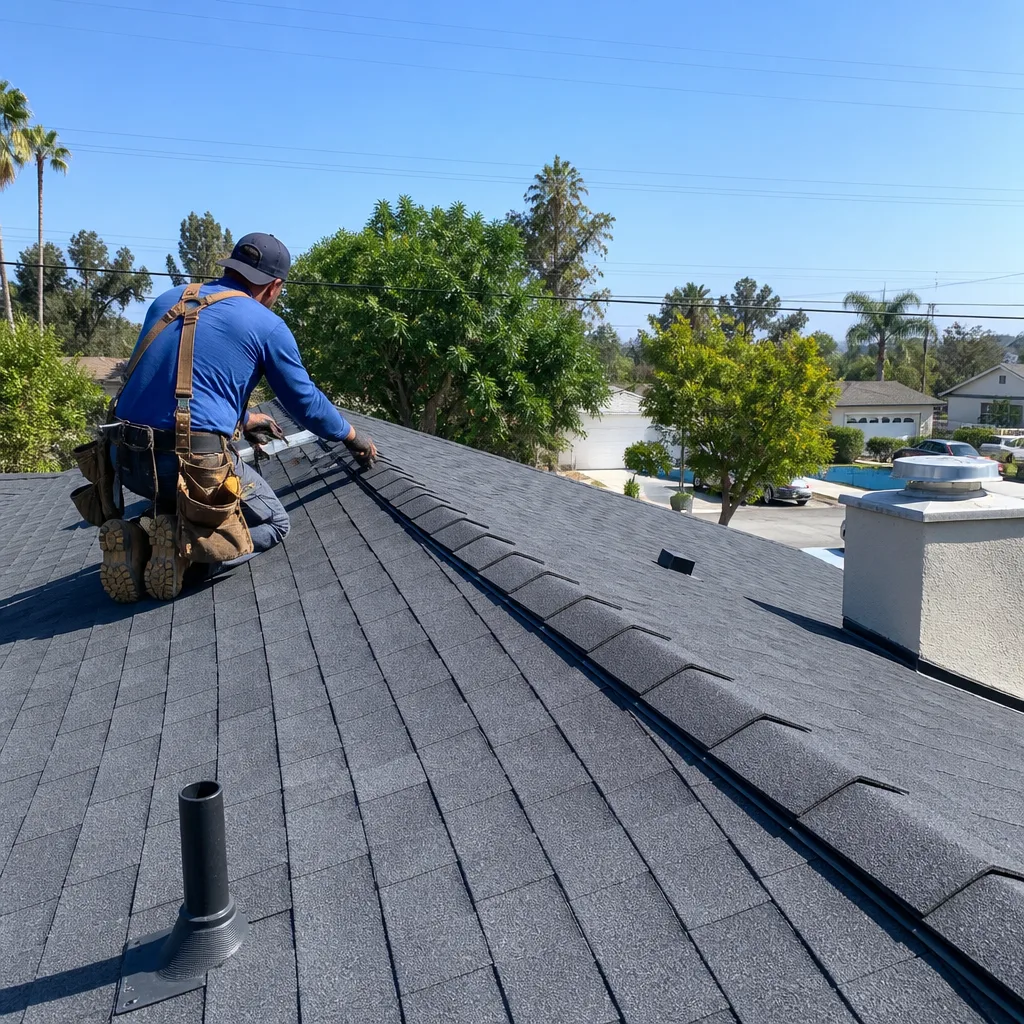 After
After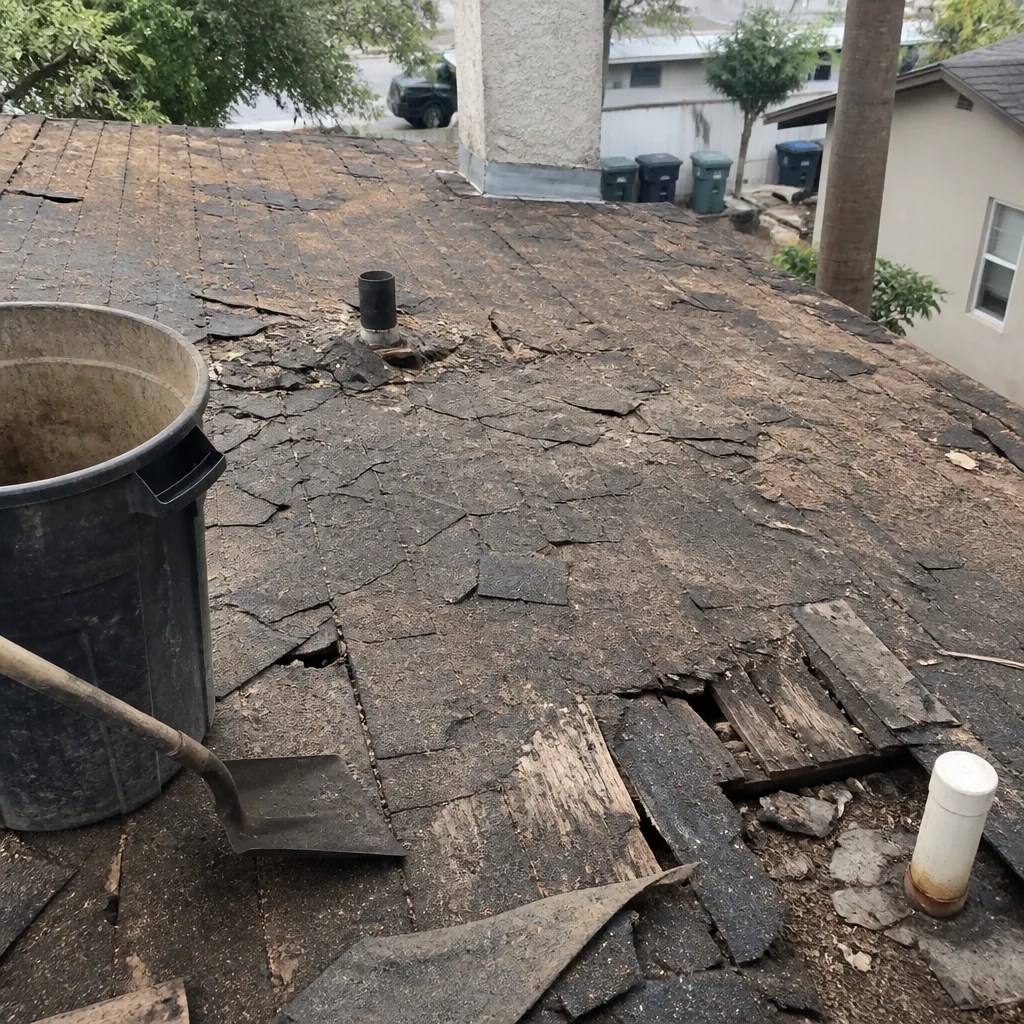 Before
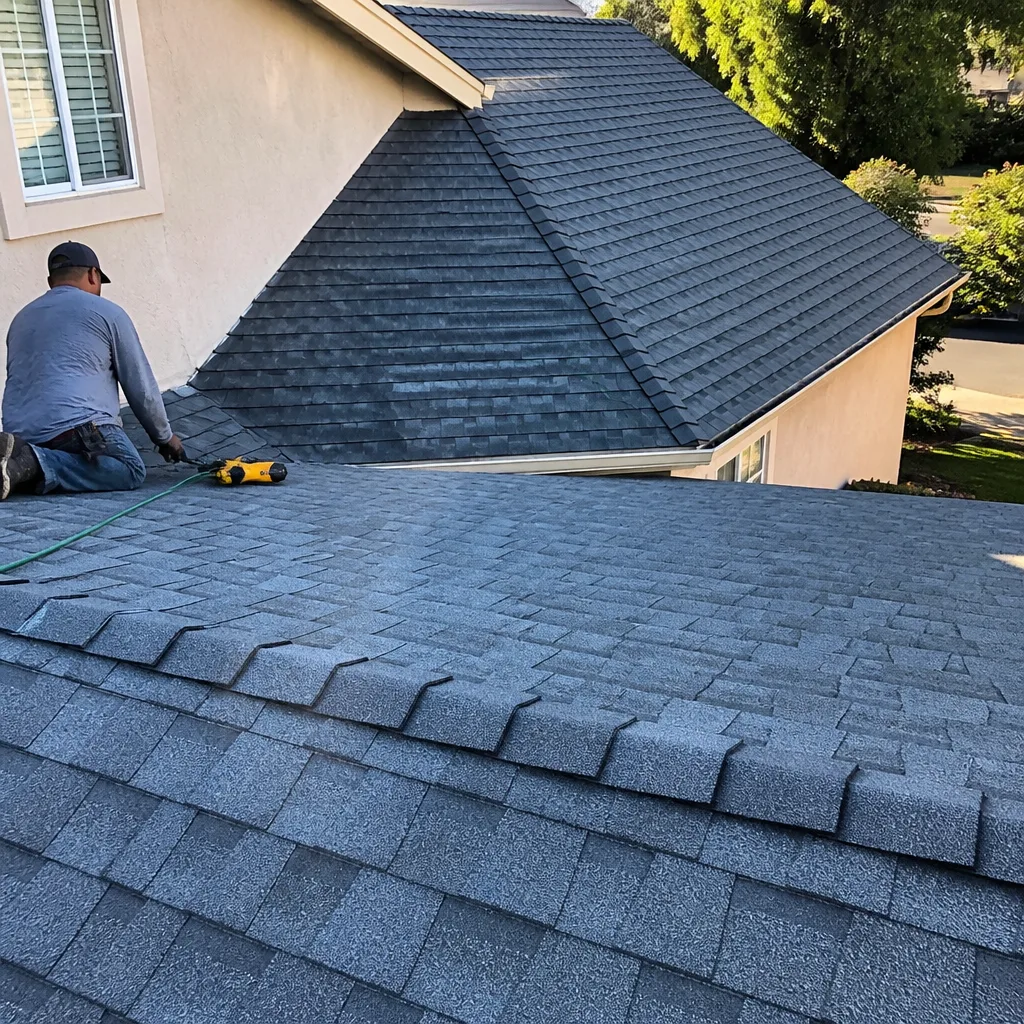 After
After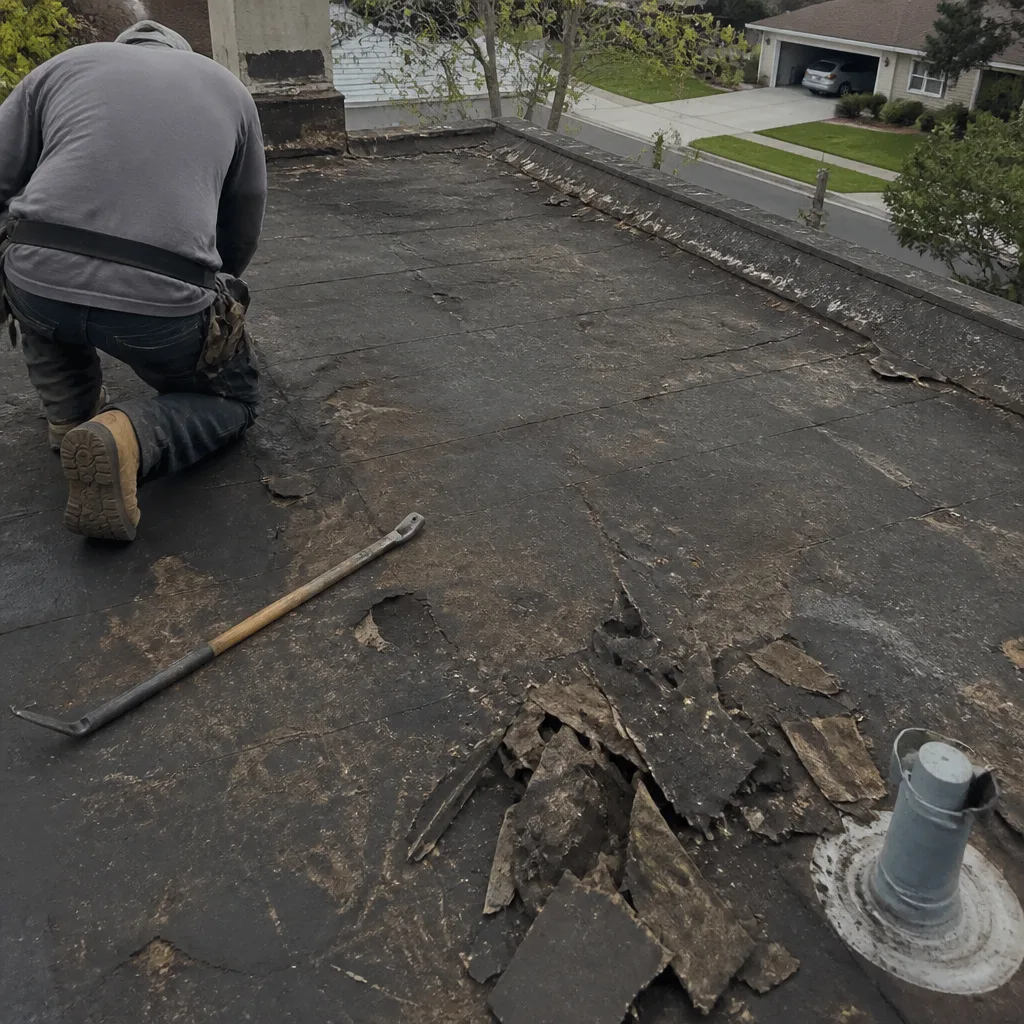 Before
 After
AfterRoof Leak After Heavy Rain
A roof that leaks during or right after heavy rain almost always has a specific failure point, not a general roofing problem. The most common culprits are damaged or missing flashing, cracked or dried-out sealant around a penetration, or a section of shingles that has lost enough granules to let water through. In most cases, a trained technician can locate the source in a single inspection visit.
Rain-triggered leaks are deceptive. The water you see on the ceiling or wall may have traveled several feet from the actual entry point before it found somewhere to drip. That stain on the bedroom ceiling might trace back to a failed pipe boot flashing on the other side of the ridge. Chasing the stain instead of the source is how temporary patches stay temporary. A proper inspection starts at the roof surface, works through the attic, and traces the moisture path back to where it entered.
Why It Happens
1. Failed or Separated Flashing
Flashing is the thin metal strip that seals the joints between your roof surface and anything that interrupts it: chimneys, skylights, dormers, valleys, and walls. When flashing pulls away from the substrate, even a small gap becomes a direct water channel during a driving rain. From the ground, look for metal strips around your chimney or skyline that appear to be lifting, buckling, or dark with rust staining. If you see daylight between the flashing and the masonry, that gap is almost certainly your entry point.
2. Cracked or Dried Pipe Boot Sealant
Every plumbing vent, gas flue, and exhaust pipe that exits through your roof is sealed at its base by a pipe boot, a rubber or metal collar that sits against the shingles. The rubber portion degrades with UV exposure and temperature cycling, eventually cracking and letting water funnel straight down the pipe into your attic. If your leak shows up directly below where a plumbing stack or vent is located, a failed pipe boot is the likely cause. You may even be able to see a cracked rubber ring if you look up from the attic with a flashlight.
3. Shingle Damage or Missing Shingles
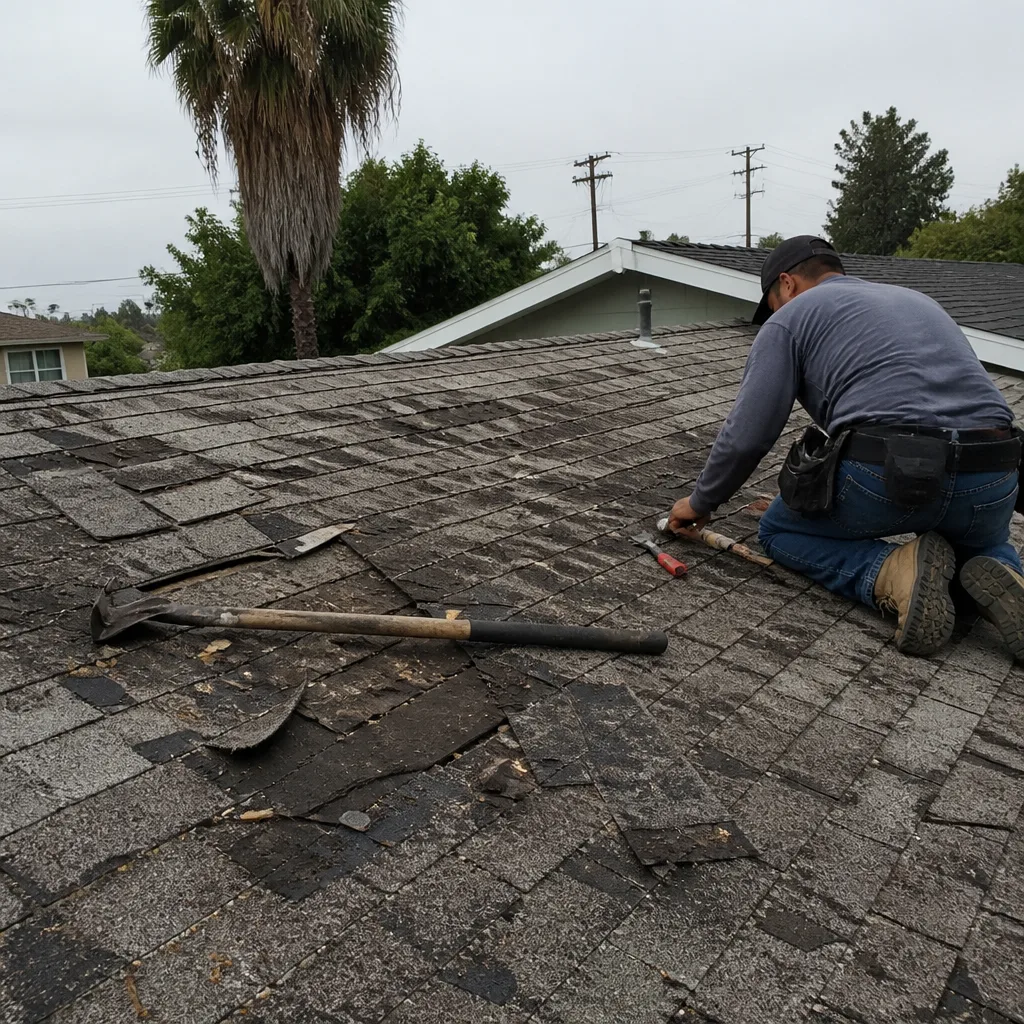
Shingles protect the roof deck through a combination of overlapping layers and embedded granules that shed water. When shingles crack, curl, or blow off entirely, the underlayment beneath them is exposed. That underlayment is a secondary barrier, not a permanent one, and it will allow water through during a sustained heavy rain. From the ground with binoculars, look for shingles that appear lighter in color than the surrounding roof (granule loss), patches where shingles are visibly misaligned, or bare spots where a shingle is gone entirely.
4. Clogged or Damaged Gutters Causing Backflow
If your gutters are packed with debris, water during a heavy downpour has nowhere to go. It backs up under the lowest course of shingles, a zone called the eave, and wicks under the roofing material. This type of leak tends to show up along the top of a wall or at the soffit rather than at the ceiling center. If your gutters are visibly overflowing during rain, or if leaves and debris are visible at the edge of your roofline, this is worth checking before assuming the shingles themselves have failed.
What to Do Right Now
- Contain the water inside. Place a bucket or towels under any active drip. If a ceiling is bulging and holding water, puncture it at the lowest point with a screwdriver to release it in a controlled spot rather than letting the weight collapse the drywall.
- Document everything before you dry it up. Take clear photos of the interior water staining, the ceiling bulge if present, and any standing water. These photos help the technician trace the source and give you a record of the condition before any work begins.
- Check your attic if you can safely access it. A flashlight and a few minutes in the attic can tell you a lot: look for wet insulation, water trails on rafters, or daylight visible through the deck. Stay on the joists, never step between them. If the attic access is above a high ceiling or requires a ladder on uneven ground, skip this step and let the technician handle it.
- Do not go onto the roof yourself. A wet roof is a serious fall hazard. Beyond the slip risk, walking on wet shingles can dislodge granules or crack already-stressed areas. The source of a leak is almost always identifiable from the attic and through a professional exterior inspection without you needing to climb up.
- Note when the leak occurs. Does it start during the rain or a few hours after? Does it drip from one spot or multiple? Is it worse when rain comes from a particular direction? These details give the technician a meaningful head start and often cut inspection time significantly.
How We Fix It
When your local Tilehurst Roofing team arrives, the technician starts with the interior evidence: where the water is entering the living space and which direction it appears to have traveled. From there, the inspection moves to the attic if accessible, then to the roof surface. The goal is to find the actual entry point, not just the symptom.
Once the source is confirmed, you receive a written price before anyone picks up a tool. That is not a formality; it is The Kingswell Way. The price in your hands is the price of the job.
Most rain-triggered leaks are addressed through our Roof Repair service: replacing or re-seating damaged flashing, installing a new pipe boot, reseating lifted shingles, or replacing a section of damaged shingles and underlayment. Where the damage is more widespread, a Roof Replacement evaluation may be appropriate, and the technician will explain exactly why if that is the case.
Every repair leaves the job site clean and comes with a written guarantee before the crew leaves your property. If the repair fails inside the guarantee period, we come back and correct it at no charge. That is the 365-Day Done Right Promise, and it applies to every job, not just the complicated ones.
Frequently Asked Questions
A roof leak should not wait, even if the drip seems minor right now. Water that reaches your roof deck or attic insulation begins causing secondary damage within hours: wet insulation loses its R-value, wood decking can begin to soften, and mold can establish in damp insulation within days depending on your climate. The longer the entry point stays open, the larger the repair tends to become. Call (945) 303-9821 and let us assess it before the next rain event arrives.
A live person answers every call to Tilehurst Roofing, around the clock, seven days a week, including evenings and weekends. When you call (945) 303-9821, you will reach a person, not a voicemail box or a callback queue. Your local team will work out the earliest available appointment with you directly, and we give you a real arrival window, not a half-day wait in your own home.
The honest answer is that the cost depends on the source: a failed pipe boot costs less to address than a section of failed flashing along a chimney, which costs less than replacing a broad area of damaged shingles and underlayment. There is no useful ballpark number that fits every situation, which is why we give every homeowner a written price specific to their roof before any work starts. Call (945) 303-9821 or book online to schedule your free written estimate.
No. The written price you receive before work begins is the price of the job. That is one of the four promises in The Kingswell Way: say the price before the work. If the technician discovers something genuinely unexpected once the repair is underway, they will stop, explain what they found, and give you a revised written price before continuing. Nothing proceeds without your agreement in writing.
Get It Fixed
Call (945) 303-9821 anytime, day or night, to reach a live person on your local Tilehurst Roofing team. You can also book online. We’ll confirm your arrival window, inspect the roof, and put a written price in your hands before any work begins. The 365-Day Done Right Promise covers every repair we make.
Written by Greg Holloway, Owner at Tilehurst Roofing, serving homeowners through the Kingswell family of roofing companies since 2000.
What Our Customers Say
"Had a leak over the kitchen every time it rained hard. Two other roofers wanted to replace the whole roof. Tilehurst found the bad flashing, fixed it, and it's been dry through three storms since. Honest people."
- Gary Whitfield"The estimator climbed up, took photos, and showed me the actual problem areas instead of just talking. No pressure to replace anything that didn't need it. Repair's held up great."
- Tom Easley"Gutters and a section of shingles after a big wind. Answered the phone right away, came when they said, and the price on the quote is what I paid. Easy to deal with."
- Guillermo Saenz