
Last updated October 8, 2026
Free roof inspection with deck photos before we talk money - GAF and Owens Corning certified installation
 Before
 After
After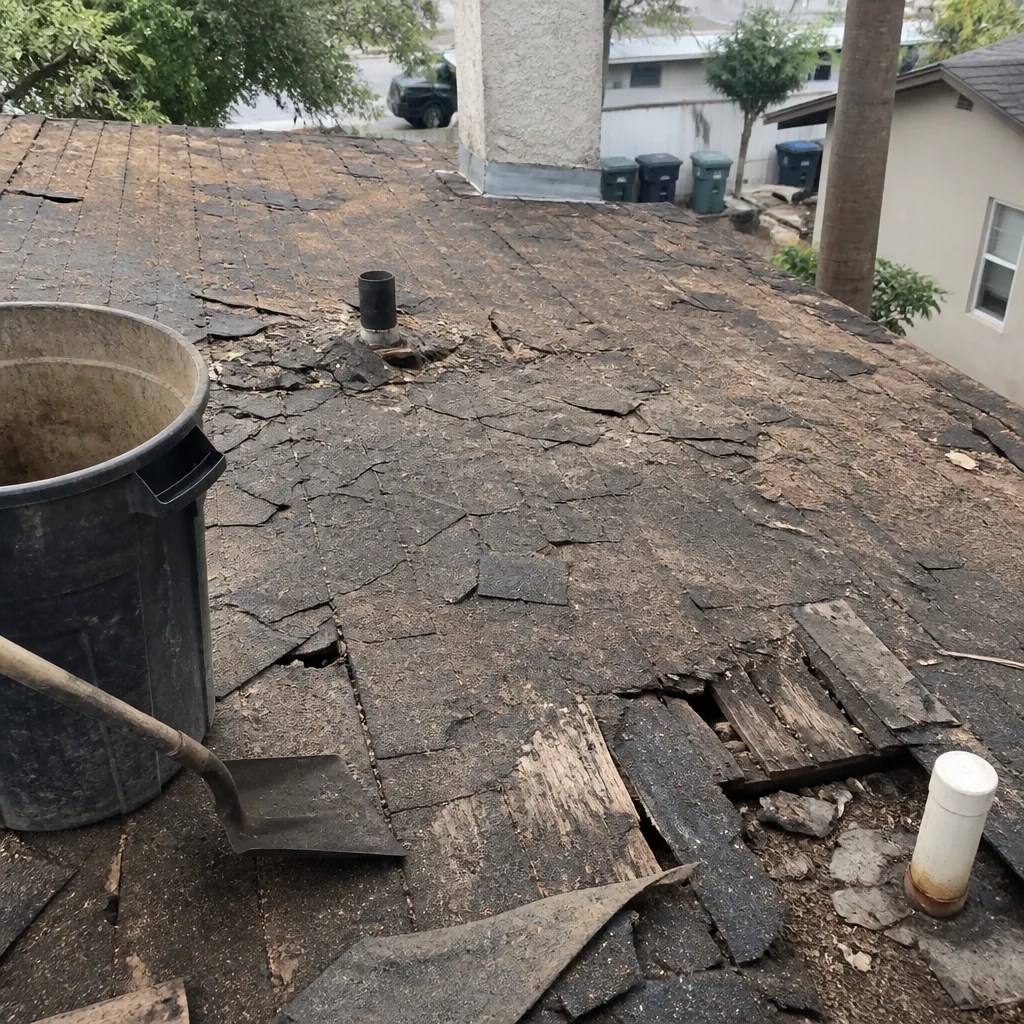 Before
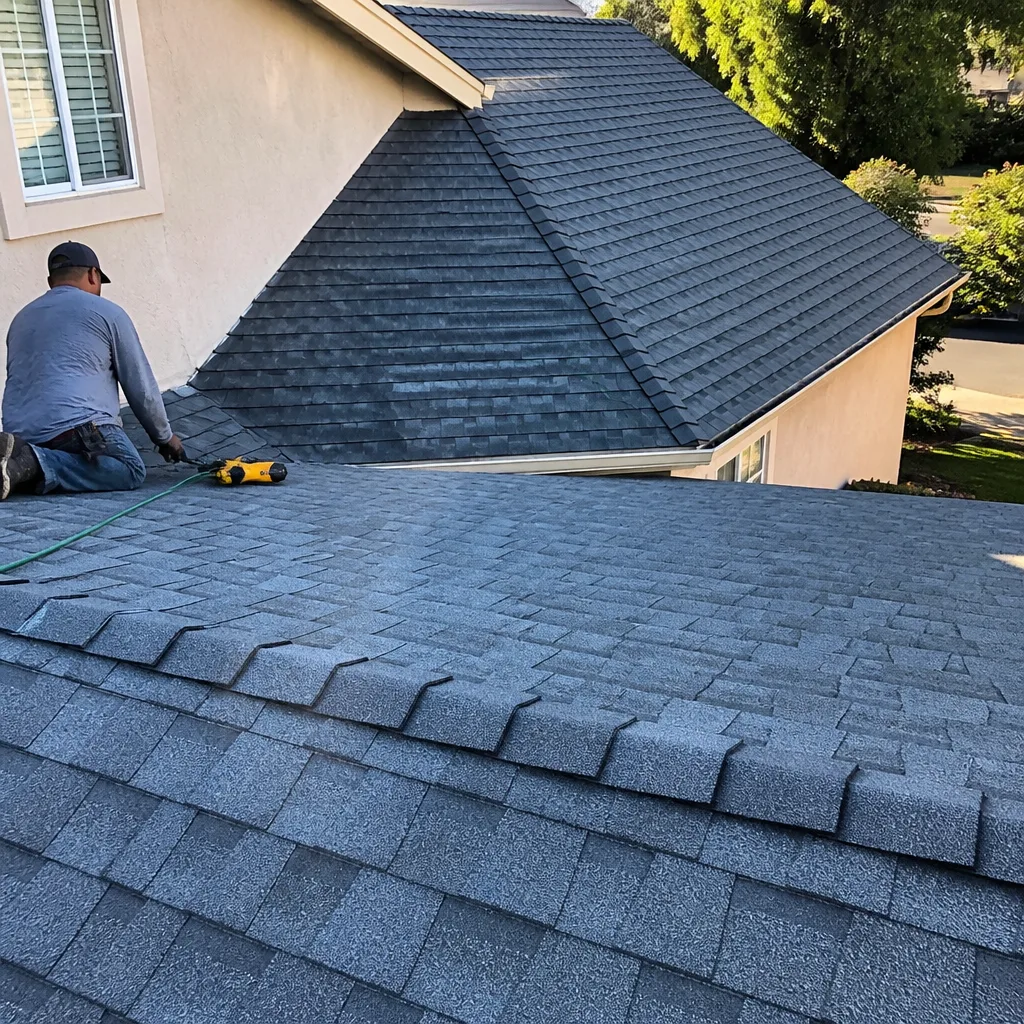 After
After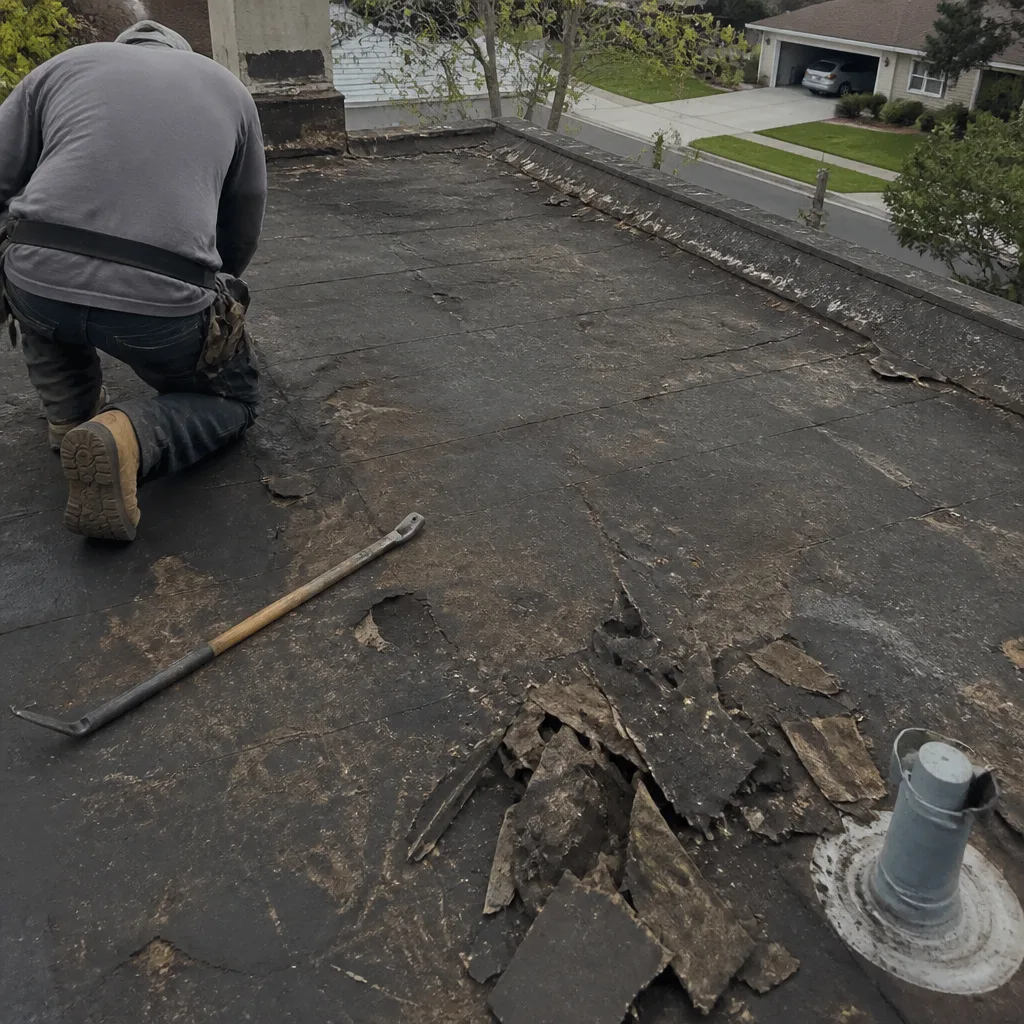 Before
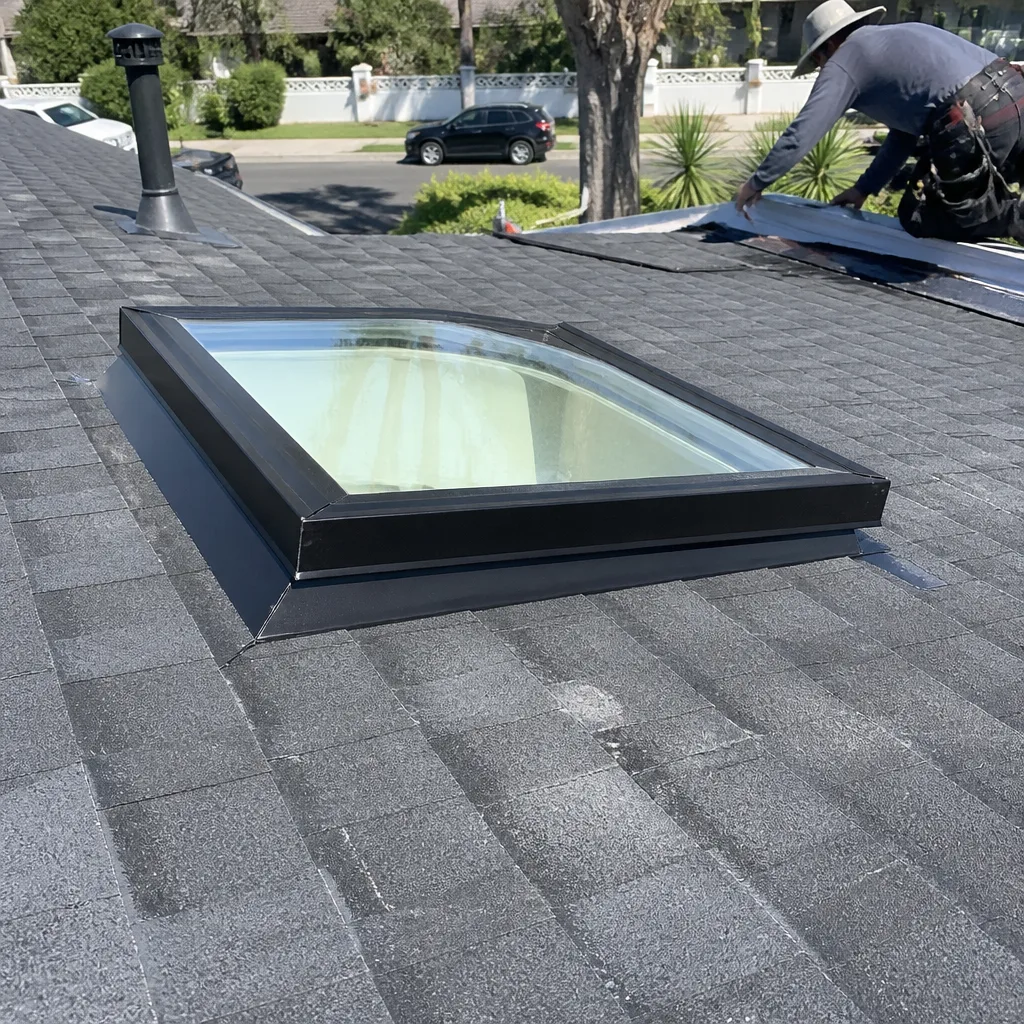 After
AfterRoof Repair Warning Signs Every Homeowner Should Know
The water stain on your ceiling is not a warning sign. It’s confirmation. The actual warning signs showed up six to eighteen months earlier, and most homeowners in Los Angeles walked past them every week without noticing. In our experience inspecting thousands of roofs across the Kingswell family of companies since 2000, the repairs that cost homeowners the most money never start with a dramatic collapse or obvious leak. They start with quiet, easy-to-rationalize symptoms that sit ignored until a $400 repair becomes a $14,000 replacement. This guide names those symptoms, explains what they mean for the specific roof types common in Los Angeles, and shows you how to spot them from the ground and from your attic without touching a ladder.
Quick Answer
The most expensive roof repair warning signs are the quiet ones: lifted or cracked tile edges, asphalt granules filling your gutters, daylight visible around attic vents, and interior stains that appear far from the actual leak entry point. In Los Angeles, the dry Santa Ana season hides active leaks for months, so by the time you see water inside, the decking may already be compromised. Catch these signs early and most Roof Repair stays under $800; ignore them and you’re often looking at full deck replacement.
Table of Contents
- Exterior Warning Signs You Can Spot From the Ground
- Interior Warning Signs That Mean Damage Has Breached the Deck
- Warning Signs by Roof Type: Clay Tile, Asphalt Shingle, and Flat Membrane
- The False Ceiling Problem: Why Your Stain Location Lies to You
- How the Santa Ana Season Hides Active Leaks in Los Angeles
- A Safe Self-Inspection Checklist: No Ladder Required
- What Roof Repairs Cost in Los Angeles When Caught Early vs. Late
- Common Mistakes to Avoid
- When to Call a Professional
- Frequently Asked Questions
Exterior Warning Signs You Can Spot From the Ground
Most homeowners believe they need to climb onto their roof to assess its condition. You don’t. In fact, for most residential roofs in Los Angeles, walking the surface does more harm than good, especially on clay tile systems where a single foot in the wrong place cracks a tile and creates a new leak path. The signs that matter are visible from your driveway, your backyard, or a second-story window with binoculars.
Lifted or shifted tile edges. On clay and concrete tile roofs, which cover roughly 60% of Los Angeles homes built between 1960 and 2000, look for tiles that no longer sit flush with their neighbors. A lifted corner means the fastening system has failed, or the underlayment beneath has degraded and the tile is no longer supported. In neighborhoods like Encino, Woodland Hills, and Pasadena, we regularly see this pattern after Santa Ana wind events in January and February. One lifted tile becomes six within a single rainy season because wind-driven rain enters the gap, saturates the underlayment, and the surrounding tiles lose support.
Granule accumulation in gutters and downspout exits. Asphalt shingle roofs, common in post-2000 construction in Santa Clarita, Valencia, and the Inland Empire-facing suburbs, shed granules as they age. A thin scattering is normal for a roof under ten years. But if you’re cleaning quarter-inch piles from your gutters twice a year, the shingle’s protective surface is failing prematurely. This is often caused by the intense UV exposure and thermal cycling unique to Los Angeles, where a summer roof surface can reach 170°F and drop to 65°F the same night. Granule loss exposes the asphalt mat to direct sun, and cracking follows within two to three years.
Visible daylight around roof penetrations. From your attic, look up at any vent pipe, chimney, or skylight shaft. If you see light, you see a gap that water can exploit. But from the ground, you can spot the exterior symptom: flashing, the thin metal that seals these transitions, that has pulled away, corroded, or developed a green patina on copper systems. In coastal Los Angeles neighborhoods like Venice and San Pedro, salt air accelerates this corrosion. We’ve replaced flashing on 12-year-old roofs in Manhattan Beach that looked 30 years old because the original installer used galvanized steel instead of copper or coated aluminum.
Sagging or uneven ridgeline. Stand at your street and sight along the peak of your roof. It should be straight. A dip or wave indicates structural movement, often from long-term water saturation in the decking or, in older Los Angeles homes, from original lumber that was under-specified for the clay tile load. This is not a repair. This is a structural evaluation.
Dark streaks or moss on north-facing slopes. Los Angeles gets enough winter moisture, especially in canyon-adjacent neighborhoods like Laurel Canyon and Topanga, for algae and moss to establish on shaded roof sections. Moss lifts shingle tabs and holds moisture against tile surfaces. The dark streaks themselves are cosmetic, but they indicate conditions that accelerate material degradation.
- Lifted tile edges: check after every Santa Ana wind event
- Granule piles in gutters: inspect during biannual gutter cleaning
- Flashing gaps: visible from ground with binoculars after rain
- Ridgeline sag: check monthly from street level
- North-face moss: address before November rains begin
Interior Warning Signs That Mean Damage Has Breached the Deck
By the time you see evidence inside your home, the roof system has failed at multiple layers. Understanding which interior signs indicate which type of failure helps you communicate accurately with an inspector and avoid the “patch the stain” mistake that wastes money.
Water stains that expand after rain but dry between events. This indicates an active leak path that has reached the drywall but hasn’t yet saturated the insulation continuously. The repair is still localized. In Los Angeles, where rain comes in concentrated winter events separated by months of dry weather, these stains often appear in February, seem to “heal” by May, and return worse the following winter. Homeowners mistake the drying for resolution. The leak is still active; the attic simply has enough ventilation to evaporate the moisture during dry months.
Stains that remain dark and expand regardless of weather. This means continuous moisture, usually from a plumbing vent leak or a condensation issue in the attic, not direct rain entry. In Los Angeles, we see this frequently in homes with original galvanized plumbing vents where the pipe itself has deteriorated above the roofline. The water runs down the pipe’s exterior and follows it through the ceiling. Patching the drywall without replacing the vent flashing and pipe section guarantees recurrence.
Paint bubbling or peeling on exterior-facing walls, especially upper stories. This is often misdiagnosed as a siding or window leak. In homes with composite shingle roofs and inadequate overhangs, wind-driven rain enters at the roof-to-wall transition and runs down the interior of the wall cavity. We’ve traced this pattern in homes from Burbank to Torrance where three painters had already “fixed” the wall before anyone looked at the roof flashing.
Musty odor in attic spaces during warm weather. Los Angeles attics can reach 140°F in summer. If you smell mildew despite that heat, you have enough moisture to sustain mold growth in cooler microclimates, typically near vents or where insulation has compressed against decking. This indicates a leak that has been active long enough to degrade the wood’s moisture content below the surface.
Sudden spike in cooling costs. Wet insulation loses R-value dramatically. If your summer electricity bill jumps 15-20% year-over-year and your HVAC technician finds no equipment issue, have your attic insulation inspected for saturation. In Los Angeles’s inland valleys, where summer cooling already strains budgets, this hidden cost often exceeds the repair estimate.
Warning Signs by Roof Type: Clay Tile, Asphalt Shingle, and Flat Membrane
Generic Roof Replacement Troubleshooting: Common Problems and How to Fix Them lists fail Los Angeles homeowners because they treat all materials as interchangeable. They’re not. The failure modes, inspection priorities, and cost trajectories differ substantially across the three dominant roof types in this market.
Clay and Concrete Tile Roofs
These systems are designed to last 50-plus years, but the underlayment beneath them typically fails in 20 to 25 years in Los Angeles’s UV environment. The tiles themselves rarely show dramatic damage. The warning signs are subtle:
- Cracked or broken tiles at valleys and ridges. These high-stress areas see the most thermal movement. A cracked valley tile channels water directly onto the underlayment, which may already be near end of life.
- Efflorescence, the white powdery residue on tile surfaces. This indicates moisture is migrating through the tile body from the underside, meaning the underlayment is no longer shedding water.
- Missing or displaced hip and ridge caps. These are the “finishing” tiles that cover the peak joints. Their mortar or foam adhesive fails first, and their absence exposes the most vulnerable seam in the system.
In neighborhoods like Hancock Park and Los Feliz, where original Spanish Colonial Revival homes carry vintage clay tile, we often see homeowners replace individual broken tiles for years while the underlayment beneath degrades. The proper repair is a full underlayment replacement with tile salvage, typically $8,000-$14,000 for a 2,500 square foot home. Catching it when only isolated valleys show efflorescence can reduce this to $2,500-$4,000 for targeted underlayment replacement with new tile at the repair site.
Asphalt Shingle Roofs
The dominant material in tract construction from the 1980s forward, especially in the San Fernando and San Gabriel valleys. Los Angeles’s UV exposure and thermal cycling create failure patterns distinct from cooler climates:
- Curling or clawing at shingle tabs. The bottom edge curls up (curling) or the center rises while edges stay down (clawing). Both indicate the asphalt mat has dried and shrunk from UV exposure. This is end-of-life, not repairable.
- Random cracking across shingle faces. Unlike curling, this can occur mid-life if the manufacturer used a substandard asphalt formulation. We’ve seen this on 8-year-old roofs with certain economy-grade products. This is why Tilehurst Roofing specifies architectural-grade shingles from manufacturers like CertainTeed, Owens Corning, and Atlas, whose Los Angeles-area warranties have proven reliable in our experience.
- Loss of self-sealing strip adhesion. Lift a shingle edge gently from a ladder or with a pole from the ground. If it lifts freely and doesn’t snap back, the tar strip has failed. Wind can now enter beneath and tear shingles off in sheets.
Most asphalt shingle repairs in Los Angeles run $350-$800 when caught early, typically involving localized shingle replacement, ice-and-water shield installation at vulnerable transitions, and ridge cap resealing. Full replacement of a failed system on a typical 2,000 square foot home currently ranges $12,000-$18,000 depending on access, pitch, and whether decking replacement is needed.
Flat and Low-Slope Membrane Roofs
Common on modern additions, ADUs, and commercial-style residential in Silver Lake, Echo Park, and the Arts District. These systems fail differently:
Membrane bubbling or tenting. Air or moisture has become trapped between membrane layers during installation, or the adhesive has failed. The bubble itself isn’t the leak, but foot traffic or thermal movement will eventually split it.
Alligatoring, a crazed pattern on coated surfaces. The UV-resistant topcoat has degraded, exposing the base membrane to direct sun. In Los Angeles, this can progress from first visible cracking to through-membrane failure in 18 months.
Ponding water that remains 48 hours after rain. Flat roofs aren’t truly flat, they’re low-slope, and proper drainage is engineered in. Ponding indicates either structural deflection or clogged drains. In Los Angeles’s occasional heavy winter storms, a ponding area becomes a leak point under hydrostatic pressure.
Membrane repairs range widely, from $500 for localized patching to $4,000-$7,000 for full recovery board and membrane replacement on a typical residential flat roof. We specify TPO and modified bitumen products from manufacturers including IKO and CertainTeed, selected for the specific exposure and traffic conditions of each application.
The False Ceiling Problem: Why Your Stain Location Lies to You
This is the single most expensive misunderstanding in residential roofing. Homeowners see a stain, point to the spot on the roof directly above it, and demand a patch there. Three months later, the stain returns. Here’s why.
Water entering at a penetration point, damaged shingle, or failed flashing doesn’t fall straight down. It follows the path of least resistance, which is typically along the underside of the decking, along a rafter, or down the face of a truss until it reaches an obstruction. Then it pools until it finds a fastener hole, a drywall seam, or a light fixture to drip through.
In Los Angeles’s predominant hip-and-valley roof designs, this means a leak at the ridge, where two roof planes meet at the peak, can travel 12 to 16 feet laterally before showing on your ceiling. We’ve traced stains in living rooms back to failed ridge vent installation in attics, stains over kitchen islands to chimney counterflashing gaps on the opposite side of the house, and stains that appeared to indicate flat roof failure to actual entry points on the adjacent sloped section.
The professional approach, and the one we follow on every Roof Repair in Los Angeles inspection, is water testing: controlled application of water at suspected entry points while an observer watches the attic space. This confirms the path before any material is removed. Patching at the stain location without this verification has, in our experience, a better than 70% failure rate within two years.
For homeowners, the actionable insight is simple: when you see a stain, note its location, but understand that the actual repair may be in a completely different roof section. Any contractor who offers to “just patch that spot” without attic inspection is saving time at your expense.
How the Santa Ana Season Hides Active Leaks in Los Angeles
Los Angeles’s climate creates a dangerous false confidence. From May through October, and often well into November, the region is effectively rainless. The Santa Ana winds blow hot and dry from the interior. A roof with active leak paths, degraded underlayment, or failed flashing shows no symptoms because there’s no water to exploit the gaps.
Then the first Pacific storm arrives, typically in October or November. The phone at Tilehurst Roofing rings continuously for 72 hours. Homeowners who’ve ignored lifted tiles since March discover that six tiles became twenty. Granule loss that seemed cosmetic in August becomes visible shingle cracking after the first thermal shock of wet-cold followed by dry-heat. Membrane bubbles that held through summer split under the first foot traffic of a technician checking a “small leak.”
The financial pattern is stark. Emergency repairs in October and November average 40% higher than scheduled repairs in August and September, primarily because emergency calls require after-hours labor, temporary waterproofing before permanent repair, and often involve more extensive damage from the first storm event. A lifted tile section that would have been $400 in September becomes $1,200 in November because the underlayment beneath it, exposed through a dry summer, shredded in the first rain.
Our recommendation, based on twenty-four years of Kingswell company data across Southern California: schedule inspection and maintenance in August or early September, before the Santa Ana pattern breaks. This is when warning signs are still warning signs, not emergency entries. Tilehurst Roofing’s Los Angeles team provides written estimates with no obligation during this window, and we can typically schedule within a week because demand hasn’t yet spiked.
A Safe Self-Inspection Checklist: No Ladder Required
You can gather 80% of the information a professional needs without leaving the ground or entering unsafe attic spaces; see our Roof Replacement Maintenance Schedule: What to Do and When for timing guidance. This checklist takes 30 minutes and creates a documented baseline you can compare year to year.
Ground-Level Exterior Check (15 minutes)
- Walk to your street and sight the ridgeline with your eye level. Note any dips, waves, or sections where tiles appear uneven.
- Using binoculars or a phone with zoom, scan each roof slope for lifted, shifted, or missing tiles or shingles. Pay special attention to valleys, ridges, and areas around chimneys and vents.
- Check gutter downspout exits for granule accumulation. If you find piles, photograph them for comparison next season.
- Walk your property perimeter and look for fallen tile or shingle fragments, especially after wind events.
- Examine fascia boards and soffits for discoloration, peeling paint, or visible moisture staining.
Attic Interior Check (15 minutes, daytime only)
- Enter your attic during full daylight with a flashlight for shadowed areas. Do not step between joists.
- Look up at every penetration: vent pipes, chimneys, skylights, exhaust fans. Visible daylight indicates gaps.
- Follow each rafter from the ridge toward the eave with your eyes, looking for dark streaks, water stains, or wood discoloration.
- Check insulation for compression, displacement, or darkening. Lift a small section gently; if it’s damp or crumbles abnormally, note the location.
- Smell deliberately. Mustiness in summer heat indicates sustained moisture.
Document everything with dated photographs. When you do call for professional evaluation, these images let the technician focus on confirmed problem areas rather than conducting a full survey, which saves time and often reduces the inspection cost.
What Roof Repairs Cost in Los Angeles When Caught Early vs. Late
Price transparency matters. These ranges reflect Tilehurst Roofing’s current Los Angeles market pricing for typical residential scenarios. Every job begins with a written, line-item price before any work starts, and every repair carries our written 365-Day Done Right Promise.
| Repair Type | Caught Early (Preventive) | Caught Late (After Interior Damage) |
|---|---|---|
| Localized tile replacement with underlayment patch | $350-$650 | $1,200-$2,500 (with decking repair) |
| Asphalt shingle repair, limited area | $300-$600 | $900-$1,800 (with insulation replacement) |
| Flashing replacement at chimney or vent | $400-$800 | $1,500-$3,000 (with surrounding shingle/tile replacement) |
| Flat membrane patch | $450-$750 | $2,000-$4,500 (with recovery board replacement) |
| Ridge cap resealing, full length | $800-$1,400 | $2,500-$5,000 (with underlayment replacement) |
| Full underlayment replacement, tile salvage | $6,000-$10,000 (planned) | $10,000-$16,000 (with structural decking repair) |
The pattern is consistent: early intervention addresses the specific failure point. Late intervention addresses the failure point, the surrounding compromised materials, the interior damage, and often the consequences of temporary or incorrect previous repairs. Our 365-Day Done Right Promise includes free return visits if a repair fails within the guarantee period, but we’d rather help you avoid that scenario entirely through timely inspection.
Material options for any repair or replacement include products from GAF, CertainTeed, Owens Corning, IKO, Atlas, Tamko, and Boral. We specify based on your roof’s pitch, exposure, and your preference for warranty length and aesthetic match, not based on what happens to be in our truck.
Common Mistakes to Avoid
- Assuming a dry attic in summer means the roof is sound. Los Angeles’s long dry season hides active leaks for months. The absence of current water does not mean the absence of leak paths.
- Patching interior stains without roof inspection. This wastes money and often traps moisture in wall cavities, creating mold conditions that require remediation beyond roofing scope.
- Using generic “roof sealant” from hardware stores on tile or shingle roofs. These products are formulated for metal or flat surfaces. Applied to asphalt shingles, they accelerate degradation. Applied to clay tile, they trap moisture and cause spalling.
- Ignoring lifted tiles because “it’s just one.” In Los Angeles’s wind-driven rain environment, one lifted tile creates a pressure differential that lifts neighbors. We’ve seen six-tile repair estimates become forty-tile replacements within a single rainy season.
- Hiring based on lowest bid without verifying scope. A $200 “repair” that replaces three shingles but leaves degraded underlayment untouched fails within two years. Our written estimates specify every layer being addressed.
- Waiting for “a few more years” on an aging roof. In Los Angeles’s UV environment, material degradation accelerates non-linearly. A roof that looks acceptable at year 18 may be critically compromised by year 21. Replacement planning should start at first significant warning signs, not at obvious failure.
- Neglecting to check ADU or garage roof sections. These smaller structures often use lower-grade materials and receive less attention, yet their failure can damage the main structure through shared wall connections.
When to Call a Professional
Call for evaluation when you identify any exterior warning sign from the checklist above, when you notice any interior stain regardless of size, or when your roof has reached 75% of its rated lifespan, even if visible condition seems acceptable. For clay tile roofs in Los Angeles, that’s approximately 18 to 20 years for the underlayment; for asphalt shingles, 15 to 18 years in high-UV exposure; for flat membranes, 12 to 15 years depending on product grade.
Tilehurst Roofing offers free estimates in Los Angeles. A live person answers every call, 24 hours a day, 7 days a week, including evenings and weekends. Call (945) 303-9821 to schedule your inspection. Every estimate includes a written, line-item price before any work starts, and every repair is covered by our written 365-Day Done Right Promise.
Frequently Asked Questions
Most localized repairs on asphalt shingle or tile roofs in Los Angeles run $350-$800 when caught before interior damage occurs. Repairs requiring decking replacement or involving multiple roof sections typically range $1,200-$2,500. Call (945) 303-9821 for an exact quote on your specific situation, estimates are free.
No. Tilehurst Roofing provides a written, line-item price before any work begins, and that price does not change unless you request additional scope. This is The Kingswell Way, and it’s how we’ve operated since 2000. If we discover concealed damage during work, we document it, stop, and discuss options with you before proceeding.
Most localized repairs are completed in a single day. Full underlayment replacement on a tile roof typically requires 3 to 5 working days, depending on size and complexity. We provide a specific timeline in every written estimate, and our crew arrives in the window we commit to.
Permit requirements in Los Angeles vary by municipality and repair scope. Tile replacement and localized repairs typically do not require permits. Full roof replacement, structural decking repair, and changes to roofline geometry do. We handle all permit applications and inspections as part of our standard process when required, and we specify permit status in your written estimate.
Sometimes, but not always. If the damage is isolated and the underlayment beneath is sound, targeted replacement is appropriate and cost-effective. If the underlayment has degraded, replacing surface materials without addressing the waterproofing layer beneath guarantees future failure. Our inspection determines which approach applies to your specific situation.
The combination of intense UV exposure, wide daily temperature swings, and seasonal Santa Ana winds creates accelerated thermal cycling and material fatigue. UV degrades asphalt binders in shingles and the organic components of underlayment. Thermal cycling causes expansion and contraction that stress fasteners and seams. Wind-driven rain exploits any gap with pressure that calm-rain climates don’t replicate. These factors mean Los Angeles roofs often show warning signs 3 to 5 years earlier than identical installations in milder climates.
The Bottom Line
The warning signs that destroy household budgets are rarely dramatic. They’re the lifted tile you noticed last March, the granules you cleaned from gutters in June, the faint attic mustiness you smelled in August. In Los Angeles’s long dry season, each of these seems tolerable, even forgettable. Then the first October rain arrives, and the repair that would have cost $500 in September costs $2,000 by November.
The purpose of this guide is to make those quiet signs unmistakable, and to give you a safe, practical method to check for them without risking a ladder fall or a cracked tile. Document what you find, compare year to year, and call for evaluation at first significant change. The homeowners who spend least on roofing over a twenty-year period are not those who find the cheapest contractor. They’re those who catch problems when they’re still problems, not emergencies.
Roof Replacement in Los Angeles becomes necessary when warning signs are ignored long enough that repair is no longer economically viable. The line between repairable and replaceable is not always obvious from the ground, which is why professional evaluation matters. But the signs that you’ve reached that line are, if you know what to look for, visible well in advance.
Call (945) 303-9821 to schedule your free estimate. A live person will answer, we’ll arrive in the window we promise, and you’ll have a written price in your hands before any work starts. That’s The Kingswell Way, and it’s how Tilehurst Roofing has served Los Angeles homeowners since 2000.
Written by Greg Holloway, Owner at Tilehurst Roofing, serving Los Angeles since 2000.