
Last updated October 8, 2026
Free roof inspection with deck photos before we talk money - GAF and Owens Corning certified installation
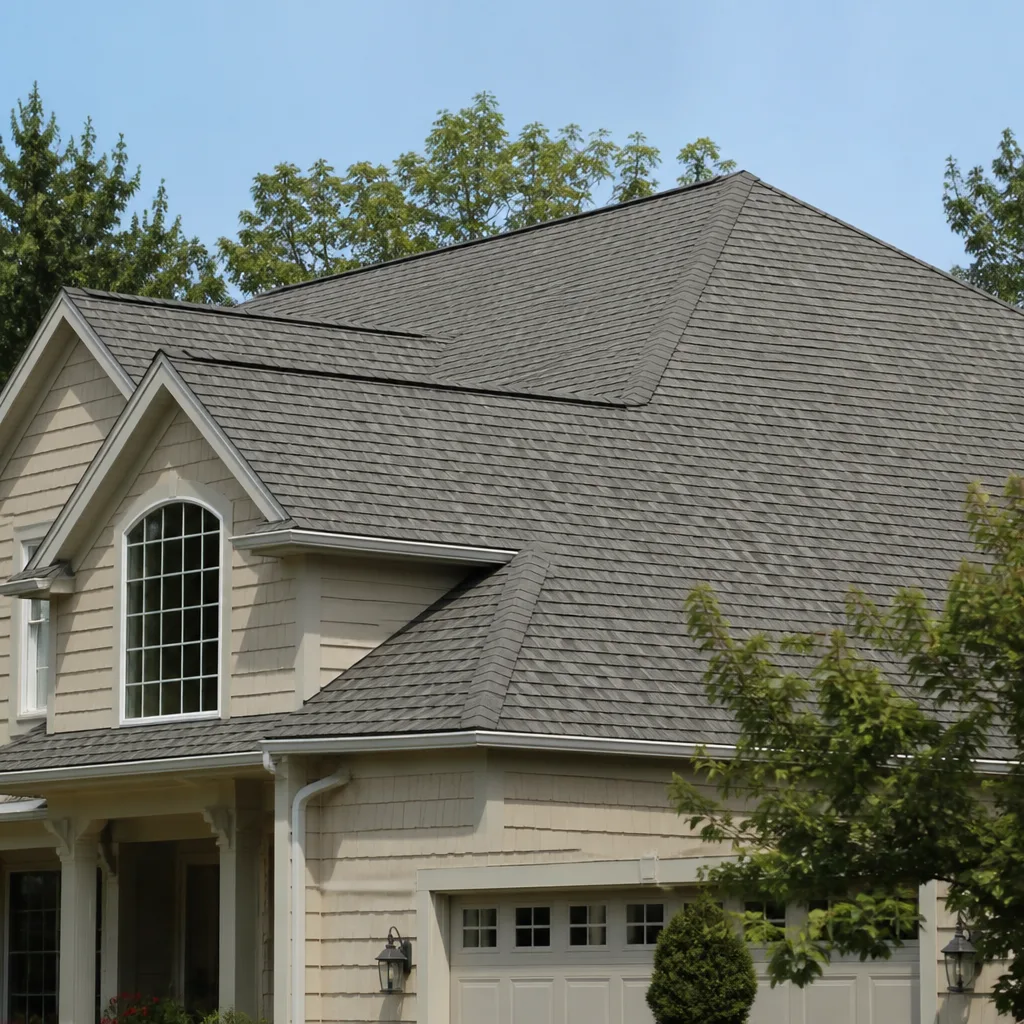
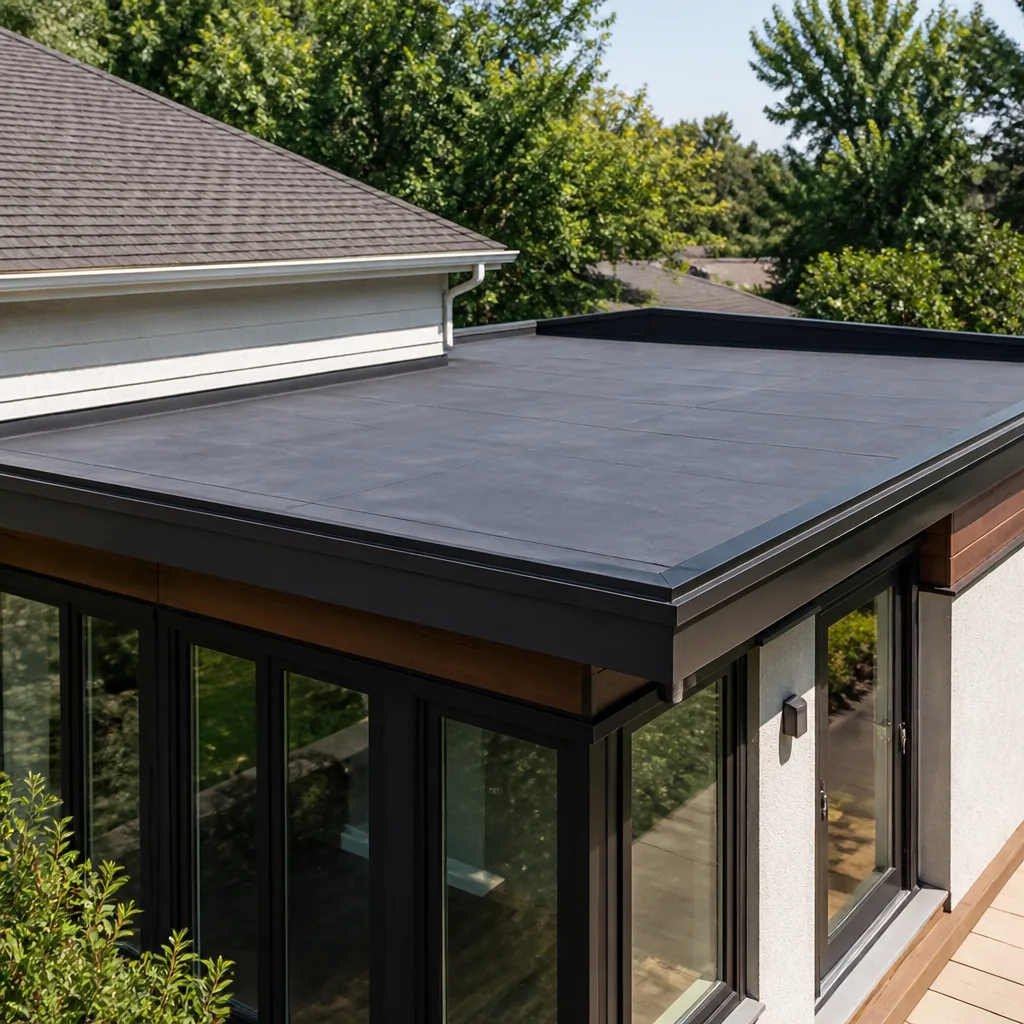
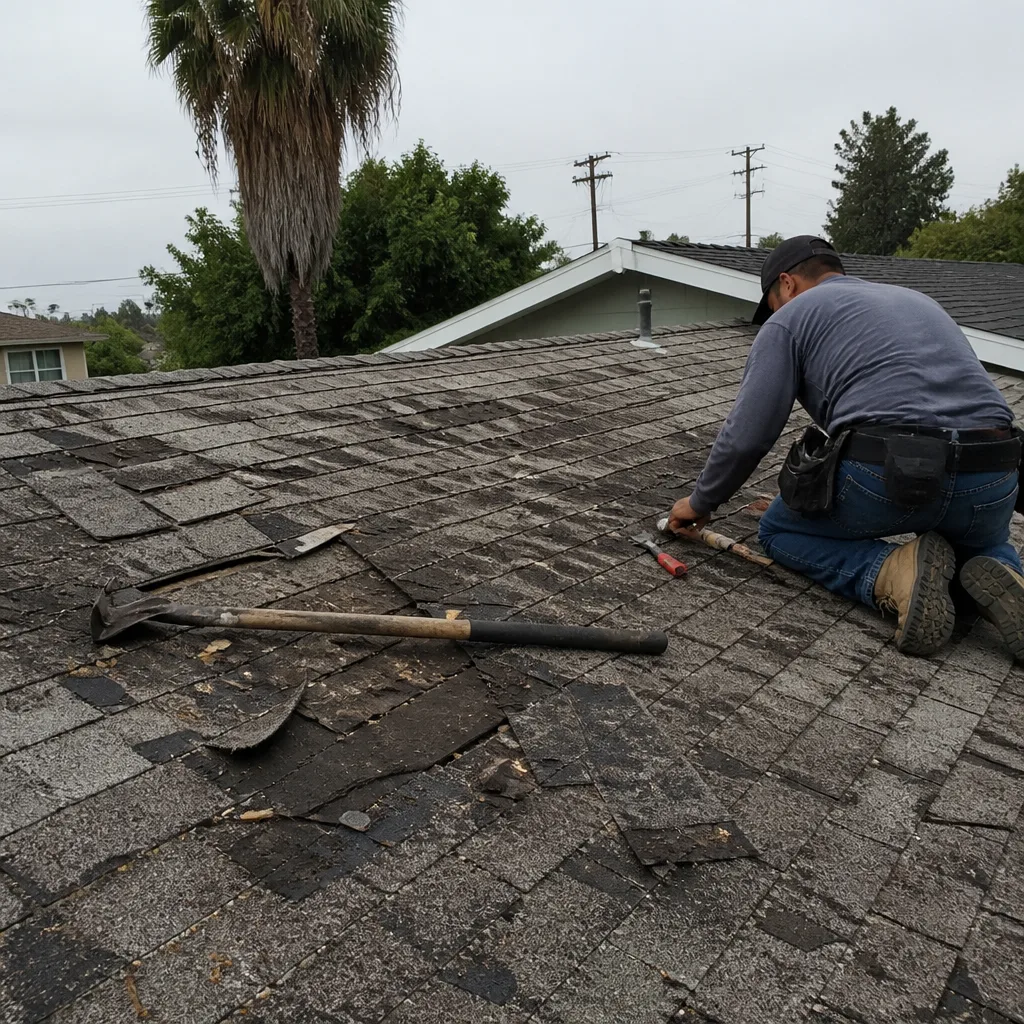 Before
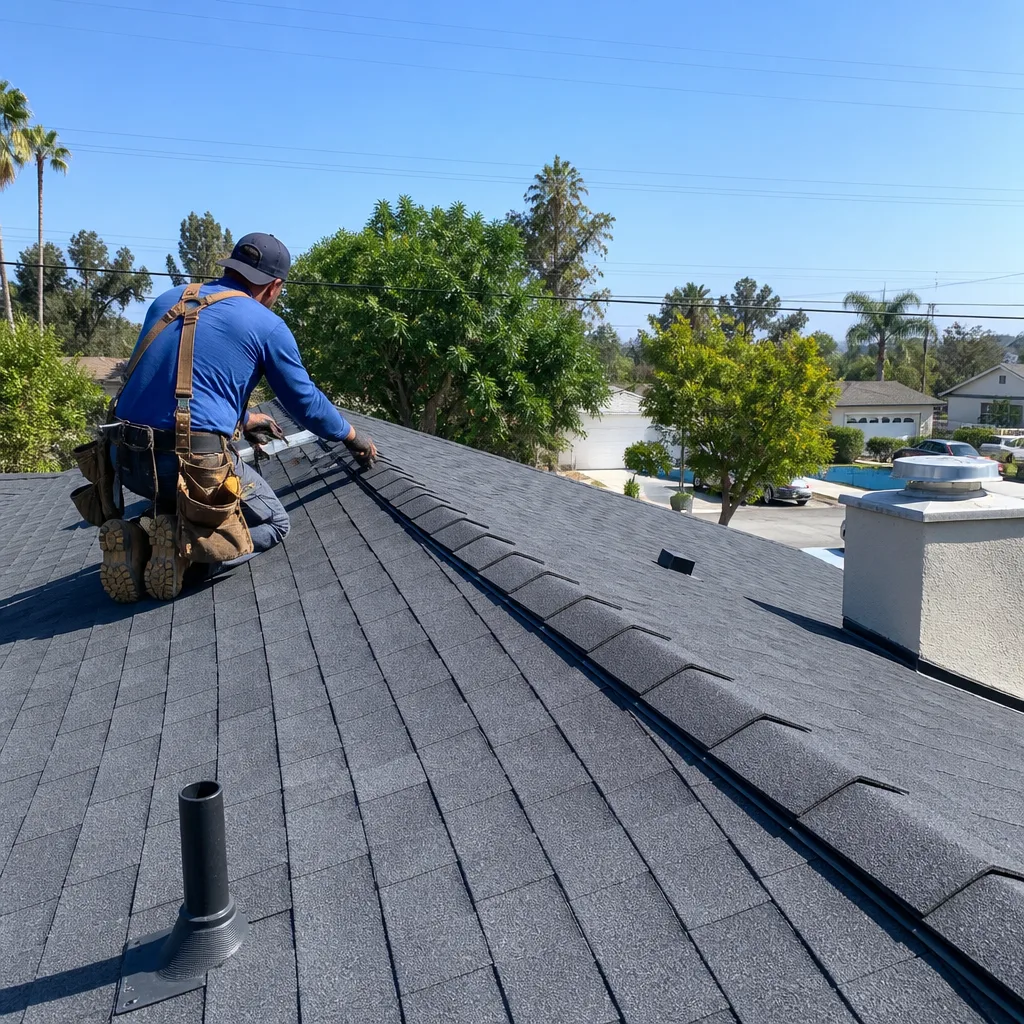 After
After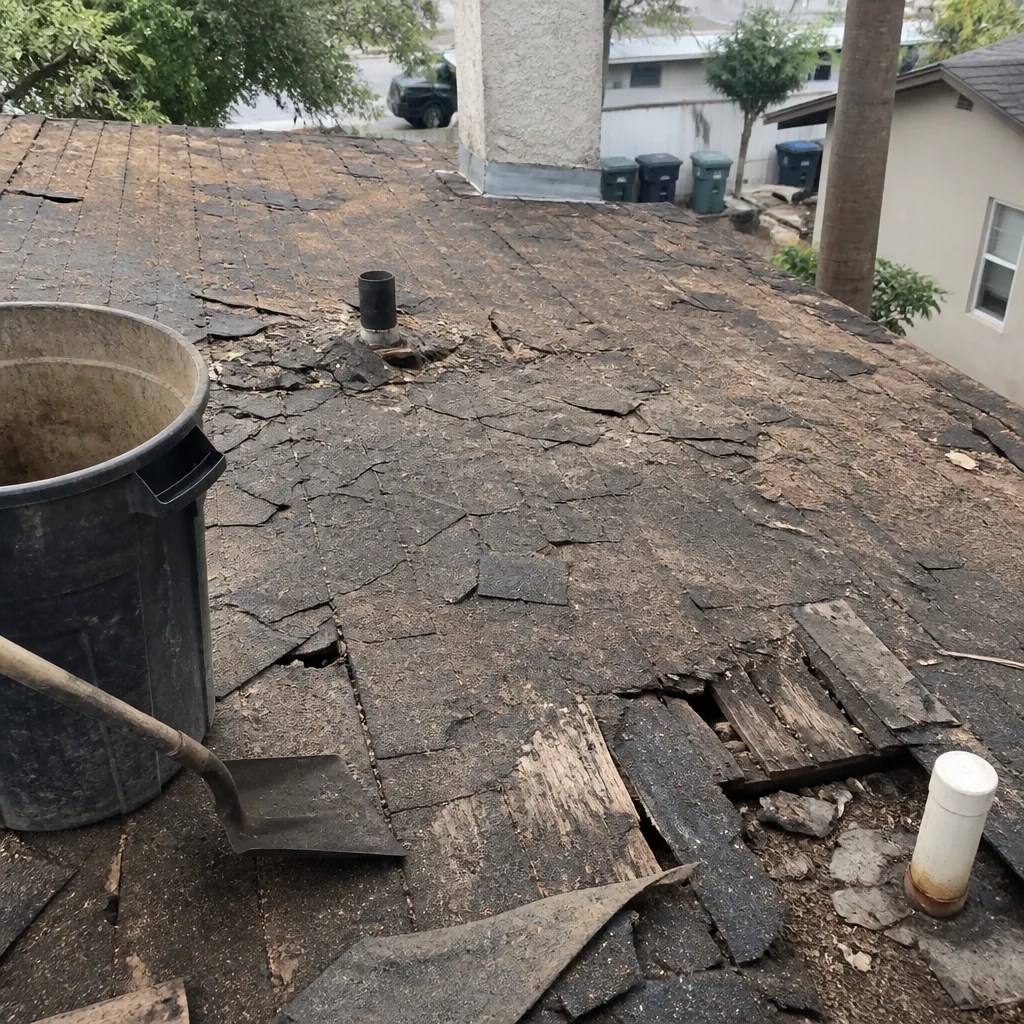 Before
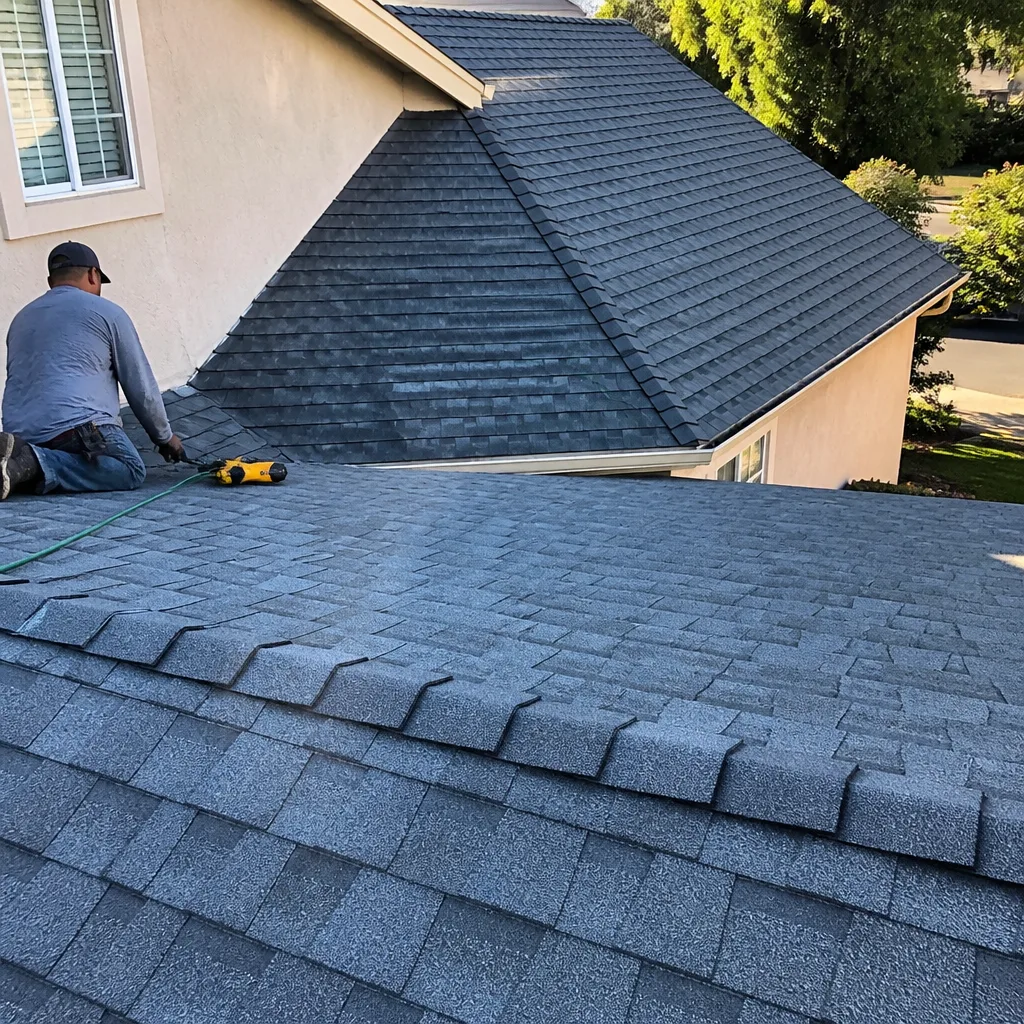 After
After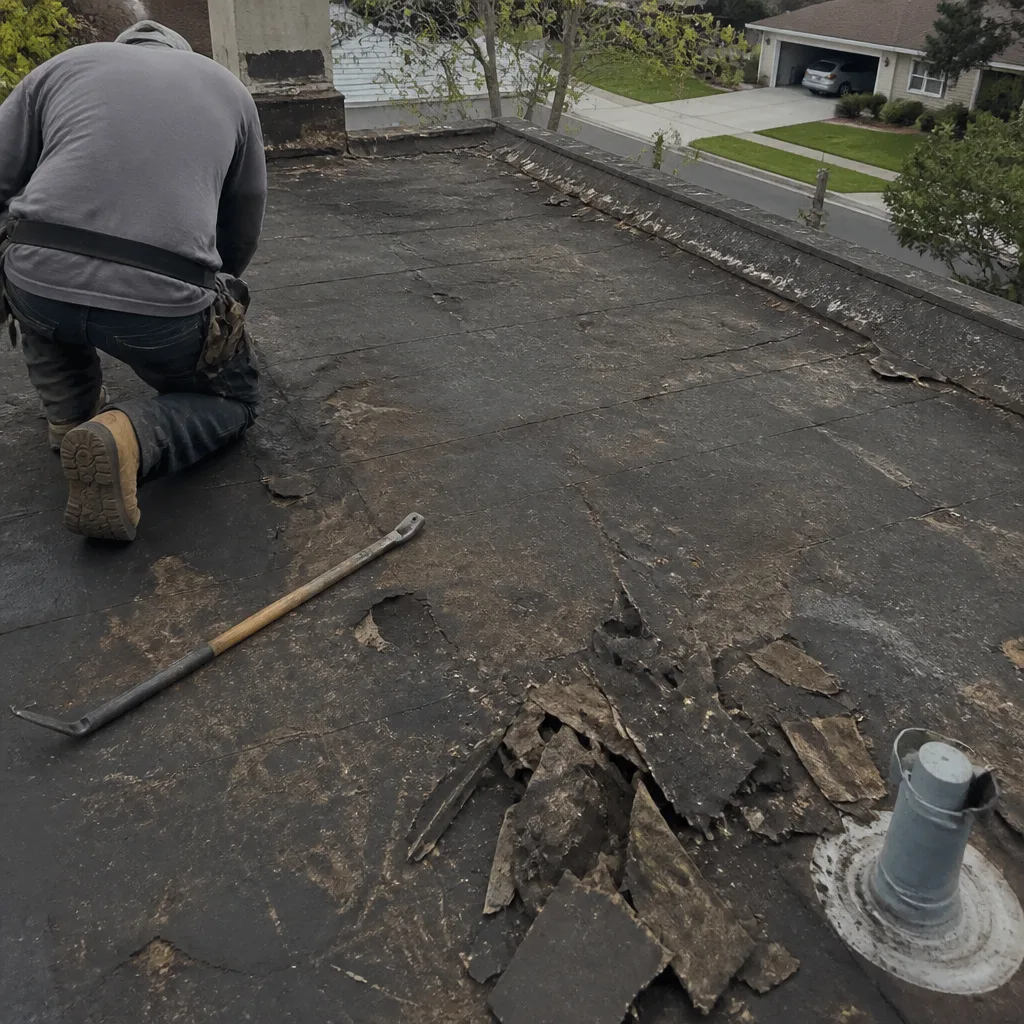 Before
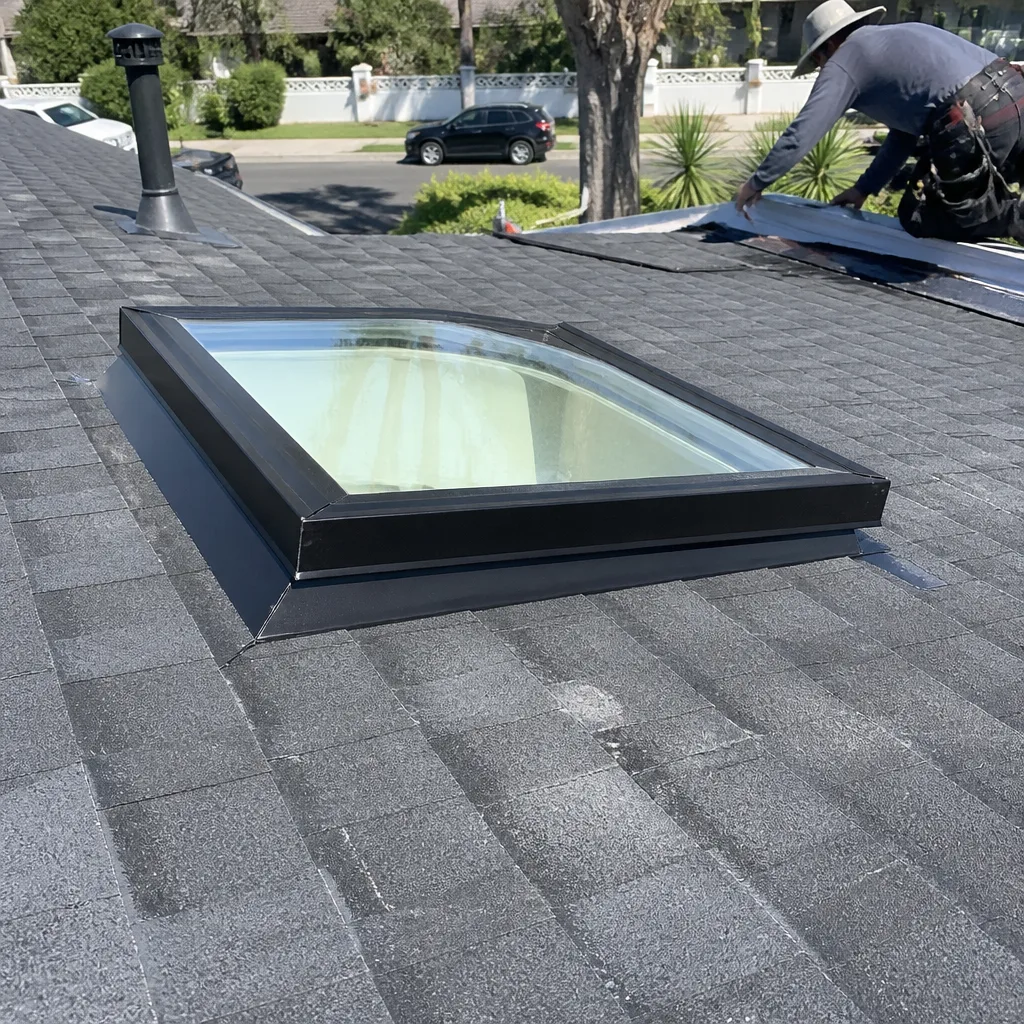 After
AfterRoof Replacement Warning Signs Every Homeowner Should Know
Two homeowners in Los Angeles spot identical brown stains spreading across their bedroom ceilings. One calls a contractor and gets a $600 repair. The other gets a $22,000 replacement quote. Both contractors looked at the same symptom. Only one looked for the cause. The difference between repair and replacement isn’t a matter of opinion, it’s a matter of structure, scope, and math. In this guide, we’ll show you how to read your own roof’s signals so you can tell whether you need Roof Replacement or repair before anyone sets foot on a ladder.
Quick Answer
Most Los Angeles homes need roof replacement when damage is systemic rather than isolated, when decking or underlayment is compromised, or when repairs would cover more than 30% of the roof surface. Key warning signs include: sagging between rafters visible from the attic, soft spots felt when walking the roof, daylight showing through boards, granule loss measured in cups rather than traces, and any second major repair needed within 24 months.
Table of Contents
- Repair vs. Replacement: The 30% Rule and the Structural Line
- How Roof Age Hits Harder in Los Angeles Climate Zones
- What Your Attic Reveals That the Street Can’t See
- Surface Signals: Reading Shingles, Flashing, and Fasteners
- Structural Non-Negotiables: When Replacement Is Mandatory
- The Financial Inflection Point: When Repairs Stop Making Sense
- Common Mistakes to Avoid
- When to Call a Professional
- Frequently Asked Questions
- The Bottom Line
Repair vs. Replacement: The 30% Rule and the Structural Line
The roofing industry has a rough boundary that separates repair territory from replacement territory. It’s not a law of physics, but it’s a useful mental model that has saved thousands of homeowners from throwing good money after bad.
Localized damage on structurally intact decking equals repair. A few wind-torn shingles above the garage. A small leak where a vent pipe boot cracked. A section of flashing that pulled away after Santa Ana winds. These are fixable. The decking beneath is solid. The underlayment is dry. The damage doesn’t repeat a pattern across the roof.
Systemic damage, compromised decking, or surface damage exceeding 30% equals replacement. Here’s why that 30% threshold matters in practice. By the time a Los Angeles roof has damage across a third of its surface, the remaining “good” sections are usually within a few years of failure too. Patching becomes a patchwork. The color won’t match. The warranties won’t align. And the labor cost of working around intact sections often erases any material savings.
The structural line is even clearer. When the plywood or plank decking beneath the shingles is compromised, repair is off the table. Decking is the roof’s foundation. You don’t wallpaper over a cracked foundation. In our experience across Los Angeles, from Pasadena’s inland heat to El Segundo’s marine layer, decking damage follows predictable patterns: long-undetected leaks, failed valley drainage, and - in pre-1980s homes - original decking that was never rated for modern load requirements.
Three questions to ask before calling any contractor:
- Is the damage confined to one area or scattered across multiple roof planes?
- Is the ceiling stain directly below the damage, or does it appear several feet away (suggesting water travel along decking)?
- When was the last professional inspection, and what did it find?
Honest contractors welcome informed homeowners. The Kingswell Way means we say the price before the work, show up in the window we gave, and put every guarantee in writing. That process starts with you knowing which conversation to have.
How Roof Age Hits Harder in Los Angeles Climate Zones
Roof age is not just a number. In Los Angeles, it’s a number multiplied by sun exposure, thermal cycling, and proximity to salt air. A 20-year-old asphalt shingle roof in Pasadena or the San Fernando Valley is often in worse shape than a 25-year-old roof in El Segundo or Palos Verdes. The difference is UV dose.
Asphalt shingles are essentially a fiberglass mat coated with asphalt and surfaced with mineral granules. Those granules block UV. Once they’re gone, the asphalt degrades directly. Inland Los Angeles receives roughly 20% more annual UV radiation than the immediate coast. That doesn’t sound dramatic until you compound it across 7,000+ sunny hours. We’ve removed 18-year-old roofs in Glendale that were more brittle than 28-year-old roofs in Manhattan Beach.
Age-based warning signs by Los Angeles microclimate:
- Inland valleys (Pasadena, Burbank, Woodland Hills): Granule loss accelerates after year 12. Check downspouts after rain. Cupfuls of granules, not a dusting, mean the UV shield is failing. Thermal expansion from 110°F days to 55°F nights stresses seal strips.
- Coastal zone (Santa Monica, El Segundo, San Pedro): Salt spray corrodes flashing and fasteners faster than shingles age. A 25-year roof may have intact shingles but compromised metalwork. Fog and marine layer moisture promote algae that holds water against surfaces.
- Basin and hills (Mid-City, Hollywood, Silver Lake): Combination of moderate UV and urban heat island effect. Watch for “thermal blistering” - small bubbles in shingle surface from trapped moisture expanding in heat.
The manufacturer’s rated lifespan assumes ideal installation and ventilation. In Los Angeles, inadequate attic ventilation is common in homes built before 1990. Heat trapped beneath the deck cooks shingles from below while the sun cooks them from above. A “30-year” shingle in a poorly ventilated Pasadena attic often shows significant degradation by year 15.
Here’s a practical age checkpoint: if your asphalt shingle roof is past 75% of its rated life and you’re seeing any other warning sign, replacement planning should begin. Not panic. Planning. Material lead times for quality products from manufacturers like Atlas or Tamko can run 4-8 weeks in busy seasons. Starting the conversation early preserves your options.
What Your Attic Reveals That the Street Can’t See
The most reliable diagnostic space in your home is the one most homeowners avoid. Your attic tells the truth about your roof in ways that exterior inspection cannot. Professional roofers spend significant time in attics because the damage patterns visible from inside are often invisible from outside until they’re severe.
What to look for, safely:
- Daylight through the roof boards. Turn off all attic lights during daytime. Any pinprick of daylight through the roof deck means a penetration exists. Small points at nail holes are common in older homes. Larger spots, or multiple points in a cluster, indicate decking movement or fastener back-out that admits water.
- Insulation staining. Fiberglass batts or blown cellulose that is discolored, compressed, or crusted shows where water has traveled. Follow the stain uphill to its entry point. Stains that spread across multiple rafter bays suggest valley or flashing failure rather than isolated shingle damage.
- Rafter and deck moisture. Press a flathead screwdriver gently into exposed rafter wood. Softness or easy penetration indicates rot. Check the underside of plywood decking for darkening, delamination, or fungal growth. These are replacement-level findings regardless of exterior appearance.
- Sagging between rafters. Stand at the attic entry and sight along the deck plane. Any visible dip or wave between structural members means the decking has lost integrity. This is non-negotiable replacement territory.
In Los Angeles, attic conditions vary dramatically by neighborhood vintage. Postwar tract homes in the San Fernando Valley often have minimal ventilation and original decking that’s below modern span ratings. Spanish Colonial Revival homes in Hancock Park or Los Feliz may have no attic at all, with cathedral ceilings that make inspection more complex. Bungalows in Highland Park frequently have been modified with unpermitted dormers that create water traps.
Safety note: Attic inspection involves working in confined spaces, often near live electrical wiring, on surfaces not designed for foot traffic. If you’re uncomfortable with ladders, confined spaces, or distinguishing structural members from ceiling drywall, this is a task for a professional. Tilehurst Roofing provides written documentation of every attic finding as part of our free estimate process.
Surface Signals: Reading Shingles, Flashing, and Fasteners
Not every warning sign requires attic access. Ground-level and ladder-visible indicators can tell you plenty, if you know what specificity looks like.
Granule loss: the measurable indicator. Check your downspout outlets after rain. Run your hand through the discharge. A few granules are normal for any asphalt roof under five years. A thin layer coating the bottom of the downspout elbow suggests active loss. Multiple cupfuls, or granules forming small piles, mean the protective surface is failing. We’ve seen Los Angeles homeowners ignore this until gutters clog and overflow damages fascia. Measure it. Document it with photos dated to the month.
Curling and clawing: two different problems. Curling shingles turn up at edges, usually from age and UV embrittlement. Clawing shingles cup upward in the center, often from poor attic ventilation or moisture cycling. Clawing is more urgent because it breaks the seal between courses and admits wind-driven rain. In Los Angeles, clawing appears more frequently on north-facing slopes where moisture lingers, and on homes with bathroom vents dumping into attics.
Missing or broken shingles: pattern matters. A single missing shingle after wind is repairable. Multiple missing shingles in a scattered pattern suggests seal strip failure across the roof field. Check the yard after Santa Ana wind events. If you’re finding whole shingles with intact fasteners still attached, the shingles were never properly sealed. This is an installation or manufacturing defect that may affect the entire roof.
Flashing conditions: Step flashing at walls, counterflashing at chimneys, and apron flashing at dormers are common leak sources. Look for:
- Lifted or separated caulk joints
- Corrosion holes in metal flashing (common within 3 miles of the coast)
- Gaps where flashing meets vertical surfaces
- Missing or deteriorated rubber boots around plumbing vents
Fastener exposure: Nails or staples visible at shingle edges mean shingles have slipped or fasteners have backed out. In Los Angeles, thermal cycling causes more fastener back-out than in milder climates. Each exposed fastener is a potential leak point.
Material selection affects how these signals present. Our crews work with products from seven manufacturers including IKO, Atlas, and Boral, and we specify differently for coastal corrosion exposure versus inland UV exposure. A homeowner who understands their own roof’s failure mode can participate more effectively in material selection.
Structural Non-Negotiables: When Replacement Is Mandatory
Some roof conditions make the repair-or-replacement debate irrelevant. These are structural compromises that affect the building’s safety regardless of the roof’s age, material, or apparent surface condition.
Sagging between rafters. Whether visible from the attic, the exterior, or both, sagging indicates that the roof deck has lost structural capacity. Causes include: long-term water saturation weakening plywood, inadequate original decking thickness for current span, or rafter spread in older homes. Sagging will not improve. It will accelerate. In rare cases, rafter reinforcement can address the structural issue while preserving decking, but this is uncommon and requires engineering evaluation.
Soft spots when walked. A professional roofer’s foot can feel decking integrity in ways that visual inspection cannot. Soft, spongy, or bouncy sections mean the decking is delaminated or rotted. Walking a roof to find these spots is dangerous and requires fall protection. This is not a homeowner diagnostic.
Visible rot at the fascia line. The fascia board runs along the roof edge, supporting gutters. Rot here often indicates extended gutter overflow, ice dam damage (rare in Los Angeles but possible in higher elevations), or roof edge water intrusion. Fascia rot is frequently the visible tip of an iceberg that includes compromised rake boards, soffit damage, and deck edge deterioration.
Active daylight through multiple deck points. A single nail hole is repairable. Multiple daylight points, especially if they’re growing or clustered, mean the decking system has moved, cracked, or deteriorated beyond patch scope.
Rafter spread or collar tie failure. In older Los Angeles homes, particularly pre-1940s construction, roof structures relied on different bracing methods than modern trusses. Visible spreading at the eaves, or separation at ridge connections, is a structural issue that roofing alone cannot fix but that roofing work may need to accommodate.
These conditions trigger building code requirements for full deck replacement in Los Angeles. The 2019 California Building Code, adopted with Los Angeles amendments, requires decking replacement when existing material is “structurally unsound.” This isn’t contractor discretion. It’s a permit and inspection issue. Tilehurst Roofing pulls permits on every replacement, passes every inspection, and documents the structural condition that triggered full replacement in writing.
The Financial Inflection Point: When Repairs Stop Making Sense
There’s a math problem that ends the repair cycle, and it’s not complicated. Homeowners who miss this inflection point often spend 60-80% of replacement cost on repairs before finally replacing, with nothing to show for the earlier expenditure.
The 50% rule. When a proposed repair exceeds 50% of the cost of full replacement, replacement is usually the better financial decision. This isn’t just about the immediate repair. It’s about the probability of subsequent repairs. A roof needing $8,000 in repairs on a $14,000 replacement has demonstrated systemic vulnerability. The next failure is likely within 24-36 months.
The 24-month rule. Any second major repair within 24 months signals the end of the repair cycle. “Major” means anything involving decking, multiple squares of shingles, or structural components. First repair: $1,200 for valley replacement. Eighteen months later: $2,800 for decking and shingle repair on the opposite slope. That $4,000 cumulative spend, plus the disruption of two repair cycles, approaches replacement economics without delivering replacement value.
Los Angeles-specific cost context: In current Los Angeles market conditions, asphalt shingle roof replacement for a typical 2,000 square foot home runs approximately $12,000-$18,000 depending on product tier, deck condition, and access complexity. Repairs involving decking replacement on more than two squares (200 square feet) typically run $3,500-$6,500. The 50% threshold is easy to calculate once you have both numbers.
Here’s a framework we use with Los Angeles homeowners:
| Scenario | Repair Cost | Replacement Cost | Recommended Path |
|---|---|---|---|
| Localized damage, solid deck, first repair in 5+ years | $400-$1,200 | $14,000 | Repair |
| Multiple areas, questionable deck, first major repair | $2,500-$4,500 | $15,000 | Repair with replacement planning |
| Second major repair within 24 months | $3,000+ | $15,000 | Replace |
| Any repair exceeding 50% of replacement | $7,500+ | $14,000 | Replace |
| Structural compromise (sagging, rot, multiple daylight points) | N/A | $15,000-$20,000 | Replace, permit required |
We provide written line-item quotes for both repair and replacement when the situation is borderline. The Kingswell Way means you get the price before any work starts, every single time. No change orders. No “we found more damage” conversations after work begins. The 365-Day Done Right Promise covers either path: if it’s not done right, we make it right, for a full year after the job.
Common Mistakes to Avoid
- Waiting for the leak to appear inside. By the time water stains the ceiling, damage to decking and insulation is usually extensive. Los Angeles homeowners often delay because rain is seasonal. The damage doesn’t pause for summer.
- Getting only one opinion on a borderline roof. A contractor with open crew slots next week may recommend replacement. A booked-solid contractor may recommend repair. Get two assessments. Compare specificity, not just price.
- Ignoring ventilation as a root cause. Replacing shingles without fixing attic ventilation is like replacing tires without aligning the suspension. In Los Angeles, code-compliant ventilation is required on all re-roofs. Verify your contractor’s plan includes it.
- Assuming all “30-year” shingles are equivalent. Manufacturer warranties vary in transferability, proration, and coverage exclusions. Products from Atlas, Tamko, and IKO have different performance characteristics. The cheapest shingle is rarely the lowest cost over the roof’s life.
- Neglecting to verify permit and inspection status. Los Angeles requires permits for full roof replacement. Unpermitted work voids most manufacturer warranties and creates disclosure issues at sale. Ask for permit numbers. Verify inspection sign-offs.
- Paying for “free” estimates that turn into high-pressure sales. Legitimate contractors provide written estimates without obligation. Be wary of same-day discount offers, “sign now” pricing, or estimates that won’t be left with you to review.
- Replacing the roof but reusing damaged flashing. Flashing is the system’s weak point. Reusing old step flashing or vent boots to save $800 on a $15,000 job is false economy. Specify new flashing in your scope of work.
When to Call a Professional
Call for a professional assessment when: you spot any structural warning sign from this guide; your roof is past 75% of rated life and showing any degradation; you’ve had one major repair and are considering a second; or you’re planning to sell within 24 months and need documentation of roof condition. In Los Angeles, disclosure requirements mean roof condition affects transaction timelines and negotiations. A documented professional inspection protects both buyer and seller.
Tilehurst Roofing offers free estimates in Los Angeles. A live person answers every call, 24 hours a day, 7 days a week, including evenings and weekends. We’ll provide a written price before any work starts, and every repair carries our written guarantee. Call Roof Replacement in Los Angeles specialists at (945) 303-9821 to schedule your free estimate.
Frequently Asked Questions
Most asphalt shingle roof replacements in Los Angeles run $12,000-$18,000 for a typical 2,000 square foot home, with tile, metal, or premium products ranging higher. Final cost depends on deck condition, access complexity, product selection from manufacturers like Atlas or IKO, and whether structural repairs are needed. Call (945) 303-9821 for a written line-item quote specific to your home - estimates are free.
Repair is appropriate when damage is localized, the decking is sound, and the repair cost stays below 50% of replacement cost. Once damage exceeds 30% of roof surface, involves compromised decking, or represents a second major repair within 24 months, replacement becomes the more reliable investment. A professional assessment can draw this line specifically for your roof. Explore more guides & resources to stay informed.
Most residential asphalt shingle replacements take 2-4 days of active work, plus permit acquisition and inspection scheduling. Los Angeles Department of Building and Safety inspection availability varies by district; we coordinate this as part of our project management. Weather delays are minimal in Los Angeles compared to other markets, though Santa Ana wind events can pause work for safety.
No. Tilehurst Roofing provides a written price before any work starts, every single time. The only exception is if concealed damage is found after decking removal that was genuinely impossible to detect during inspection. In that rare case, we document the finding with photos, explain the additional scope, and require your written approval before proceeding. No surprises.
Yes. We pull permits on every full roof replacement in Los Angeles, schedule all required inspections, and ensure sign-offs are complete. This protects your manufacturer warranty, satisfies disclosure requirements for future sale, and verifies that work meets current code. Permit status is documented in your project file.
Signs of inadequate ventilation include: excessive heat in the attic during summer, moisture or frost on nails in winter (rare in Los Angeles but possible in higher elevations), premature shingle curling or blistering, and mold or mildew on rafters or decking. Current California code requires specific net free ventilating area based on attic floor space. We evaluate and specify ventilation upgrades as part of every replacement proposal.
The Bottom Line
The warning signs that separate repair from replacement are specific, observable, and learnable. Start with the 30% surface rule and the structural non-negotiables. Factor in your roof’s age adjusted for Los Angeles UV exposure. Check your attic for daylight, stains, and softness. Know the 50% and 24-month financial inflection points. Document what you find. Get multiple opinions that include specificity, not just numbers. And work with a contractor who puts every promise in writing before work begins.
At Tilehurst Roofing home, we’ve served Los Angeles homeowners since 2000 as part of the Kingswell family of roofing companies. Our 365-Day Done Right Promise, written price guarantee, and live-person answering mean you get answers when you need them and accountability after the work is done. For Roof Repair in Los Angeles or full replacement, call (945) 303-9821 to schedule your free estimate.
Written by Greg Holloway, Owner at Tilehurst Roofing, serving Los Angeles since 2000.