
Last updated October 8, 2026
Free roof inspection with deck photos before we talk money - GAF and Owens Corning certified installation
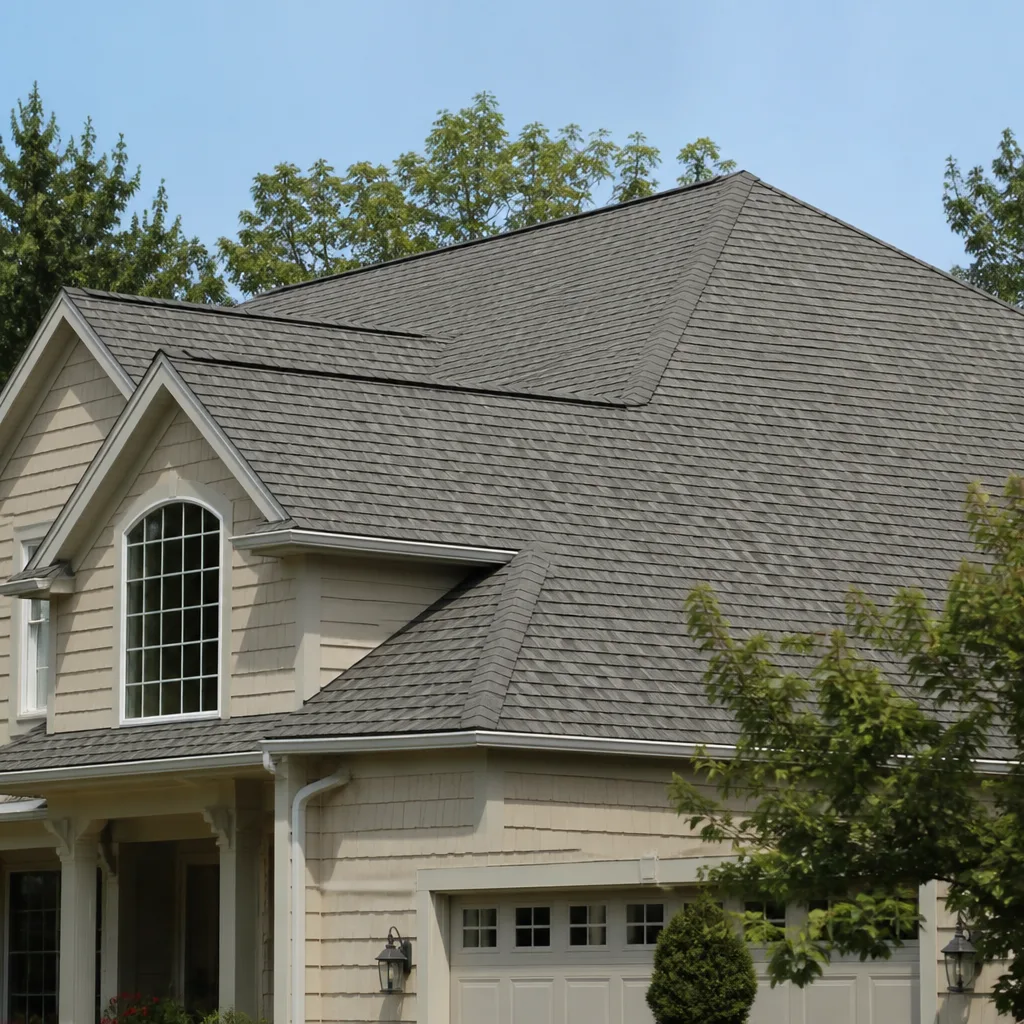
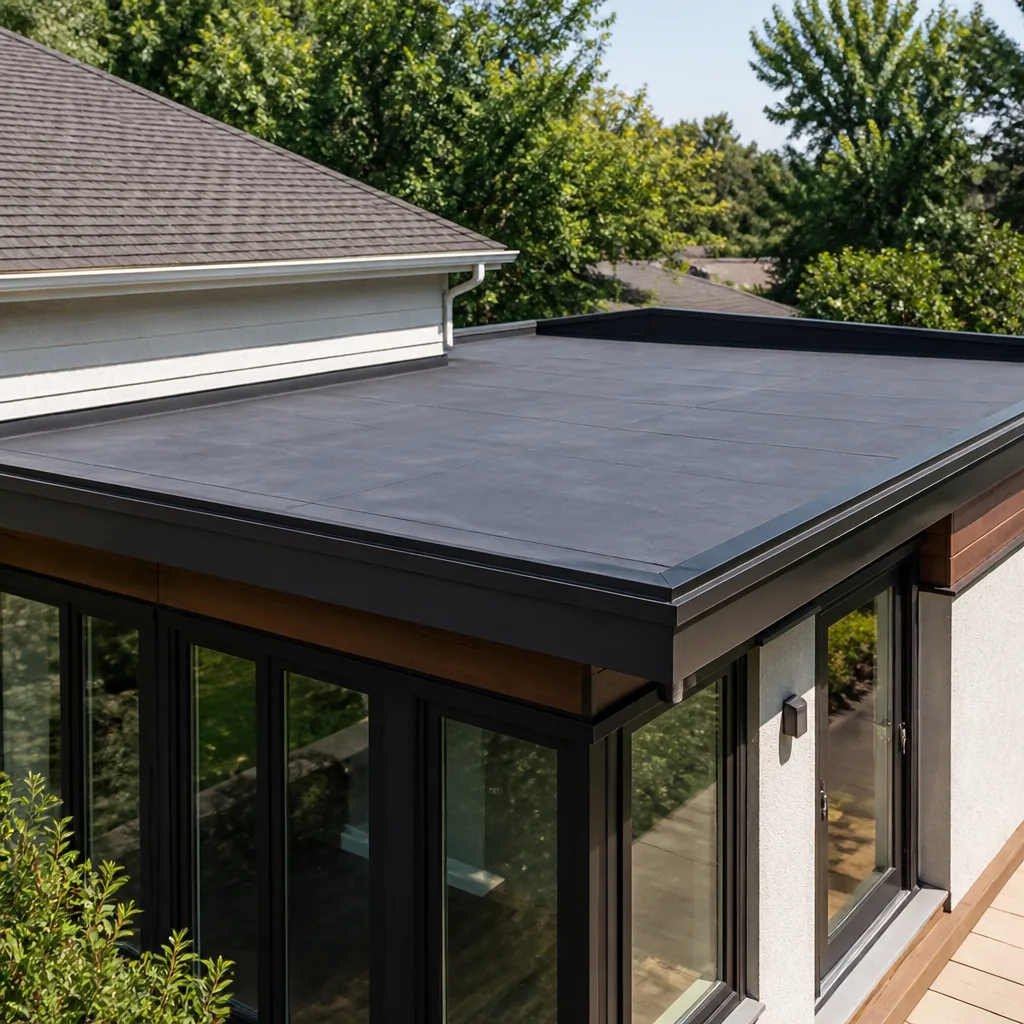
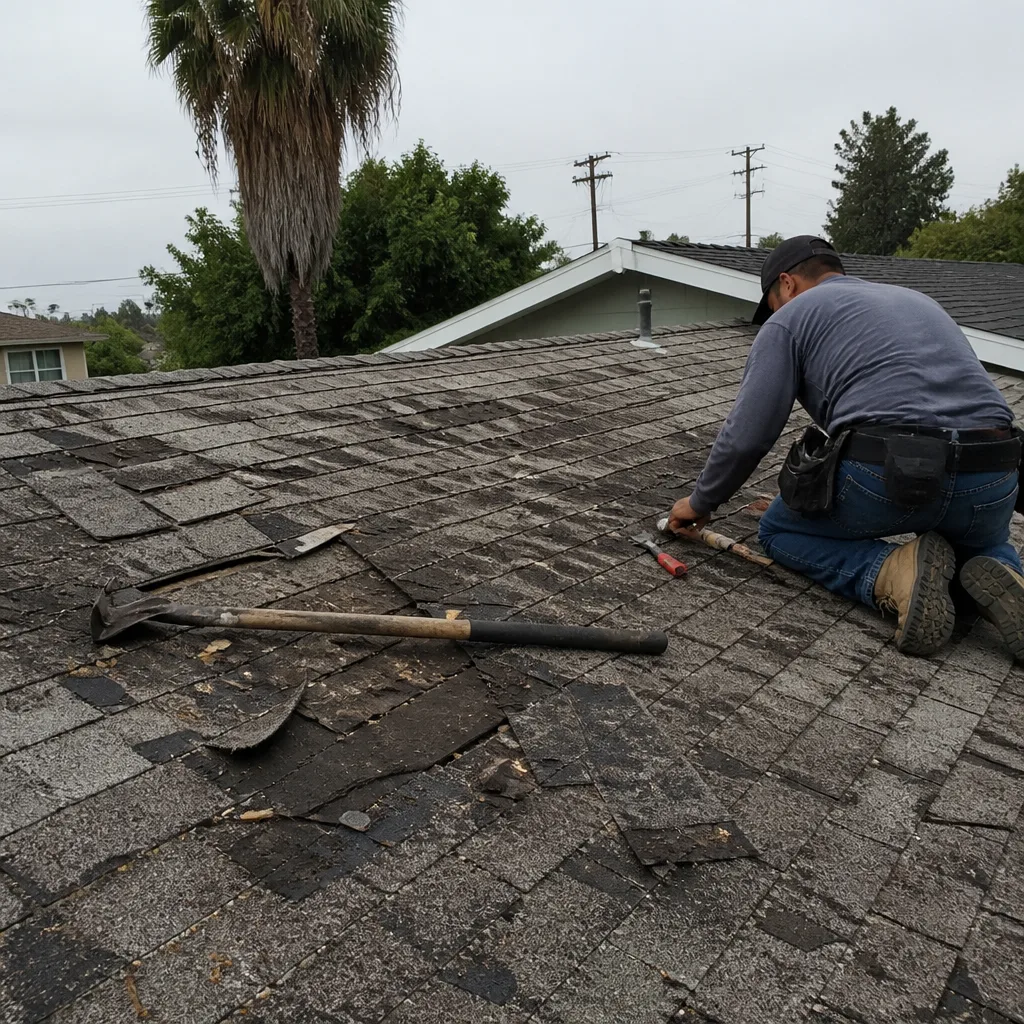 Before
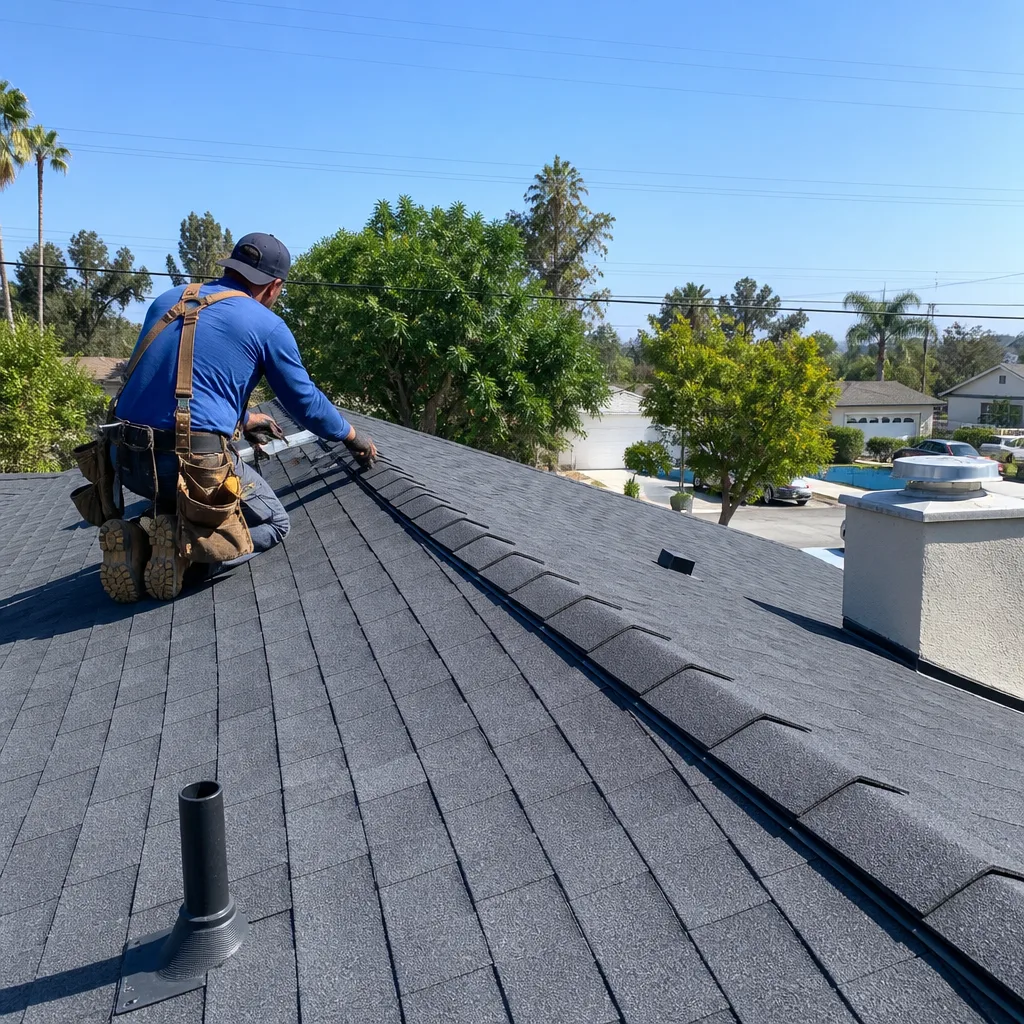 After
After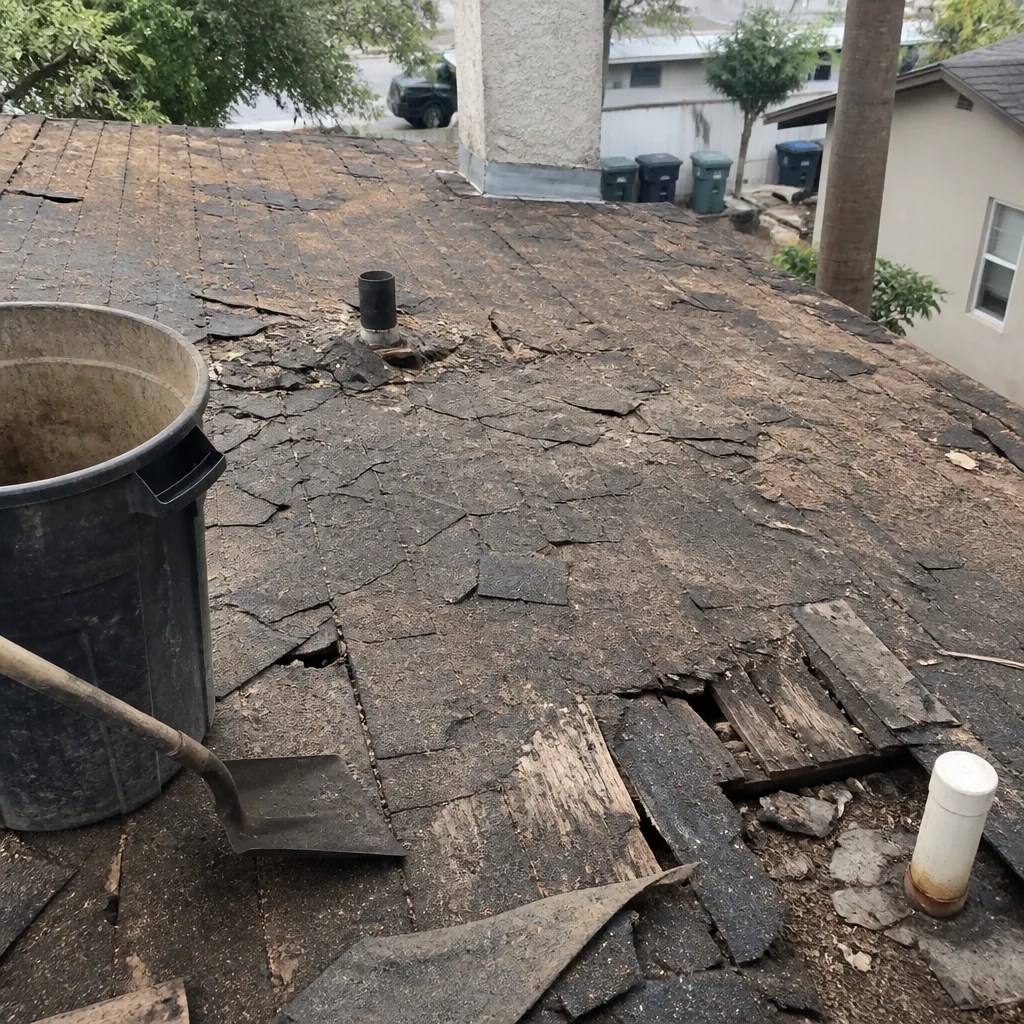 Before
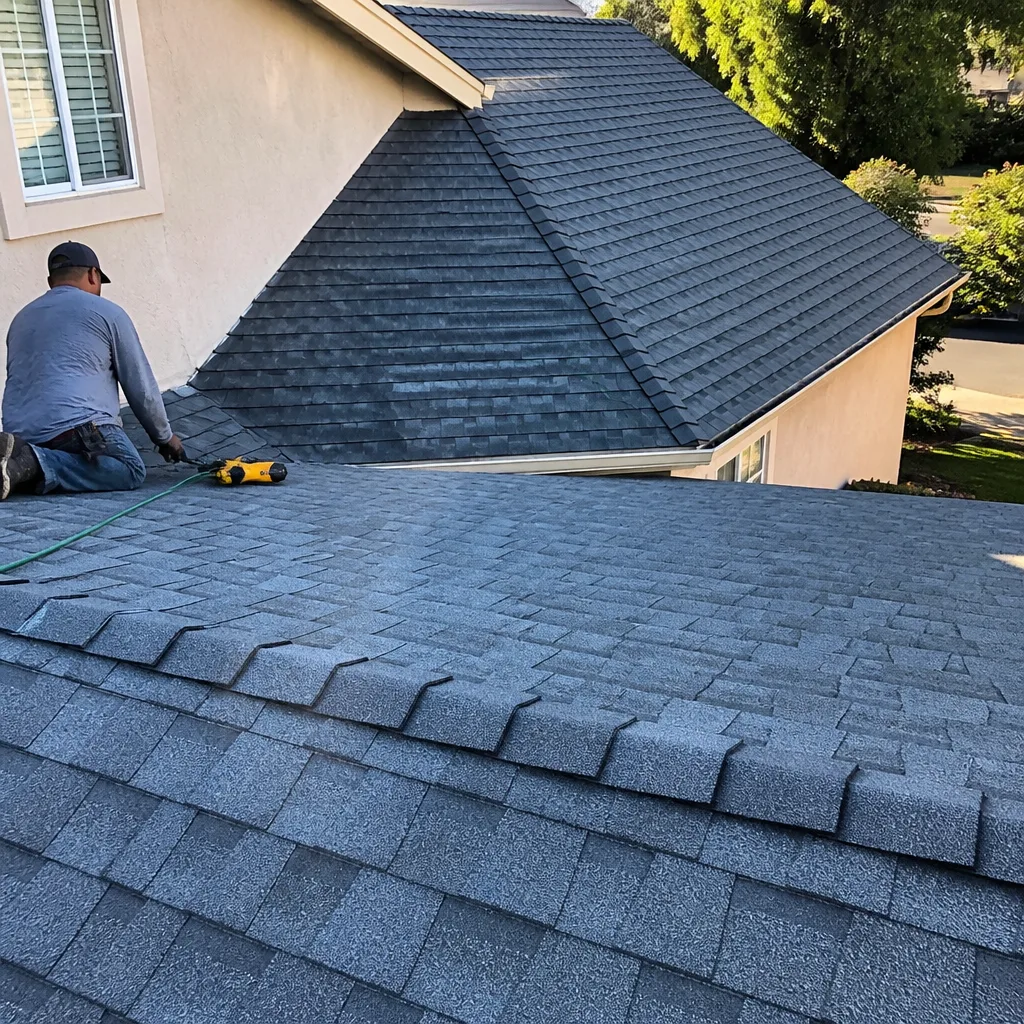 After
After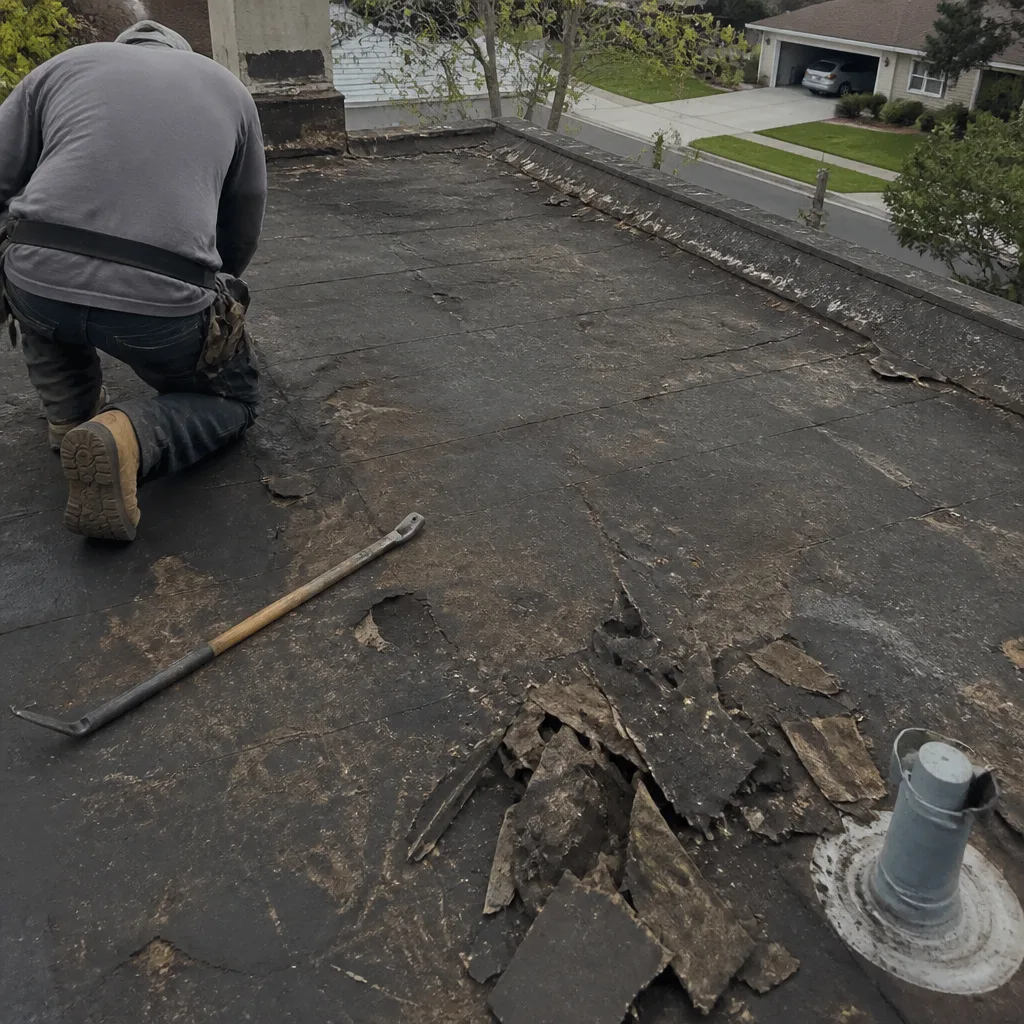 Before
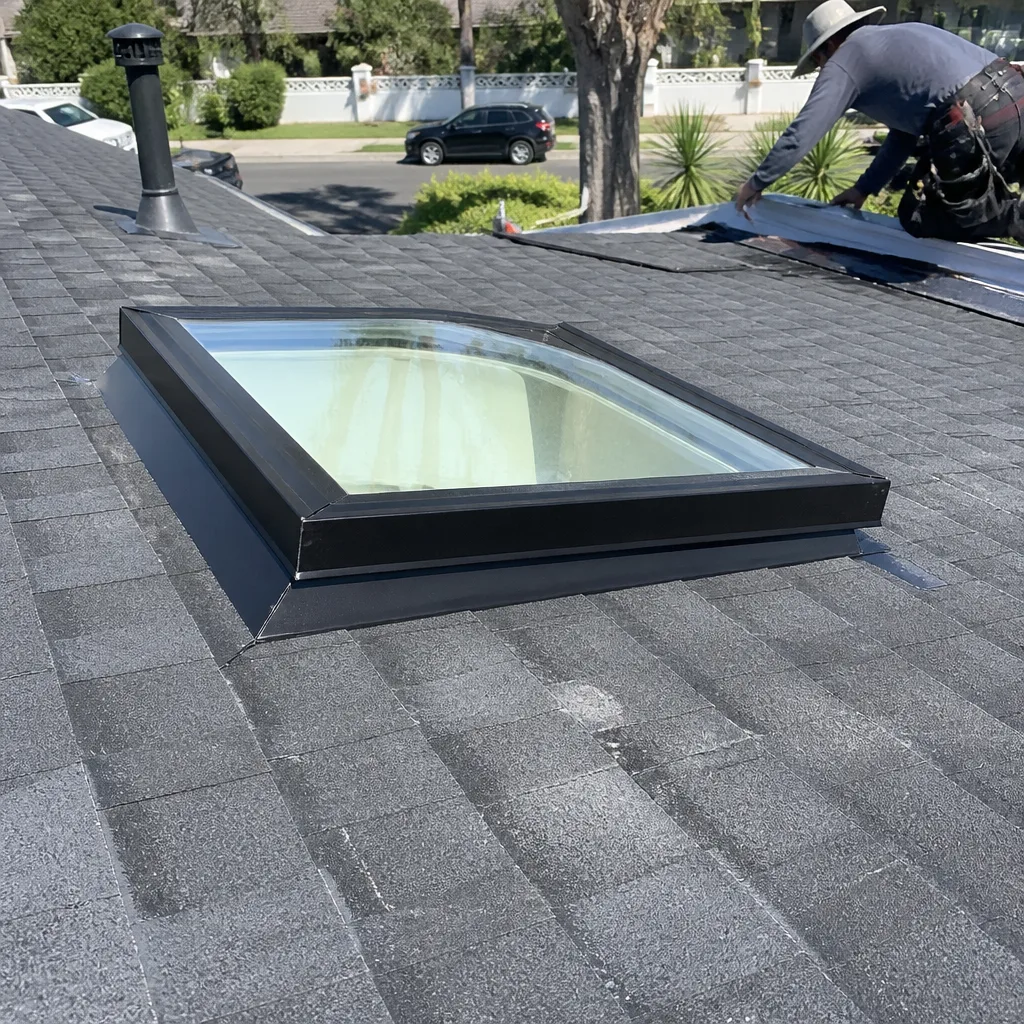 After
AfterThe Complete Roof Repair Guide for Los Angeles Homeowners
In Los Angeles, the average homeowner calls a roofer in January - after the first heavy rain reveals a leak that probably started forming the previous summer. Our dry, sunny climate trains us to ignore what we can’t see, and that deferral habit costs thousands. This guide covers what LA homeowners actually need to know: real repair costs by roof type, how to handle storm-season emergencies without getting gouged, city-specific code rules that affect your quote, and how to spot a temporary patch job masquerading as a real fix. Whether you own a 1920s Spanish in Los Feliz or a mid-century ranch in the Valley, here’s how to approach roof repair with your eyes open.
Quick Answer
Most roof repairs in Los Angeles cost between $450 and $2,800 depending on roof type and damage severity. Concrete and clay tile repairs typically run $650-$1,400 per area, torch-down flat roof repairs $500-$2,200, and composition shingle repairs $450-$1,200. The key variable isn’t just the damage - it’s whether your roofer is repairing the underlying cause or just the symptom.
Table of Contents
- Why LA’s Climate Makes Roof Repair Different
- The Four Most Common LA Repair Scenarios (With Real Costs)
- How to Handle Roof Repair During or After a Storm
- LA Code Considerations That Affect Your Repair Quote
- How to Write a Repair Scope That Prevents Price Doubling
- Real Fix vs. Temporary Patch: Knowing What You’re Buying
- Common Mistakes to Avoid
- When to Call a Professional
- Frequently Asked Questions
- The Bottom Line
Why LA’s Climate Makes Roof Repair Different
Los Angeles gets roughly 35 rainy days per year. That statistic shapes everything about how roofs fail here - and how homeowners respond.
In wetter climates, small leaks announce themselves quickly. A missing shingle in Seattle means a stained ceiling within weeks. In Los Angeles, that same missing shingle might let water in for eight months before the first interior sign appears. By then, the decking beneath has softened, insulation has compacted, and what should have been a $600 repair has become a $2,400 problem involving multiple trades.
The Santa Ana winds compound this. Gusts exceeding 60 mph, common from October through January, lift and crack tiles that were already stressed by thermal cycling - our summer roof temperatures regularly exceed 160°F. We’ve inspected homes in Pasadena where wind-lifted tiles went unnoticed for two full rainy seasons, allowing continuous water intrusion into the battens and rafters.
Then there’s the surprise factor. Because Angelenos don’t think about roofs, we don’t budget for them. For more guides & resources on planning ahead, see our blog. When January storms hit - and they have been intensifying, with atmospheric river events now common - every reputable roofer’s schedule fills simultaneously. Homeowners who deferred maintenance find themselves choosing between waiting weeks in a leaking house or hiring whoever answers the phone first.
The practical implication: in Los Angeles, roof maintenance isn’t about preventing leaks. It’s about preventing emergency leaks during the one month you can’t get a quality roofer.
The Four Most Common LA Repair Scenarios (With Real Costs)
Los Angeles roofing breaks into four dominant types, each with its own failure patterns and repair economics. These ranges reflect what we quote in 2024-2025 for properly executed repairs in the LA market, including removal, replacement, and disposal. Prices assume standard access and no structural damage beneath.
Concrete Tile Roofs
Common in post-1960s construction throughout the San Fernando Valley, Orange County, and Inland Empire-adjacent LA County. Concrete tiles crack from foot traffic, thermal expansion, and impact. The repair requires removing tiles in the damaged area, replacing broken underlayment (the waterproof layer beneath), and reinstalling matching tiles.
Typical repair cost in Los Angeles: $650-$1,400 per area
What drives the high end: Discontinued tile profiles requiring custom sourcing; multiple cracked tiles in a valley or ridge where water concentrates; degraded underlayment needing full section replacement.
What competitors miss: Many LA roofers replace broken tiles without checking the underlayment beneath. The tile looks fixed, but the actual waterproofing layer remains compromised. We see this constantly in inspections of “repaired” roofs in Granada Hills and Northridge.
Clay Tile Roofs
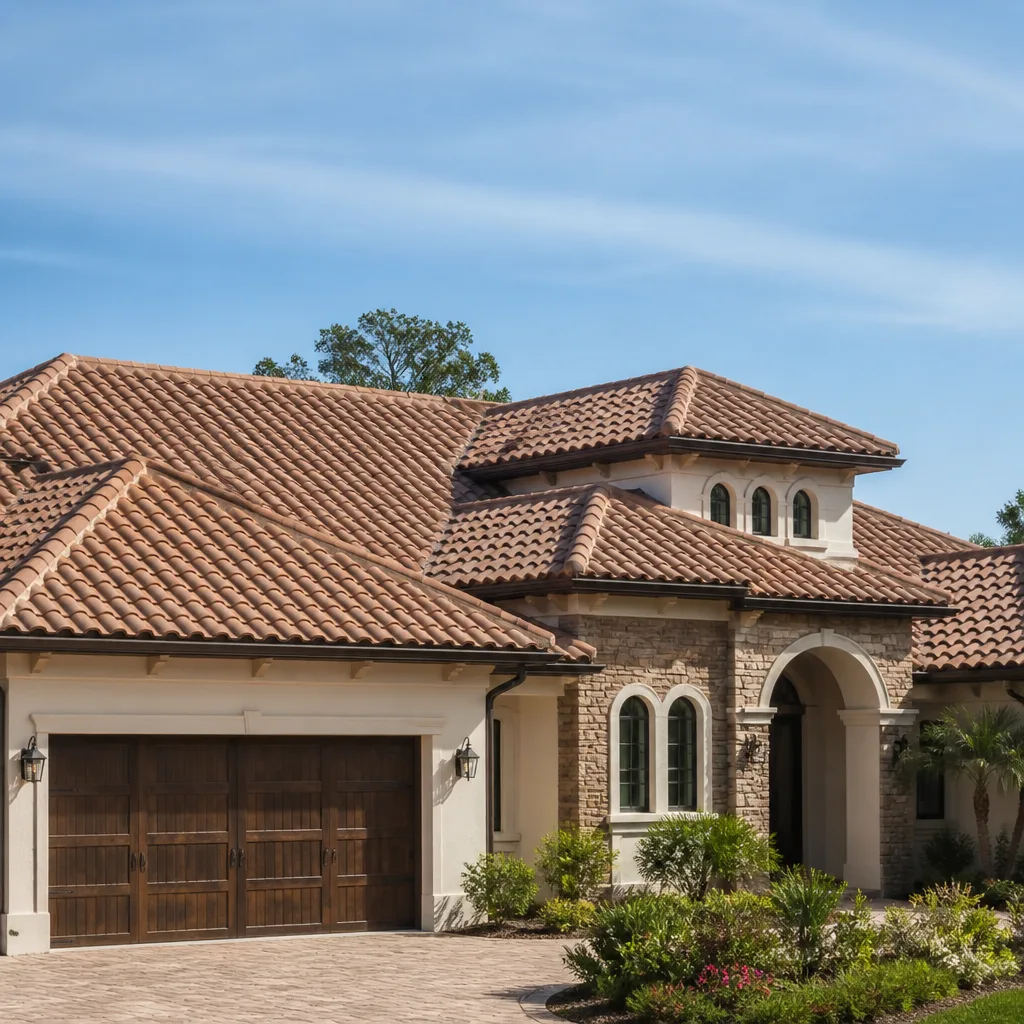
The signature roof of 1920s-1940s Spanish and Mediterranean homes in Los Feliz, Hancock Park, Pasadena, and San Marino. Clay is more brittle than concrete and nearly impossible to match exactly when sourcing replacements.
Typical repair cost in Los Angeles: $800-$1,600 per area
What drives the high end: Salvaged or custom-matched clay tiles; hand-pressed reproductions for historic properties; copper or stainless flashing integration where original lead flashing has failed.
What competitors miss: Clay tile roofs in Los Angeles were often installed without underlayment, relying entirely on the tile profile and headlap for water shedding. “Repairing” a leak by replacing visible tiles on these systems is pointless if the original design logic isn’t understood.
Torch-Down Flat Roofs
Predominant on commercial buildings and residential additions throughout LA, especially Mid-City, Koreatown, and modernist homes in the Hollywood Hills. Modified bitumen (torch-down) fails at seams, penetrations, and where ponding water exceeds 48 hours.
Typical repair cost in Los Angeles: $500-$2,200 per area
What drives the high end: Multi-layer removal where previous repairs have been layered atop each other; structural deflection causing chronic ponding; HVAC platform or skylight integration requiring custom flashing fabrication.
What competitors miss: The “repair” of cutting a patch and torching it over the damaged area without addressing why the original failed. On flat roofs in Los Angeles, the cause is usually drainage - a clogged scupper, a settled drain, or an HVAC platform blocking flow. Patch the symptom, and you’re back in six months.
Composition Shingle Roofs
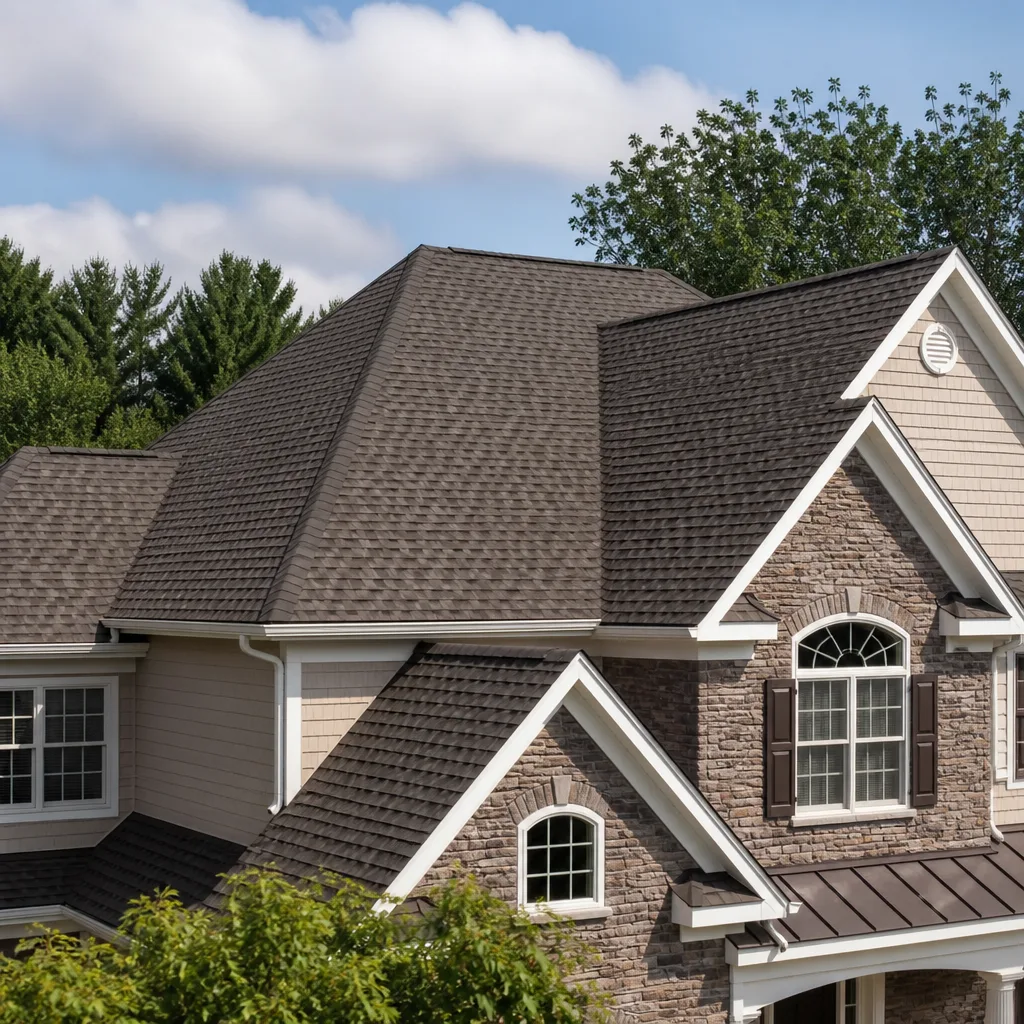
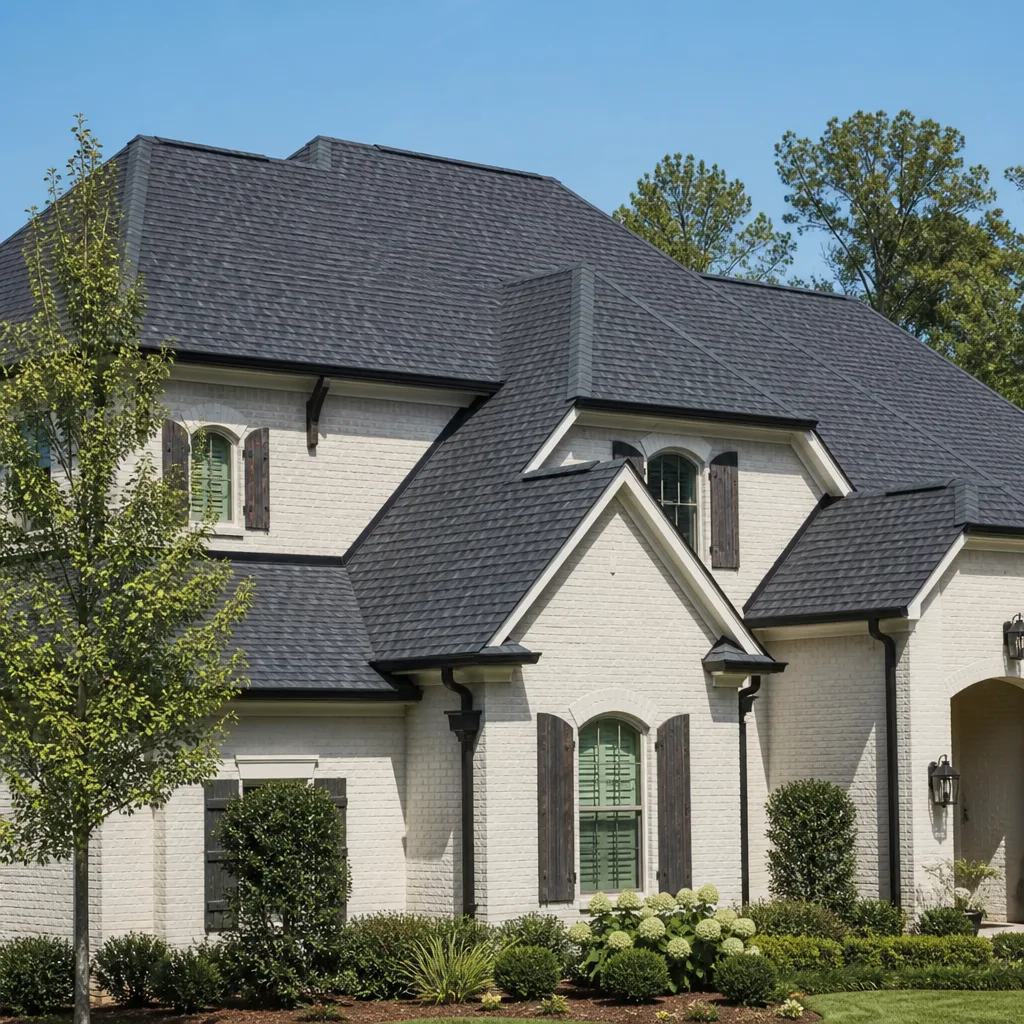
The economical standard for postwar tract housing across the South Bay, Gateway Cities, and vast swaths of the Valley. Architectural (dimensional) shingles dominate newer installations; three-tab persists on older homes.
Typical repair cost in Los Angeles: $450-$1,200 per area
What drives the high end: Matching discontinued shingle colors after UV fading; wind-lifted sections requiring full course replacement; valley or chimney flashing integration.
What competitors miss: Shingle repairs in Los Angeles often follow unpermitted re-roofs where previous contractors installed new shingles over old, exceeding code weight limits and trapping moisture. The “repair” needs to address whether the entire assembly is legitimate.
How to Handle Roof Repair During or After a Storm
January 2023 and January 2024 delivered atmospheric river events that flooded LA roofers with emergency calls. Here’s what we learned, and what homeowners should know before the next one.
Emergency Tarping: What It Is and Isn’t
Storm response contractors - often out-of-state crews who mobilize for weather events - offer emergency tarping at $300-$800 for a standard residential area. This is a waterproof covering secured over the damaged section to prevent interior damage until permanent repair is possible.
What tarping covers in terms of insurance: Most homeowners policies cover “reasonable temporary repairs” to prevent further damage. Document everything with photos before and after tarping. The tarp itself and its installation are typically reimbursable as “additional living expenses” or “loss mitigation.”
What tarping does not do: It does not constitute a repair. It does not satisfy your duty to mitigate damage. And it creates a deadline - tarps degrade in LA sun within 60-90 days, after which the underlying damage resumes.
The Difference Between Storm Response and Repair Contractors
Storm response contractors specialize in volume: rapid tarping, temporary patching, and insurance documentation. Their business model depends on moving to the next storm. Repair contractors - local roofers like our team in Los Angeles - build ongoing relationships and stand behind permanent work.
The risk: storm response contractors who also “do repairs” often subcontract to local crews they don’t supervise, with no warranty follow-through. We’ve been called to fix their work in Silver Lake and Studio City where temporary patches were sold as permanent solutions.
Steps to Take During an Active Leak
- Contain interior damage with buckets and plastic sheeting. Puncture ceiling bubbles to release trapped water and prevent collapse.
- Document with photos and video for insurance - damage to roofing, interior finishes, and personal property.
- Call your insurance company to report the claim and confirm coverage for temporary repairs.
- Contact a local roofer for emergency tarping if water is actively entering. In Los Angeles, reputable companies maintain storm response protocols; at Tilehurst Roofing, a live person answers every call 24 hours a day, 7 days a week, including evenings and weekends.
- Schedule permanent repair within 30 days, before tarp degradation or mold risk escalates.
LA Code Considerations That Affect Your Repair Quote
Los Angeles operates under the Los Angeles Building Code (LABC), based on the California Building Code with city-specific amendments. Two code provisions regularly surprise homeowners receiving repair quotes.
When Adding a Layer Is Allowed
LABC Section 1511 permits a maximum of two roof coverings on any structure. If your home already has two layers - common in LA where 1980s and 1990s re-roofs were installed over original shingles - any repair requiring removal of the top layer must restore the assembly to code compliance.
Practical impact: A “simple” shingle repair on a two-layer roof can trigger a full tear-off of the repair area down to decking, plus replacement of any water-damaged decking. Your $800 repair quote becomes $2,200. This isn’t contractor upselling; it’s code compliance, and inspectors in Los Angeles enforce it.
When Full Tear-Off Is Required
Beyond the two-layer rule, full tear-off is required when:
- Existing roofing is water-soaked or deteriorated to the point it won’t support new material
- Decking has deflection exceeding 1/240 of the span (visibly sagging between rafters)
- The repair area exceeds 25% of the total roof area in any 12-month period - at which point the entire roof must be brought to current energy code, typically requiring cool roof compliance or Title 24 documentation
That last provision catches Los Angeles homeowners who attempt to “repair” their way through a failing roof over multiple years. We’ve seen this in Encino and Tarzana, where deferred maintenance on large homes triggered full re-roof requirements mid-repair.
Cool Roof Requirements
Los Angeles, like much of California, mandates cool roof ratings for new and replacement roofs in many climate zones. For repairs, the threshold is the 25% rule above. If your repair triggers full re-roof status, your material selection must meet Title 24 cool roof standards. This affects color and product availability - some traditional dark shingles and tiles won’t qualify.
We specify from seven leading manufacturers - GAF, CertainTeed, Owens Corning, IKO, Atlas, Tamko, and Boral - specifically to maintain options that satisfy both aesthetic preferences and code requirements.
How to Write a Repair Scope That Prevents Price Doubling
The most common complaint we hear from Los Angeles homeowners about previous roofers: “They gave me a price, then found more problems and doubled it.” The Complete Roofing Company Guide for Los Angeles Homeowners shows how to vet contractors before this happens. This is preventable with a well-written scope of work.
A scope of work is simply a written description of what will be done, to what standard, for what price. It protects both parties. Here’s how to construct one that holds your contractor accountable.
Elements of a Bulletproof Scope
- Define the repair area precisely. “Repair leak in northeast bedroom ceiling” is inadequate. Specify: “Remove and replace all roofing materials in 8′ x 10′ area above northeast bedroom, from ridge to eave, including valley intersection if within 3 feet.”
- Specify layers to be removed. “Remove existing roofing down to sound decking” prevents a contractor from claiming surprise when they find a second layer.
- Define “sound decking.” Specify: “Replace decking only where visibly delaminated, soft to probe, or moisture content exceeds 19% per pin meter. Maximum 2 sheets included in base price; additional sheets at $X per sheet with photo documentation.”
- Require photo documentation. Before, during, and after photos of any conditions that change the scope.
- Specify materials by manufacturer and product line. “GAF Timberline HDZ in Barkwood” not “matching shingles.”
- Define completion criteria. “Water-tight to code inspection, with city permit pulled and passed” or “water-tight with 5-year written guarantee.”
- Fix the price for fixed scope, define contingency process. “Base price $X for scope above. Additional work requires written change order with homeowner signature before proceeding.”
At Tilehurst Roofing in Los Angeles, we provide this documentation as standard practice. The Kingswell Way means the price is in your hands before any work starts, every single time. No surprises, no change orders without your explicit approval.
Real Fix vs. Temporary Patch: Knowing What You’re Buying
Not all repairs are equal. The roofing industry has a vocabulary problem: everything from a tube of sealant smeared over a crack to a full structural rebuild gets called a “repair.” Here’s how to distinguish them.
Temporary Patches
Characteristics: No removal of existing material. Application of coating, sealant, or membrane over the damaged area. No inspection of underlying layers. No permit. No manufacturer warranty on the repair.
When appropriate: Genuine emergencies where interior damage is imminent and permanent repair must wait for weather or scheduling. Should be explicitly labeled temporary with a written deadline for permanent repair.
Typical lifespan in Los Angeles climate: 6-18 months before UV degradation or thermal cycling fails the patch.
Managed Repairs
Characteristics: Partial removal. Replacement of visible damage without full area integration. May address immediate leak path while leaving adjacent degraded material in place. Often presented as “repair” but functionally extends roof life without solving underlying condition.
When appropriate: Near end-of-life roofs where full replacement is planned within 2-3 years. Should be priced and warranted accordingly - typically 1-2 years.
Real Fixes
Characteristics: Full removal to sound substrate in the affected area. Replacement of all failed or failing components. Integration with existing roofing to restore original water-shedding design. Permit pulled where required. Written warranty matching or approaching new-roof terms.
At Tilehurst Roofing, our repair standard is the real fix. The 365-Day Done Right Promise covers every repair for a full year, and if a repair fails inside that period, the crew returns to correct it at no charge. We don’t offer temporary patches as permanent solutions because we’ve seen where that leads - callbacks, interior damage, and homeowners who no longer trust roofers.
How to know which you’re being sold: Ask directly, “Are you removing material to inspect the substrate, or applying product over the damage?” Ask about the warranty duration and what it covers. Ask whether a permit will be pulled. A roofer who hesitates on any of these questions is selling a patch.
Common Mistakes to Avoid
- Waiting for the leak to appear inside. By the time water stains your ceiling in Los Angeles, the actual roof damage is typically 6-12 months old. Schedule inspections every 3 years, or after any Santa Ana wind event exceeding 50 mph.
- Hiring based on who can come fastest during storms. In January 2024, we saw out-of-state crews charging triple rates for tarping that blew off in the next wind event. Verify local presence, physical address, and ability to return for warranty service.
- Accepting verbal estimates. California contractors law requires written contracts for jobs exceeding $500. More practically, a written scope prevents the “we found more damage” price escalation.
- Ignoring flat roof ponding. On torch-down and TPO roofs common in modern LA homes, standing water exceeding 48 hours degrades all membrane types. “It always ponds there” is not normal; it’s a design or drainage defect requiring correction.
- Matching discontinued materials without verifying availability. We’ve replaced entire roof sections in Pacific Palisades where homeowners accepted repair quotes assuming matching tiles could be sourced, only to learn production ended years ago. Verify material availability before authorizing work.
- Neglecting to verify permit status. Unpermitted repairs in Los Angeles complicate future sales and insurance claims. Require permit numbers and final inspection sign-off for any work beyond simple maintenance.
When to Call a Professional
Some roof conditions demand immediate professional assessment: active water intrusion during rain; visible sagging of roof plane or ceiling below; daylight visible through roof boards from the attic; more than three missing or displaced tiles in a single area; or granule accumulation in gutters exceeding what you’d expect from normal aging.
Equally important: call before these conditions develop. A professional inspection every three years in Los Angeles - more frequently for roofs over 20 years - catches the deferred-damage patterns our climate conceals.
Tilehurst Roofing offers free estimates in Los Angeles. A live person answers every call 24 hours a day, 7 days a week. Background-checked, uniformed technicians arrive in the window we promise, provide a written price before any work starts, and leave every job with a written guarantee in hand. Call (945) 303-9821 to schedule your free estimate.
Frequently Asked Questions
Most residential roof repairs in Los Angeles range from $450 to $2,800, with composition shingle repairs at the lower end ($450-$1,200) and torch-down flat roof or clay tile repairs at the higher end ($800-$2,200). The specific cost depends on roof type, damage extent, and whether code compliance requires full tear-off in the repair area. Call (945) 303-9821 for an exact quote - estimates are free.
It shouldn’t, if your scope of work is written correctly. At Tilehurst Roofing, the written price we provide before any work starts is the price you pay for the defined scope. If we discover genuinely unforeseen conditions - structurally unsound decking hidden beneath intact roofing, for example - we document with photos, explain the finding, and require your signed change order before any additional work proceeds. No surprises.
Yes, for any repair requiring removal of roofing material down to decking or affecting structural components. Los Angeles requires permits for work exceeding cosmetic maintenance. We handle permit application, scheduling, and inspection attendance as part of our standard process. The permit number and inspection sign-off are provided to you at completion.
Standard repairs on Los Angeles homes - a few broken tiles, a wind-damaged shingle section, a small torch-down patch - typically complete in one working day. Larger repairs involving multiple areas, structural decking replacement, or historic material sourcing may extend to 2-3 days. We specify duration in your written estimate and communicate any weather-related delays promptly.
Active rain prevents most repair work for safety and quality reasons. However, emergency tarping can be installed during precipitation to stop active leaks, and we schedule permanent repairs at the first dry window - typically within 48-72 hours during LA’s winter storm patterns. Our 24/7 live answering means you can report active leaks immediately and receive scheduling confirmation.
Consider replacement when: your roof exceeds 75% of its rated lifespan; repairs are needed in more than 25% of total area within 12 months (triggering LA code requirements); multiple layers exist and code compliance demands full tear-off; or repair costs approach 40% of replacement cost. We assess this honestly during our free estimate - roof replacement in Los Angeles is a significant investment, and we don’t recommend it unless it’s the genuinely better value.
The Bottom Line
Roof repair in Los Angeles is a discipline of timing and specificity. Our climate rewards procrastination until it suddenly doesn’t, and the contractors who thrive in storm chaos are rarely the ones who execute quality permanent work. The homeowners who fare best inspect before leaks appear, demand written scopes with real prices, understand what their roof type requires, and distinguish patches from genuine repairs. Whether your home wears clay tiles in Pasadena or composition shingles in Torrance, the principles hold: know what you’re buying, get it in writing, and verify that your roofer will answer the phone if something goes wrong.
Written by Greg Holloway, Owner at Tilehurst Roofing, serving Los Angeles since 2000.